
Brake Fluid Resistant Paint: Caliper Options Compared

For brake fluid resistant paint, choose G2 G2160 Red Caliper Epoxy Kit or G2 G2164 Black Caliper Epoxy Kit: their maker claims the epoxy coating protects against brake fluids, and rates it to 980°F. Choose a different caliper paint if you prefer an aerosol, but its claims do not specifically address brake-fluid resistance.
Brake fluid can damage many painted surfaces, so wipe spills promptly and confirm the paint is fully cured before exposing it to fluid.
We earn a commission if you buy through links on this page. As an Amazon Associate I earn from qualifying purchases. Products are compared on manufacturer specifications, not hands-on testing.
- Best overall: G2 G2160 Red Caliper Epoxy Kit – The maker specifically claims chemical protection against brake fluids, with a 980°F heat rating.
- Best for black finish: G2 G2164 Black Caliper Epoxy Kit – It pairs the same brake-fluid protection claim and 980°F rating with a black epoxy finish.
- Best for aerosol application: RAPTOR Caliper Enamel Satin Black – Its satin-black caliper enamel is a self-priming spray rated to 950°F.
| Product | Best for | Application | Finish | Shop |
|---|---|---|---|---|
| G2 G2160 Red Caliper Epoxy Kit | Red brush-on epoxy | Brush-on epoxy system | High gloss red | Check Price on Amazon |
| G2 G2164 Black Caliper Epoxy Kit | Black brush-on epoxy | Brush-on epoxy system | High gloss black | Check Price on Amazon |
| RAPTOR Caliper Enamel Satin Black | Satin black spray | Aerosol enamel | Satin black | Check Price on Amazon |
| Rust-Oleum 251591 Red Caliper Spray | Red caliper spray | Aerosol spray paint | Red | Check Price on Amazon |
| Rust-Oleum Automotive High Heat Flat Black | General high heat | Aerosol enamel | Flat black | Check Price on Amazon |
Brake Fluid Resistant Paint Options
Compare the coating type, finish, and stated heat rating before choosing paint for a caliper.
G2 G2160 Red Caliper Epoxy Kit

For a red brush-on coating with an explicit brake-fluid protection claim, this G2 epoxy kit is the clearest match. The maker says its coating resists heat up to 980°F and provides chemical and physical protection against brake fluids, road salt, dust, dirt, and gravel. The 330-milliliter kit is part of a system rather than an aerosol, which suits buyers prepared to apply paint with a brush. Its limitation is the red, high-gloss finish: choose another option if you want black or prefer spray application.
Bottom line: Pick this if you want a red brush-on epoxy and explicit brake-fluid protection.
G2 G2164 Black Caliper Epoxy Kit

For black calipers, this G2 kit combines a high-gloss finish with the same epoxy system and brake-fluid protection claim as the red version. The maker says the paint resists heat up to 980°F and offers chemical and physical protection from brake fluids, road salt, dust, dirt, and gravel. The 4-fluid-ounce kit uses a brush-on approach, not an aerosol, and the maker says the epoxy dries harder than spray-type paint. The color choice is its main constraint; buyers seeking satin black or spray application should consider a different coating.
Bottom line: Choose this for a black, high-gloss brush-on epoxy system.
RAPTOR Caliper Enamel Satin Black

For satin black calipers in an aerosol, RAPTOR stands apart from the brush-on epoxy kits. The maker says its 1K enamel uses ceramic technology, resists heat up to 950°F, and protects against automotive fluids, brake dust, impact, and corrosion. It is self-priming for most prepared metals, which may simplify the coating steps. However, the claims refer broadly to automotive fluids rather than specifically naming brake fluid, so it is a less direct match for buyers prioritizing that chemical resistance claim.
Bottom line: Pick this for satin-black spray convenience, not an explicit brake-fluid claim.
Rust-Oleum 251591 Red Caliper Spray

For red calipers with an aerosol application, Rust-Oleum’s 12-ounce spray is the straightforward alternative to brush-on epoxy. The maker says its formula resists heat up to 900°F and is formulated to resist brake dust and high temperatures from harsh braking; it also has an any-angle spray design and comfort-tip nozzle. Those claims address heat and brake dust, not brake-fluid resistance, so buyers focused on chemical exposure should favor an option whose maker specifically names brake fluid. The red color also rules it out for a black finish.
Bottom line: Choose this for red aerosol caliper paint when heat and brake-dust claims are the priority.
Rust-Oleum Automotive High Heat Flat Black
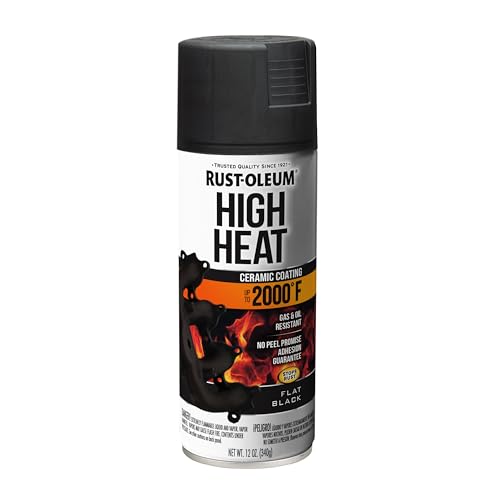
For automotive parts exposed to intermittent high heat, this flat-black aerosol has a higher stated temperature rating than the caliper-specific options. The maker says it is intended for intermittent heat up to 2,000°F and resists grease, oil, gas, salt, rust, humidity, and other solvents. The 12-ounce can is a general automotive high-heat coating, not a caliper-specific paint in its claims, and brake-fluid resistance is not among those claims. Confirm the part is an intended surface before using this general-purpose option on a brake caliper.
Bottom line: Consider this for other automotive parts, not as the clearest caliper brake-fluid choice.
How to choose brake fluid resistant paint
Choose paint whose maker explicitly names brake fluid if chemical resistance is the deciding requirement. The products differ by both application and evidence: epoxy brush-on kits make a brake-fluid claim, while the aerosol caliper paints emphasize heat and brake dust or broader automotive fluids. Heat ratings alone do not establish resistance to a particular chemical. Brake fluid can damage many vehicle finishes, so a spilled drop should not be left on painted metal. Use a product intended for the part, prepare the surface as directed by its maker, and allow the coating to cure fully before exposure. If you need a spray can, verify the product’s brake-fluid compatibility before buying rather than inferring it from a high temperature rating.
Brush-on epoxy versus caliper spray
Brush-on epoxy is a better fit when you want the explicit brake-fluid claim in these options; aerosol enamel is more convenient when spray application or a particular sheen is the priority. Both product types are used for calipers, but they are not interchangeable in application method or finish. Brush-on kits require spreading the coating across the prepared surface, while aerosol products are applied by spraying. Coating a brake assembly calls for care: keep paint off friction surfaces such as the rotor and pad material, since those surfaces need direct contact to work properly. Cover adjacent parts before application and use only products intended for the target component.
The table separates the products by type and the maker’s heat claim; a temperature rating is not a brake-fluid compatibility rating.
| Coating type | Typical choice here | What to prioritize |
|---|---|---|
| Brush-on epoxy | G2 red or black kits | Explicit brake-fluid claim |
| Caliper aerosol enamel | RAPTOR or Rust-Oleum red | Spray format, finish, and heat claim |
| General automotive high-heat aerosol | Rust-Oleum flat black | Intended surface and intermittent heat use |
Preparing calipers before painting
Clean, dry, and properly prepared metal is the starting point for paint adhesion; dirt, brake dust, oil, and loose corrosion can undermine a coating. Remove loose rust and residue before applying paint, and mask the rotor, pads, bleeder, and other areas that should remain uncoated. A self-priming claim applies to the RAPTOR enamel on most prepared metals, not automatically to every paint or surface. Follow the selected product’s preparation and curing directions, because the coating must harden before service. Avoid spraying near flames or hot components, and work with ventilation when applying aerosol coatings.
Brake-fluid spills and painted surfaces
Wipe brake-fluid spills from painted surfaces promptly because brake fluid can damage many automotive finishes. Do not rely on heat resistance to protect paint from fluid: temperature and chemical resistance describe different performance characteristics. Keep a clean cloth and water available while working, and remove contamination without rubbing it across a larger painted area. Before using any coating where fluid contact is likely, look for an explicit brake-fluid compatibility claim and observe the maker’s cure time. Brake systems are safety-critical; keep paint, cleaning residue, and masking debris off rotors and friction pads.
Frequently Asked Questions
Does brake fluid damage caliper paint?
Brake fluid can damage many painted automotive surfaces, so wipe spills promptly rather than assuming a heat-resistant coating is also chemical-resistant. Paint makers may test different fluids and exposure conditions.
Is a 980°F rating the same as brake-fluid resistance?
No. A temperature rating describes heat performance, while brake-fluid resistance is a separate chemical claim. Choose a coating whose maker specifically names brake fluid if that is your concern.
Can I spray caliper paint without removing the caliper?
Some caliper coatings are applied in place, but masking and access determine whether you can coat safely. Keep paint off the rotor, brake pads, bleeder, and other moving or friction surfaces.
How long should caliper paint cure before driving?
Use the specific coating’s cure instructions before driving or exposing the caliper to fluid; cure times differ between aerosol enamel and epoxy systems. A dry-to-touch surface is not necessarily fully cured.
Should brake caliper paint go on the rotor?
No. Keep paint off the rotor’s braking track and the brake pad friction material, which need clean contact surfaces to function. Mask those areas before coating the caliper.