
Best Compression Sleeve Puller Tools Compared by Fit

DURATECH 1/2-Inch Compression Sleeve Puller suits most people because its 1/2-inch puller uses a T-bar for leverage and is sized for narrow spaces.
A compression sleeve puller removes a ferrule and nut from copper pipe so a valve can be replaced without cutting the pipe; check that the fitting is 1/2 inch before choosing.
We earn a commission if you buy through links on this page. As an Amazon Associate I earn from qualifying purchases. Products are compared on manufacturer specifications, not hands-on testing.
- Best overall: DURATECH 1/2-Inch Compression Sleeve Puller – A3 steel, zinc plating and a T-bar design pair with a 1/2-inch fitting size.
- Best for plated steel: Wikmonx 1/2-Inch Compression Sleeve Puller – The 1/2-inch puller has a zinc-plated steel finish and is described for tight spots.
| Product | Best for | Material or finish | Shop |
|---|---|---|---|
| DURATECH 1/2-Inch Compression Sleeve Puller | Narrow workspaces | A3 steel, zinc-plated | Check Price on Amazon |
| Wikmonx 1/2-Inch Compression Sleeve Puller | Zinc-plated steel | Zinc-plated steel | Check Price on Amazon |
| 03943 1/2-Inch Compression Sleeve Puller | Tight pipe access | Precision-machined | Check Price on Amazon |
Compression sleeve puller tools
Match the fitting size first, then compare the tool construction and any extra repair pieces you need.
DURATECH 1/2-Inch Compression Sleeve Puller
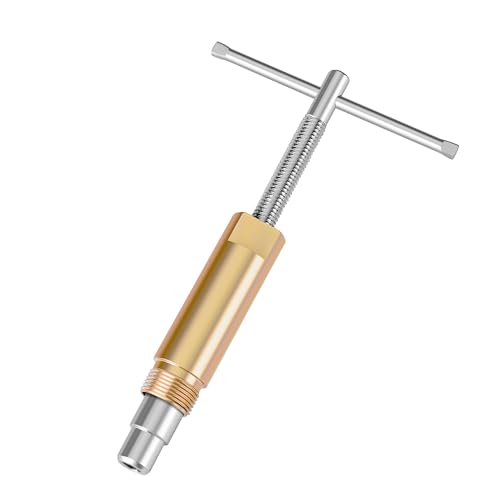
DURATECH 1/2-Inch Compression Sleeve Puller stands out for its T-bar design, which provides leverage while working in a narrow space. The A3 steel body has a zinc-plated finish, and the compact tool measures 7.4 inches long, 4.2 inches wide and 1.1 inches high. The maker says it removes corroded or frozen nuts and compression rings without damaging pipes or walls. It suits a 1/2-inch compression connection where access is limited. Its fit is only 1/2 inch, so it is not the choice for a different fitting size.
Bottom line: Pick this for a 1/2-inch fitting when the T-bar and compact dimensions suit the access area.
Wikmonx 1/2-Inch Compression Sleeve Puller

Wikmonx 1/2-Inch Compression Sleeve Puller is distinguished by its zinc-plated steel construction and a weight of 0.4875 pound. The maker says its lever action removes old rings and ferrules without cutting, including in tight spaces, and can straighten crimped pipe. That combination suits a 1/2-inch copper repair where a small amount of pipe is exposed. The fitting size limits its use; choose a different tool if the compression fitting is not 1/2 inch.
Bottom line: Choose this for a 1/2-inch repair if its zinc-plated steel construction is your priority.
03943 1/2-Inch Compression Sleeve Puller

03943 1/2-Inch Compression Sleeve Puller is a precision-machined puller for 1/2-inch copper compression sleeves, with its maker emphasizing use where there is little exposed pipe and cutting is difficult. It is aimed at removing both the nut and ferrule during a supply-stop replacement, such as at a sink, toilet or dishwasher. The maker says it works in relatively tight spots without damage to walls, copper or supply lines. Its scope is narrow: this is for 1/2-inch compression fittings, not other sizes or a complete repair kit.
Bottom line: Pick this when you need a 1/2-inch puller for limited exposed pipe and do not need extra tools.
How to choose a compression sleeve puller
Choose by compression fitting size first: these options are for 1/2-inch fittings, so measure or identify the connection before buying. A puller grips the nut and ferrule and draws them off the pipe as its screw or lever applies force; it avoids sacrificing pipe length to a cut. Tight access makes the tool’s shape and leverage important, while an extra wrench matters only if the valve job also needs one. A useful decision rule is simple: if your fitting is not 1/2 inch, do not select any of these pullers. Do not confuse the 3/8-inch and 1/2-inch outlet threads in a kit wrench with the puller’s 1/2-inch fitting size.
Compression fitting size and pipe fit
A 1/2-inch compression fitting size does not mean the tool fits every plumbing joint; it is intended for the compression nut and ferrule on the matching connection. Compression fittings seal when a nut pushes a ferrule against the pipe and fitting body, so the puller must engage the nut correctly before force is applied. Copper tubing sizes can be identified by outside diameter, while nominal pipe sizing uses a different convention; do not infer compatibility from a pipe’s nominal label alone. Before starting, shut off the water supply and relieve pressure at the fixture. If the old fitting is visibly deformed or the pipe is badly kinked, stop rather than applying more leverage.
Standalone pullers versus angle-stop repair kits
A standalone sleeve puller removes the nut and ferrule; a broader angle-stop kit adds tools for the rest of a valve-replacement task. The included kit wrench accepts 15/16-inch and 5/8-inch nuts, while its threaded end serves 3/8-inch and 1/2-inch MPT compression outlet threads, which are separate dimensions from the puller fit.
| Need | Choose |
|---|---|
| Remove a 1/2-inch ferrule only | Standalone compression sleeve puller |
| Remove a ferrule and work on an angle stop | Kit with a puller and wrench |
| Fitting is not 1/2 inch | Find a puller made for that fitting |
Buy the kit only when its additional wrench and accessories match the repair; otherwise, those pieces add no benefit to ferrule removal.
Safe use when removing a frozen ferrule
Turn off the fixture’s water supply and open the tap to release pressure before loosening a compression connection. Keep the tool aligned with the pipe and increase force gradually; a puller should draw the ferrule straight rather than bend the copper. Copper tubing can kink under side load, and a kinked section may not seal reliably with a replacement valve. If the pipe twists, buckles or begins pulling from the wall, stop and reassess access instead of using a longer lever. After the valve repair, restore water slowly and inspect the connection for leaks while it is pressurized.
Frequently Asked Questions
Can a compression sleeve puller remove a ferrule without cutting pipe?
Yes, a correctly sized puller can draw the nut and ferrule off the pipe instead of requiring a cut. These products are for 1/2-inch compression fittings, so verify that size before starting.
How do I identify a 1/2-inch compression fitting?
Check the fitting or valve specification rather than relying only on the pipe’s nominal size. Copper tubing size is based on outside diameter, while nominal pipe sizing follows a different convention.
Should I shut off water before removing a compression fitting?
Yes, shut off the supply and open the fixture to relieve pressure before loosening the nut. Keep a container and towel nearby because water can remain in the line.
What should I do if the copper pipe bends during removal?
Stop applying force if the pipe kinks, twists or pulls from the wall. A kink can compromise the new connection, and the damaged section may need to be cut back by a plumber.