
Jupiter Pure Sine Wave Inverters Compared by Output

For a Jupiter pure sine wave inverter, Jupiter Pure 2000W Inverter is the named 2,000-watt continuous model, and its GFCI-protected outlets distinguish it from the modified sine alternatives. Choose a different model if you need more continuous output or specifically want a modified sine wave for compatible loads.
We earn a commission if you buy through links on this page. As an Amazon Associate I earn from qualifying purchases. Products are compared on manufacturer specifications, not hands-on testing.
- Best overall: Jupiter Pure 2000W Inverter – The 2,000-watt continuous pure sine model has dual GFCI-protected outlets and an LCD screen.
- Best for a separate pure-sine alternative: BELTTT 2000W Pure Sine Wave – It offers 2,000 watts continuous output, a 4,000-watt surge rating, and a hardwire port.
- Best for higher continuous output: Jupiter 5000W Modified Sine Wave – Its 5,000-watt continuous rating exceeds the other inverter options.
| Product | Best for | Waveform | Continuous output | AC outlets | Shop |
|---|---|---|---|---|---|
| Jupiter Pure 2000W Inverter | Sensitive electronics | Pure sine wave | 2,000 W | 2 GFCI-protected | Check Price on Amazon |
| BELTTT 2000W Pure Sine Wave | Hardwired setup | Pure sine wave | 2,000 W | Dual AC plus 20 A | Check Price on Amazon |
| Jupiter 5000W Modified Sine Wave | Higher continuous loads | Modified sine wave | 5,000 W | 4 | Check Price on Amazon |
| Jupiter 2000W Modified Sine Wave | Portable compatible loads | Modified sine wave | 2,000 W | Multiple AC | Check Price on Amazon |
| Jupiter 2000W Modified Sine Wave, 3 Outlets | Three AC outlets | Modified sine wave | 2,000 W | 3 | Check Price on Amazon |
Jupiter pure sine wave inverters and alternatives
Compare the waveform and continuous output first, then match the connection options to your installation.
Jupiter Pure 2000W Inverter

For a Jupiter-branded pure sine wave model, this 2,000-watt inverter is the direct match. Its features include dual GFCI-protected outlets, a 2.4-amp USB port, a multicolor LCD, and an LED fault indicator. The maker says efficiency reaches 92% and cites over/under-voltage, short-circuit, and overload protection. This option suits buyers who want a pure sine wave output and status display. Its continuous rating is below the 5,000-watt model in this group, so it is not the match for loads requiring more than 2,000 watts continuously.
Bottom line: Choose this if you want the Jupiter pure sine wave model with GFCI outlets and an LCD.
BELTTT 2000W Pure Sine Wave

Unlike the Jupiter-branded option, this is a BELTTT pure sine wave inverter with a 12-volt DC input and 120-volt AC output. Its features include a 23-foot remote, LCD, hardwire port, USB, and dual AC outlets plus a 20-amp outlet. The maker gives a 4,000-watt surge rating and says maximum efficiency is 93%. It suits buyers seeking pure sine output with a remote and hardwire connection. It is not a Jupiter model, and its 2,000-watt continuous rating does not provide the higher output of the 5,000-watt alternative.
Bottom line: Pick this if a remote and hardwire port matter more than a Jupiter brand match.
Jupiter 5000W Modified Sine Wave

With 5,000 watts continuous output, this Jupiter inverter has the highest continuous rating among these options, but it produces modified rather than pure sine wave power. It has four 120-volt AC outlets and two 2.1-amp USB ports. The maker cites a 10,000-watt peak capacity and protection against voltage, temperature, current, short-circuit, and overload conditions. It may suit equipment compatible with modified sine wave output that needs substantial continuous power. It is not a substitute for pure sine wave output when a device’s requirements call for that waveform.
Bottom line: Choose this for compatible loads needing up to 5,000 watts continuously.
Jupiter 2000W Modified Sine Wave

This Jupiter model is a compact, portable modified sine option rather than a pure sine wave inverter. Its ratings are 2,000 watts continuous and 4,000 watts peak; features include multiple AC outlets and USB ports, along with overcurrent, overload, short-circuit, and over-temperature protection. The maker positions it for portable use such as camping, RVing, and emergency use. Its 8.55-pound weight is lower than the 25-pound 5,000-watt Jupiter model. The modified waveform is the key limitation for buyers whose connected equipment specifically requires pure sine wave power.
Bottom line: Pick this for portable use with devices compatible with modified sine wave output.
Jupiter 2000W Modified Sine Wave, 3 Outlets
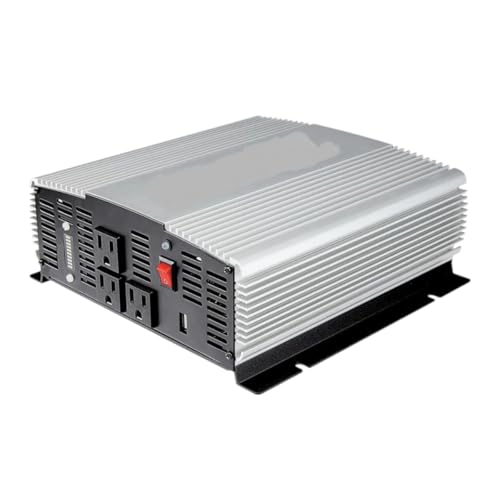
For three 120-volt AC outlets in a 2,000-watt Jupiter inverter, this modified sine model is the most specific match in the group. It converts 12-volt DC battery power to 120-volt AC, and includes a 2.1-amp USB port. The maker cites 4,000 watts peak and describes low/high-voltage shutdown, overload, short-circuit, and thermal protection. It suits buyers with compatible equipment who want multiple AC receptacles. Its modified waveform differs from the pure sine output sought in the keyword, so check connected devices’ power requirements before choosing it.
Bottom line: Choose this if three AC outlets suit your compatible loads.
Choosing an inverter waveform and wattage
Choose pure sine wave output when the equipment maker requires it; modified sine wave models here are alternatives, not equivalent waveform matches. Inverter wattage has two limits: continuous output for ongoing operation and peak or surge output for startup. Compare a device’s running and startup wattage against those separate ratings; a motor or compressor may draw more while starting than while running. For this group, continuous ratings range from 2,000 to 5,000 watts, while peak ratings reach 10,000 watts on the highest-output model. Keep the total of simultaneously powered loads within the continuous rating, and leave headroom for startup surges rather than sizing only to the device’s running watts.
Matching battery voltage and wiring
A 12-volt inverter drawing 2,000 watts would need about 167 amps at ideal conversion, before accounting for losses, so DC-side current can be substantial. At 12 volts, even modest power demands require much higher current than the same power at household voltage; cable length, conductor size, connections, and fuse selection therefore matter. Use the inverter maker’s specified cable and fuse requirements, and mount the unit with ventilation rather than enclosed beside heat-sensitive equipment. A loose or undersized DC connection can heat under load. Disconnect the battery before making wiring changes, and have a qualified installer handle a high-current setup if you are unsure.
Comparing pure and modified sine wave models
Pure sine wave output more closely matches the smooth AC waveform supplied by utility power, while modified sine wave output uses a stepped waveform. That difference can affect compatibility: some motors, chargers, audio equipment, and other electronics may run poorly, make noise, or overheat on a modified waveform. Check the appliance label or manual for waveform requirements before connecting it. Use this decision rule: if the device explicitly calls for pure sine wave power, select a pure sine option; if it allows modified sine wave, compare continuous watts and startup needs. The Jupiter choices include both waveform types, so brand alone does not determine compatibility.
Safe installation and use
Inverters can deliver dangerous AC voltage, and battery systems can supply very high DC current; protect against shock, short circuits, and overheated wiring. Keep the inverter dry, ventilated, and away from combustible materials, and avoid blocking its cooling openings. Never exceed the continuous wattage rating or connect an inverter to household wiring unless a qualified electrician installs an approved transfer arrangement; backfeeding can endanger utility workers. Before use, confirm that the battery voltage matches the inverter input and that cables, fuse, and connections meet the model’s requirements. GFCI outlets add a layer of protection against certain ground faults, but they do not make wet or damaged equipment safe.
Frequently Asked Questions
What does pure sine wave mean in an inverter?
Pure sine wave describes an AC output with a smooth waveform similar to utility power. Some appliances specify this waveform, so check the device requirements before using a modified sine wave inverter.
How much battery current does a 2,000-watt inverter draw?
At 12 volts, 2,000 watts would draw about 167 amps at ideal efficiency; real current is higher because conversion is not lossless. Cable and fuse sizing must follow the inverter maker’s requirements.
Can a modified sine wave inverter run a refrigerator?
Compatibility depends on the refrigerator’s motor and electronics, so check its power requirements for an approved waveform. Also account for startup surge, which can exceed the refrigerator’s running wattage.
What is the difference between continuous and peak watts?
Continuous watts describe output the inverter can sustain, while peak watts describe a short surge capacity. Compare running demand with the continuous rating and startup demand with the peak rating.
Do inverter outlets need GFCI protection?
GFCI protection can help reduce shock risk from certain ground faults, especially around damp settings, but it does not make an inverter safe to operate wet. Keep the unit dry and use it according to its electrical requirements.