
Nadinola Fade Cream: 4 Formulas Compared by Skin Type

Nadinola Moisturizing Skin Tone Cream is the most versatile Nadinola fade cream option here because its name identifies niacinamide and hexylresorcinol without limiting it to a skin type. Choose another formula if you specifically want one marketed for oily or dry skin, or prefer the vitamin C or vitamin E ingredient callout.
These creams are topical skin-care products; ingredient names alone do not establish how well a formula will suit your skin.
We earn a commission if you buy through links on this page. As an Amazon Associate I earn from qualifying purchases. Products are compared on manufacturer specifications, not hands-on testing.
- Best overall: Nadinola Moisturizing Skin Tone Cream – Its name identifies niacinamide and hexylresorcinol, with no skin-type restriction.
- Best for oily skin: Nadinola Fade Cream for Oily Skin – The product is specifically named for oily skin and calls out vitamin C.
- Best for vitamin E: Nadinola Moisturizing Cream with Vitamin E – Its name distinguishes it with vitamin E alongside hexylresorcinol.
- Best for dry skin: Nadinola Skin Discoloration Cream for Dry Skin – It is specifically named for dry skin; confirm the package size because the values conflict.
| Product | Best for | Skin type | Featured ingredients | Size | Shop |
|---|---|---|---|---|---|
| Nadinola Moisturizing Skin Tone Cream | General skin care | — | Niacinamide, hexylresorcinol | 2.25 oz | Check Price on Amazon |
| Nadinola Fade Cream for Oily Skin | Oily skin | Oily | Hexylresorcinol, vitamin C | 2.25 oz | Check Price on Amazon |
| Nadinola Moisturizing Cream with Vitamin E | Vitamin E formula | — | Vitamin E, hexylresorcinol | 2.25 oz | Check Price on Amazon |
| Nadinola Skin Discoloration Cream for Dry Skin | Dry skin | Dry | — | Verify package size | Check Price on Amazon |
Nadinola Fade Cream Options
Compare each formula by its skin-type focus, named ingredients, and package size before choosing.
Nadinola Moisturizing Skin Tone Cream

Nadinola Moisturizing Skin Tone Cream stands apart by naming niacinamide with hexylresorcinol, while the other Nadinola options call out vitamin C, vitamin E, or a skin-type focus. The 2.25-ounce cream is identified as moisturizing skin tone cream. It may suit someone comparing a formula without an oily- or dry-skin label.
Bottom line: Choose this if you want niacinamide and hexylresorcinol without a skin-type focus.
Nadinola Fade Cream for Oily Skin

Nadinola Fade Cream for Oily Skin is the option expressly named for oily skin and is the only one here whose features call out vitamin C. The 2.25-ounce cream is also described as moisturizing and conditioning skin. That combination makes it the clearest fit for shoppers prioritizing an oily skin label and a vitamin C ingredient callout. The product name and features do not establish whether it suits every oily skin routine; anyone sensitive to new topical products should patch test before broader use.
Bottom line: Pick this when oily skin positioning and vitamin C matter most.
Nadinola Moisturizing Cream with Vitamin E

Nadinola Moisturizing Cream with Vitamin E is the Nadinola option distinguished by vitamin E alongside hexylresorcinol. The moisturizing cream may fit a buyer specifically comparing vitamin E formulas rather than seeking an oily- or dry-skin label. Unlike Nadinola Moisturizing Skin Tone Cream, its name does not call out niacinamide, so it is not the direct choice for someone seeking that ingredient.
Bottom line: Choose this if vitamin E is the ingredient distinction you want.
Nadinola Skin Discoloration Cream for Dry Skin
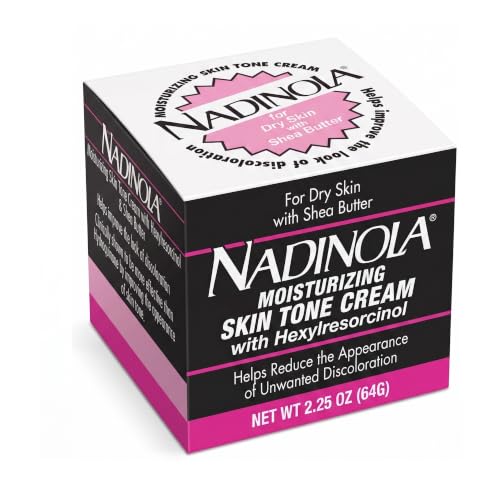
Nadinola Skin Discoloration Cream for Dry Skin is the only Nadinola option expressly identified for dry skin and skin discoloration. That makes it a better fit for someone prioritizing dry-skin positioning than for a buyer comparing creams by a specific ingredient callout. As with any new topical cream, patch test a small area before broader use.
Bottom line: Choose this for its dry-skin focus, after confirming the container size.
How to Choose a Nadinola Fade Cream
Start with the skin-type label or ingredient distinction that matters to your routine, rather than assuming every fade cream has the same formula. Among these options, the oily skin cream calls out vitamin C, the moisturizing skin tone cream names niacinamide, and another moisturizing cream names vitamin E; each also includes hexylresorcinol in its name or features. Ingredient callouts help compare labels, but they do not predict whether your skin will tolerate a product or how quickly it may affect the look of discoloration.
For any new facial or body cream, patch test on a small area and wait 24 to 48 hours before broader use. Avoid applying it to broken or irritated skin, and stop if you develop persistent burning or a rash. If you use a discoloration product on exposed skin, daily broad-spectrum SPF 30 or higher helps limit UV-related darkening; reapply every two hours outdoors.
Oily Skin and Dry-Skin Formulas
Choose by the skin-type label only if it matches where and how you plan to use the cream. Nadinola Fade Cream for Oily Skin is labeled for oily skin, while Nadinola Skin Discoloration Cream for Dry Skin is labeled for dry skin; the other two names do not specify a skin type. Oily skin can still become dehydrated, and dry skin can react to fragrance or other ingredients, so a label is a starting point rather than a guarantee of fit.
Apply a new cream to clean, dry skin and avoid combining several new products at once; introducing one new product at a time makes irritation easier to trace. If a formula stings persistently, wash it off and discontinue use. Ask a dermatologist about changing or spreading discoloration, or if irritation continues, rather than layering more products over the area.
How to Read the Ingredient Callouts
Compare the named ingredients as label distinctions, not as proof that one formula will fade discoloration faster. Hexylresorcinol appears across the Nadinola formulas in this group; niacinamide is named with Nadinola Moisturizing Skin Tone Cream, vitamin C with Nadinola Fade Cream for Oily Skin, and vitamin E with Nadinola Moisturizing Cream with Vitamin E. Nadinola Skin Discoloration Cream for Dry Skin is identified by its dry-skin and discoloration focus, without a featured ingredient callout in its name or features.
Cosmetic ingredient lists are generally ordered by concentration, but ingredients at 1% or less may appear in any order after those above 1%. That means a short feature phrase does not reveal the complete formula or ingredient concentration. If you have a known sensitivity, compare the full package ingredient list and patch test before regular use.
Package Size and Routine Safety
Check the container amount as well as the product name when comparing sizes. Nadinola Skin Discoloration Cream for Dry Skin has conflicting size values—1 ounce and 2.25 ounces—so confirm the package amount before deciding; the other three are each identified as 2.25 ounces.
Keep topical creams away from eyes, lips, and mucous membranes unless the package specifically directs otherwise, and wash hands after application. Do not use a new cream on irritated or broken skin. If you use other active skin-care products, introduce them separately instead of starting multiple new formulas at once.
Frequently Asked Questions
How long can a fade cream take to show a change?
Visible changes in uneven pigmentation commonly take several weeks or longer, and sun exposure can make dark marks persist or return. Use sun protection consistently and stop a product that causes ongoing irritation.
Should I use sunscreen with a fade cream?
Yes, use broad-spectrum SPF 30 or higher on exposed skin each day. Reapply about every two hours during outdoor exposure, because UV exposure can deepen the appearance of dark spots.
How should I patch test a new skin cream?
Apply a small amount to an inconspicuous area and watch it for 24 to 48 hours before wider use. Do not proceed if you develop persistent burning, swelling, or a rash.
Can I use a fade cream around my eyes?
Avoid the eye area unless the package specifically says the formula is suitable there. Skin around the eyes is delicate, and accidental contact should be rinsed promptly with clean water.
What should I check when buying Nadinola cream?
Check the skin-type wording, ingredient callouts, and container amount on the package. For Nadinola Skin Discoloration Cream for Dry Skin, confirm whether the container is 1 ounce or 2.25 ounces because the size values differ.