
Light to Use for Crochet: 5 Neck Lights Compared

Glocusent 5-Color Neck Light suits most crocheters because its five brightness levels span 4 to 120 lumens, with five color temperatures for different tasks. Choose a different style if you want a 30-minute auto-off timer or a focused spotlight for detail work; neck lights leave both hands free while you hold yarn and hook.
We earn a commission if you buy through links on this page. As an Amazon Associate I earn from qualifying purchases. Products are compared on manufacturer specifications, not hands-on testing.
- Best overall: Glocusent 5-Color Neck Light – Five color temperatures and brightness from 4 to 120 lumens give you the broadest adjustment range.
- Best for a timer: Glocusent Slim Neck Light – A 30-minute auto-off timer can switch the light off if you nod off while crocheting.
- Best for detail work: Glocusent Bendable Neck Light – The two beam shapes include a circular spotlight for concentrated craft tasks.
| Product | Best for | Light modes | Brightness control | Weight | Shop |
|---|---|---|---|---|---|
| Glocusent 5-Color Neck Light | Adjustable lighting | 5 color temperatures | 5 levels, 4–120 lm | 0.27 lb | Check Price on Amazon |
| Glocusent Slim Neck Light | Timed sessions | 3 color temperatures | 3 brightness levels | 0.28 lb | Check Price on Amazon |
| Glocusent Bendable Neck Light | Beam choice | 5 color modes | 5 levels, stepless dimming | 0.35 lb | Check Price on Amazon |
| EastPin Rechargeable Neck Light | Two beam shapes | 3 colors | Dimmable | — | Check Price on Amazon |
| Vekkia Rechargeable Neck Light | Simple controls | — | 3 brightness levels | 0.24 lb | Check Price on Amazon |
Lights to Use for Crochet
Compare the light settings and controls that affect how well each neck light suits your crochet setup.
Glocusent 5-Color Neck Light

Glocusent 5-Color Neck Light offers the widest range of color and brightness controls here: five color temperatures from 1800K to 6000K and five brightness levels from 4 to 120 lumens. Its dual-side LEDs are described by the maker as flicker-free, with a Ra above 85 for color rendering. That can help when you need to distinguish yarn shades or see small stitches. The neck-worn design keeps your hands free for hook and yarn. The limitation is that the maker does not give a timer; choose another option if automatic shutoff matters to you.
Bottom line: Choose this if you want the most stated control over brightness and color temperature.
Glocusent Slim Neck Light

Glocusent Slim Neck Light is the crochet option with a 30-minute auto-off timer, which is useful if you tend to doze during evening crafting. It has three color temperatures—1800K, 3200K and 6000K—and three brightness levels, so you can switch between a warmer setting and a cooler one for close detail. The narrowed neck section is 1.2 cm thick, according to the maker. Its limitation is fewer stated color and brightness choices than Glocusent 5-Color Neck Light; pick it for the timer rather than the broadest adjustment range.
Bottom line: Choose this if an automatic shutoff is more useful than extra lighting settings.
Glocusent Bendable Neck Light

Glocusent Bendable Neck Light distinguishes itself with two beam shapes: a rectangular floodlight for a wider work area and a circular spotlight for concentrated tasks such as examining a stitch. It also has five color modes and five brightness levels, with stepless adjustment by holding the buttons. That combination suits crocheters who move between broad work and small details. The maker describes the light as having 19 LEDs. Its limitation is the heaviest weight among these models, at about 0.35 lb, which may matter during long sessions.
Bottom line: Choose this if switching between a wide beam and a focused spot is important.
EastPin Rechargeable Neck Light
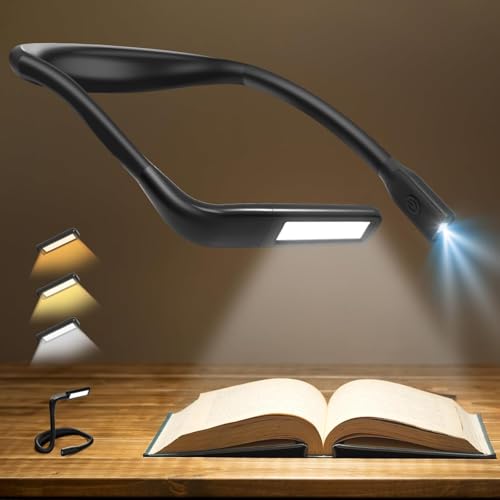
EastPin Rechargeable Neck Light pairs a rectangular floodlight with a round spotlight, giving you both broad illumination and a more concentrated beam. Its name specifies three colors and dimming, and the neck-worn format leaves your hands available for crocheting. That makes it a straightforward option if you want to aim light at your lap rather than hold a separate lamp.
Bottom line: Choose this if you want both a broad beam and a round spotlight.
Vekkia Rechargeable Neck Light

Vekkia Rechargeable Neck Light keeps the controls simple with three brightness levels and flexible soft silicone arms that can be angled toward your work. The adjustable neck and head help direct light at the crochet piece rather than the room, and its weight is about 0.24 lb. The maker describes its LED light as soft and flicker-free. This suits someone who prefers a bendable lamp with a few clear settings.
Bottom line: Choose this if adjustable arms and three simple brightness levels fit your routine.
How to Choose a Crochet Light
Choose a crochet light by matching its beam and controls to your stitches, yarn colors and work position. A broad beam helps illuminate a larger project, while a focused beam can make a small stitch easier to inspect; adjustable arms or a neck light let you aim the beam as the work moves. Color rendering matters when selecting or matching yarn: the CRI scale runs from 0 to 100, and a higher rating generally indicates colors appear closer to their appearance under a reference light. For small, dark stitches, begin with a brighter setting and reduce it if glare distracts you.
A practical rule is to choose a light with multiple brightness levels if you alternate between dark yarn and light yarn: darker materials often need more illumination to see stitch definition. Use a warm setting for relaxed evening work and a cooler setting when you want a crisper view of details.
Beam Placement for Crochet
Position the light so the beam reaches the stitches from in front of your shoulder, rather than directly behind your hands. Hands, hook and yarn can cast shadows across the working loop, and moving the beam a few inches to one side often clears the view. Neck lights are useful because they move with your upper body, but the beam can shift when you lean or turn. Angle both lamp heads separately when available, keeping one light on the stitches and the other on the next row.
Bright light aimed straight into your eyes can cause glare, so tilt the head toward the work surface instead. If your project sits in your lap, adjust the light after changing posture; the correct aim while sitting upright may miss the stitches when you recline.
Light Settings for Common Crochet Tasks
Use the lighting need that matches your project, then adjust the lamp angle before raising brightness. Color temperature is measured in kelvins: lower values look warmer, while higher values look cooler. Lumens describe light output, not how much light reaches a particular stitch; distance and beam width also affect the result. These distinctions help explain why a lamp with a spotlight can feel brighter on one small area than a wider beam with the same output.
The table is a starting point, not a fixed prescription; choose the least distracting setting that keeps the stitch edges visible.
| Task | Useful setting | Reason |
|---|---|---|
| Large project | Wide beam | Covers more of the work at once |
| Small or intricate stitch | Focused beam | Concentrates light on a detail |
| Yarn color matching | Higher color rendering | Helps colors appear more accurately |
| Evening crochet | Lower brightness, aimed down | Limits distracting glare |
Neck Light Comfort and Care
For extended crochet sessions, compare weight and how the arms rest on your neck; a small difference can matter when a light is worn for a long stretch. Flexible arms should hold their angle without pressing the lamp heads against your shoulders. Rechargeable models also need a charging routine: recharge before a long project session, and store the light dry rather than leaving it near drinks or damp yarn.
Keep the LEDs aimed at the project, not directly into another person’s eyes. If you use a neck light while walking or handling hot tools, take it off first; a moving beam can distract you, and a cord-free design does not remove the ordinary risks of trip hazards or hot surfaces.
Frequently Asked Questions
What color temperature is good for crocheting?
A warm 1800K to 3200K setting creates a warmer-looking beam, while 4500K to 6000K looks cooler and crisper. Try the cooler end for small stitches, then use the setting that shows yarn color clearly without glare.
How many lumens do I need for crochet?
There is no single lumen output that suits every crochet setup because distance and beam width change how bright the stitches appear. Start at a low setting and increase it until loops are easy to distinguish; a 4-to-120-lumen range offers room to adjust.
Is a neck light or desk lamp better for crocheting?
A neck light follows your posture and leaves both hands free, while a desk lamp can stay fixed over a work surface. Choose a neck light when you move the project in your lap, and a desk lamp when the project remains in one position.
How do I reduce shadows while crocheting?
Aim the light from slightly in front of one shoulder and off to the side of your hands. If the hook or fingers still block the stitch, shift the beam a few inches rather than pointing it directly into your eyes.
Can a crochet light help me match yarn colors?
A light with a higher color-rendering rating can make yarn colors appear closer to their appearance under a reference light. Compare colors under the same light source, since changing from a warm to a cool setting can alter how shades look.