
Best Shoes to Wear With a Broken Toe: 3 Options Compared

A closed-toe post-op shoe is the most versatile choice for a broken toe because its roomy toe box protects the foot and can accommodate dressings. Choose an open shoe only if your foot is casted, and confirm the recommended footwear with your clinician because fracture location and treatment affect what is safe to wear.
We earn a commission if you buy through links on this page. As an Amazon Associate I earn from qualifying purchases. Products are compared on manufacturer specifications, not hands-on testing.
- Best overall: BraceAbility Closed-Toe Walking Shoe – The closed toe and square toe box offer coverage with room for swelling, socks, or a cast.
- Best for rocker-sole walking: ProCare Squared Toe Post-Op Shoe – Its rigid rocker sole and skid-resistant outsole are made to support a smoother walking gait.
- Best for casted feet: Open-Toe Post-Op Walking Shoe – The open-toe and heel allow airflow, and the maker specifies use only for a foot with a cast.
| Product | Best for | Toe design | Sole feature | Size shown | Shop |
|---|---|---|---|---|---|
| BraceAbility Closed-Toe Walking Shoe | Roomy toe coverage | Closed square toe | — | Medium; women’s 7–9.5 / men’s 6–8.5 | Check Price on Amazon |
| ProCare Squared Toe Post-Op Shoe | Rocker-sole gait | Squared toe | Rigid rocker sole; skid-resistant outsole | Medium; men’s 7.5–9 / women’s 8.5–10 | Check Price on Amazon |
| Open-Toe Post-Op Walking Shoe | Casted-foot airflow | Open toe and heel | Curved sole; non-slip outsole | Large; men’s 11–13 | Check Price on Amazon |
Shoes to Wear With a Broken Toe
Match toe coverage and sole design to your treatment plan, dressings, and the fit of your injured foot.
BraceAbility Closed-Toe Walking Shoe

The closed square toe distinguishes this walking shoe, adding coverage while leaving room for swelling, socks, or a cast. The shoe fits either foot and has adjustable sizing, so it can be used on the injured side. Its 10.75-inch length and 4.25-inch width are listed for the medium size, which helps compare the shoe with the wearer’s foot and dressing bulk. The tradeoff is that the closed design provides less airflow than an open shoe; consider that if heat or ventilation is a concern, and confirm the fit using the maker’s size chart.
Bottom line: Choose this if you want a closed toe with room for swelling or dressings.
ProCare Squared Toe Post-Op Shoe
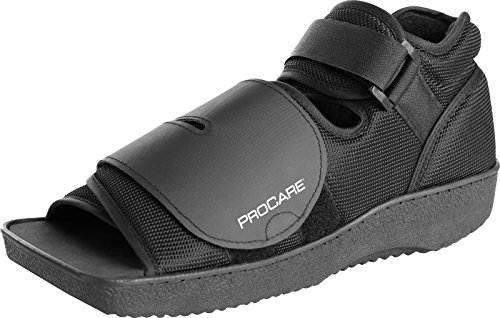
The rigid rocker sole sets this post-op shoe apart, while a skid-resistant outsole is intended to improve traction. Its square toe gives extra room and the shoe is designed to keep dressings clean and toes dry after injury or surgery. Medium fits men’s sizes 7.5–9 and women’s 8.5–10. The product features describe stable construction intended to limit unwanted foot movement, but the shoe is not a substitute for a clinician’s weight-bearing instructions. Its toe is closed, so buyers needing airflow around the toes may prefer an open design if their treatment permits it.
Bottom line: Pick this if a rocker sole is a priority and the size range fits.
Open-Toe Post-Op Walking Shoe

The open-toe and heel make this option distinct from the closed post-op shoes, allowing more airflow around a casted foot. The maker says this shoe is only for feet that have been cast, so it is a partial fit for broken-toe recovery rather than a general choice for an uncased fracture. It has adjustable straps, a curved sole, and a non-slip synthetic outsole; the shown size is large for men’s 11–13. Because the design leaves the toes exposed, it provides less direct toe coverage than a closed shoe and may not suit uncovered dressings.
Bottom line: Choose this only when your foot is casted and an open design is appropriate.
How to choose a broken-toe shoe
Choose a post-op shoe that fits your treatment plan and leaves room for swelling without letting the foot slide. A rigid or rocker sole can limit bending through the forefoot, while a roomy square toe reduces pressure on a tender toe. For a fracture that requires immobilization or restricted weight bearing, a walking shoe alone may not provide enough support; use the device and activity limits your clinician recommends. Measure both feet while wearing any dressing or sock you expect to use, since swelling can change fit during recovery. A shoe that is too short presses the toe, while one that is too loose can shift during a step.
Closed-toe and open-toe post-op shoes
Closed-toe shoes provide more coverage for toes and dressings; open-toe designs allow more airflow but leave the toes exposed. Use this comparison to match the design to cast status and need for coverage.
| Need | Design to consider | Tradeoff |
|---|---|---|
| Covered toes or dressing | Closed square toe | Less airflow |
| Airflow around a cast | Open-toe and heel | Less toe coverage |
A cast or bulky dressing can change which style fits, and an open shoe should not be treated as equivalent protection to a closed toe. Check that straps secure the shoe without compressing the injured area. If a toe becomes more painful, numb, unusually pale, or blue, stop walking and seek medical advice promptly.
Fit and sizing for an injured foot
Allow enough space for the injured foot and dressing, but keep the heel from lifting or sliding. Post-op shoes use brand-specific size charts rather than one universal medical-shoe sizing standard, so compare the chart with the foot wearing its usual recovery dressing. Measure both foot length and width; toe-box shape matters as much as the shoe’s nominal size when swelling is present. A size that fits the uninjured foot may not fit the injured foot. If the shoe cannot close securely without pressure on the toe, do not force the fit; contact the clinician or supplier about an appropriate size or device.
Walking safely in a post-op shoe
Use a post-op shoe only for the amount of walking and weight bearing approved for the injury. Rocker soles can make the transition through a step smoother, but they do not make every fracture safe to load. Keep steps short on uneven ground, use a handrail on stairs, and avoid wet or loose surfaces even when an outsole is described as skid-resistant. A rigid shoe can also make the other leg feel lower; a stable shoe on the opposite foot may reduce unevenness, but do not add lifts without clinician guidance. Follow the prescribed schedule for wearing the shoe, and ask before removing it for sleep or bathing.
Frequently Asked Questions
Can I wear a regular sneaker with a broken toe?
A roomy sneaker may be suitable for some minor fractures, but a stiff-soled post-op shoe is often used to reduce toe bending. Avoid any shoe that presses on the toe, and ask your clinician whether your fracture needs immobilization.
Should a broken toe be kept covered?
A closed toe gives more coverage for the toe and dressings, while an open shoe leaves the toe exposed. Keep dressings clean and dry, and follow your clinician’s instructions for wound or cast care.
How much room should a broken-toe shoe have?
The toe box should leave space around the injured toe and any dressing without letting the foot slide forward. Recheck fit if swelling changes, and do not use a shoe that compresses the toe.
Can I walk on a broken toe in a post-op shoe?
Only walk with the weight-bearing level your clinician allows, since fractures differ in stability and location. A rocker or rigid sole does not by itself mean full weight bearing is safe.
Can an open post-op shoe be used without a cast?
The open shoe described here is intended only for a casted foot. Because an open design exposes the toes, confirm with a clinician before using one for an uncased broken toe.