
Galphi M2 Dash Cam: Specs and Alternatives Compared

The Galphi M2 is the best fit for drivers who want a screen-free, front-only dash cam with 4K recording and an included memory card. Choose another model if you need rear- or cabin-camera coverage, or want a built-in display.
We earn a commission if you buy through links on this page. As an Amazon Associate I earn from qualifying purchases. Products are compared on manufacturer specifications, not hands-on testing.
- Best overall: Galphi M2 4K Front Dash Cam – Combines 4K front recording, a screen-free design, and a 32GB card in the box.
- Best for cabin coverage: 70mai T800E 3-Channel 4K – Records 4K front, 1080P interior, and 1080P rear video.
- Best for rear coverage: 70mai A810 Lite Dual Cam – Pairs 4K front video with 1080P rear recording.
| Product | Best for | Camera coverage | Front resolution | Memory card | Shop |
|---|---|---|---|---|---|
| Galphi M2 4K Front Dash Cam | Front-only recording | Front only | 4K | 32GB included | Check Price on Amazon |
| 70mai T800E 3-Channel 4K | Cabin and rear | Front, interior, rear | 4K | 64GB included | Check Price on Amazon |
| 70mai A810 Lite Dual Cam | Front and rear | Front, rear | 4K | 64GB included | Check Price on Amazon |
| 2.5K 3-Channel Dash Cam | Cabin recording | Front, interior, rear | 2.5K | Not included | Check Price on Amazon |
| Veement V300 1296P Front Dash Cam | Compact front view | Front only | 1296P | Not included | Check Price on Amazon |
Galphi M2 Dash Cam and Alternatives
Compare the camera coverage, front resolution, and included storage to match the setup to your car.
Galphi M2 4K Front Dash Cam

The Galphi M2 is the screen-free, front-only option in this group, and its 32GB memory card lets a driver start recording without sourcing a card separately. The camera records in 4K with a 160-degree lens, and phone-app control replaces an onboard screen. Galphi says it supports 24-hour parking monitoring, night vision, loop recording, and a G-sensor. Choose it when a compact front camera is the priority; it does not provide the rear or cabin views available from the multi-camera alternatives.
Bottom line: Pick this for a screen-free 4K front camera with a card included.
70mai T800E 3-Channel 4K

The 70mai T800E adds interior and rear views to 4K front recording, making it the broadest coverage choice here for rideshare or family driving. Its three channels record 4K front and 1080P each for the cabin and rear, and a 64GB card is included. The feature set also names GPS, Wi-Fi 6, voice control, and a parking monitor. The tradeoff is more camera coverage than a front-only setup needs; choose it when recording inside the car and behind it matters.
Bottom line: Choose this when interior and rear footage matter as much as the road ahead.
70mai A810 Lite Dual Cam

The 70mai A810 Lite is a dual-camera alternative for drivers who need rear coverage but not an interior camera. Its front channel records 4K and its rear channel records 1080P, with a 64GB card included. The product features also specify 5GHz Wi-Fi 6, GPS tracking, voice control, HDR night vision, and emergency lock.
Bottom line: Pick this if you want a rear camera without adding cabin recording.
2.5K 3-Channel Dash Cam
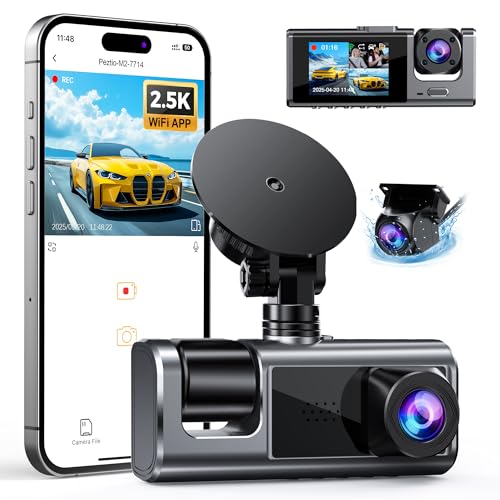
The three-channel system records the cabin as well as front and rear views, but it steps down to 2.5K front resolution rather than the 4K offered by the Galphi and two 70mai models. It includes a 2-inch IPS screen and Wi-Fi app control, while the memory card must be purchased separately. An infrared cabin camera is useful when interior recording is the deciding need. This is a less direct match for someone seeking a screen-free, front-only camera, and card cost and compatibility should be checked before ordering.
Bottom line: Choose this for three-angle coverage and a built-in screen.
Veement V300 1296P Front Dash Cam

The Veement V300 is another front-only camera, but it records at 1296P instead of 4K and uses a wider 170-degree lens. It has Wi-Fi app control, night vision, loop recording, and a G-sensor; storage is sold separately, with capacity support up to 256GB. Unlike the Galphi, the V300 requires hardwiring for its setup, an important installation distinction. It suits a driver prioritizing a small hidden design and wide lens, but not someone who wants an included card or higher front resolution.
Bottom line: Choose this for a hidden front camera and a 170-degree lens.
How to choose a Galphi M2 dash cam setup
Choose by camera coverage first: a front-only camera records the road, while a dual-channel system adds rear footage and a three-channel system also records the cabin. That distinction is more important than comparing resolution alone when a collision behind the vehicle or activity inside it is the concern. For rideshare or family use where interior footage matters, select a three-channel model; for front-and-rear coverage without cabin recording, select a dual-channel model. A screen-free camera keeps the windshield setup simpler, while a built-in display supports direct viewing. The Galphi is the only named screen-free front-only option among these products.
Dash cam resolution and lens coverage
Resolution and lens angle describe different things: resolution affects image detail, while lens angle determines how much of the scene enters the frame. The Galphi pairs 4K front recording with a 160-degree lens; the Veement combines 1296P with 170 degrees. A wider view can capture more of the surroundings, but it does not replace higher pixel resolution. Match the camera channels to the view you need, then compare front resolution and lens angle within that group. For rear or cabin footage, confirm that each camera channel is part of the package and that the installation position can capture the intended area.
Memory cards and dash cam recording
Dash cams use loop recording to overwrite older footage as storage fills, while a G-sensor can lock selected clips after a detected impact. The Galphi includes a 32GB card, the 70mai models include 64GB cards, and the other two products call for a separate card. The Galphi recommends a Class 10, U3, V30-or-higher card for expanded storage. Capacity alone does not establish recording endurance: resolution, number of active channels, and event-locked files affect how much footage remains available. If choosing another card, match its speed class to the camera maker’s recommendation and verify compatibility before ordering.
Parking mode and installation limits
Parking monitoring needs power while the vehicle is parked, so check the installation method and vehicle power setup before relying on it. The Galphi and 70mai models mention parking monitoring or mode, while the Veement specifies hardwiring as required. A hardwire kit connects to the vehicle’s electrical system and may need a low-voltage cutoff to protect starting power; use a vehicle-compatible kit and installation guidance. Parking-mode behavior differs by camera, so confirm whether the desired recording mode is supported and how the camera receives power with the ignition off. Never route cables where they can interfere with airbags, pedals, or the driver’s view.
Frequently Asked Questions
How much video fits on a 32GB dash cam card?
A 32GB card stores less footage as resolution and the number of recording channels increase. Loop recording replaces older unlocked files when storage fills, so lock important clips promptly and use the card speed class recommended for the camera.
Does a dash cam record when the car is off?
Parking recording requires a camera with parking mode and a power source after the ignition is off. Hardwiring is one common approach; a low-voltage cutoff can help protect the vehicle battery from excessive discharge.
What does a dash cam G-sensor do?
A G-sensor detects sudden movement such as an impact and can mark or lock a clip against loop-recording overwrite. Sensitivity settings matter because a setting that is too high may lock ordinary bumps and consume storage.
Where should a front dash cam be mounted?
Mount a front camera high on the windshield near the rearview mirror while keeping the driver’s sightline clear. Leave at least 2 inches from the edge of the windshield’s wiper sweep so the lens sees through the cleaned area.
Is 4K worth choosing over a wider dash cam lens?
4K provides more image pixels than 1296P, while a wider lens captures more of the scene; the two specifications solve different needs. Choose 4K when fine road detail is the priority, and favor the wider angle when capturing more lateral coverage matters.