
Best Red Light Therapy for Gums: 5 Options Compared

KTS Oral Care Light with V1 Controller suits the most people because its 18 LEDs include a red-only mode and four timer choices. Choose another option if you want a specified wavelength, near-infrared, or blue-light whitening mode; none of these devices replaces brushing, interdental cleaning, or care from a dental professional.
We earn a commission if you buy through links on this page. As an Amazon Associate I earn from qualifying purchases. Products are compared on manufacturer specifications, not hands-on testing.
- Best overall: KTS Oral Care Light with V1 Controller – Its red-only mode and four timer options allow sessions without blue light.
- Best for near-infrared: Gum Revive & Restore 48-Chip Light – It combines 630nm red and 850nm near-infrared in one mode.
- Best for specified wavelengths: Starlite Smile Gum Light – It specifies 635nm red and 455nm blue, though it lacks a red-only setting.
| Product | Best for | Light modes | LEDs or chips | Timer | Shop |
|---|---|---|---|---|---|
| KTS Oral Care Light with V1 Controller | Red-only sessions | Red; red and blue | 18 LEDs | 5, 10, 15, 30 min | Check Price on Amazon |
| Gum Revive & Restore 48-Chip Light | Near-infrared mode | Red + NIR; blue; combined | 48 chips | 7 min | Check Price on Amazon |
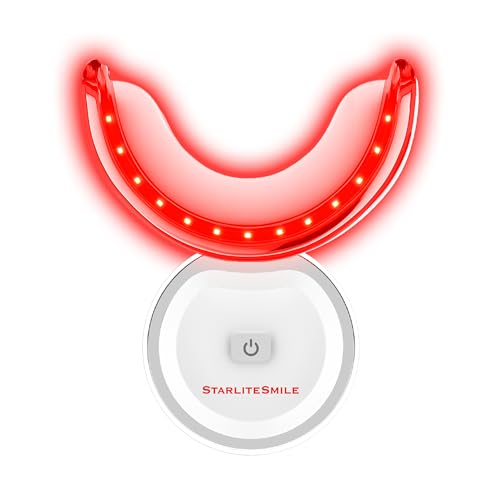
| Starlite Smile Gum Light | Wavelength specifications | Red + blue; blue | 32 LEDs | — | Check Price on Amazon |
| Starlite Smile InfraLuma 850nm Gum Light | Removable tray | 850nm + 635nm; blue | — | — | Check Price on Amazon |
| 18-LED Red & Blue Oral Care Light | Basic dual-light use | Red + blue | 18 LEDs | — | Check Price on Amazon |
Red Light Therapy for Gums
Compare the available light settings and controls, then choose a device that fits your routine without treating it as a substitute for dental care.
KTS Oral Care Light with V1 Controller

The red-only setting sets this device apart for buyers who do not want blue light in every session. The KTS has 18 LEDs, a detachable mouthpiece for cleaning, and a controller with a display and four timer choices: 5, 10, 15, or 30 minutes. The maker recommends beginning with a 5-minute session and increasing gradually. That range gives routine flexibility, but the specifications do not give a light wavelength or a clinical dose, so it is not the right pick if wavelength is your deciding specification. Treat it as an adjunct to routine oral hygiene, not gum treatment.
Bottom line: Choose this if a red-only setting and selectable session length matter most.
Gum Revive & Restore 48-Chip Light
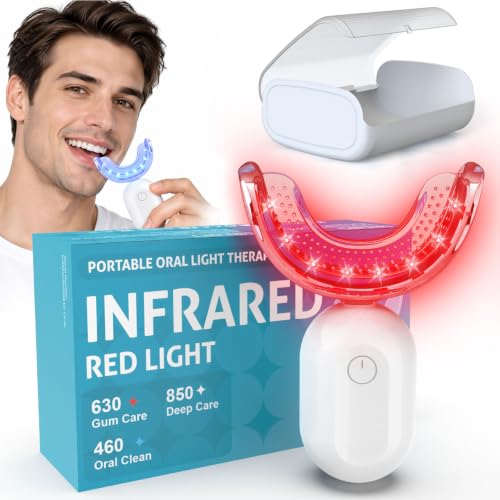
The 850nm near-infrared mode differentiates this device from options that list only red and blue light. Its three modes pair 630nm red with 850nm near-infrared, use 460nm blue, or combine the lights; the blue mode is intended for use with compatible whitening gels or strips, which are not included. The maker says 16 triple-chip LEDs provide 48 chips across the arch, and gives a 7-minute timer. Choose it if those specific wavelengths and modes suit your routine. The added mode complexity may be unnecessary if you only want a straightforward red-light session, and light therapy should not delay care for bleeding or painful gums.
Bottom line: Choose this if you specifically want a 850nm near-infrared mode.
Starlite Smile Gum Light

The specified wavelengths are the main distinction here: the device has 635nm red and 455nm blue light across 32 LEDs. It offers a red-and-blue combination and a blue setting, but the maker explicitly says there is no red-only setting. That makes it a less suitable match for anyone who wants to use red light without blue. The universal-size mouthpiece is described as comfortable, but fit can still vary from person to person. Choose this model if its wavelengths and simple two-setting setup match your preference; do not interpret the maker’s oral-wellness language as proof that it treats gum disease.
Bottom line: Choose this if stated wavelengths matter more than having a red-only mode.
Starlite Smile InfraLuma 850nm Gum Light
The InfraLuma pairs 850nm near-infrared with 635nm red and separates those lights from its blue-light setting. That configuration makes it an option for buyers who want an infrared-and-red mode plus a distinct blue mode for use with whitening gel or strips sold separately. A removable silicone tray is included for cleaning. The blue-light feature is an accessory to a whitening routine, not a substitute for dental advice or treatment for gum problems.
Bottom line: Choose this if a removable tray and separate infrared/red and blue modes appeal.
18-LED Red & Blue Oral Care Light

The 18-LED arrangement makes this a simpler dual-light option for buyers who do not need multiple modes or a wavelength. Its silicone mouthpiece and portable format are intended for personal oral care, while the maker presents red and blue light as support for gum care and a cleaner oral environment. Bleeding gums can have causes that a light device does not address; persistent bleeding, swelling, or pain calls for a dental evaluation rather than longer light sessions.
Bottom line: Choose this if you want a basic red-and-blue setup and do not need specified wavelengths.
How to choose a gum light device
Choose by the feature that changes how you would use the device: an independent red mode, a specified wavelength, or an added near-infrared mode. Photobiomodulation uses red or near-infrared light, but home mouthpieces do not share a single established session dose or a proven standard for treating gum disease. A wavelength printed on a product is a technical specification, not evidence that the device treats a condition. For a straightforward routine, prefer simple controls and a mouthpiece you can clean; choose added modes only if you will use them. If you have persistent bleeding, pain, swelling, or loose teeth, arrange dental care rather than relying on light. Keep brushing with fluoride toothpaste and cleaning between teeth as the foundation of gum care.
What red, blue, and near-infrared modes mean
Red and near-infrared are different bands of light, and neither should be assumed to produce the same result at the gumline. These products give examples from 630nm red through 850nm near-infrared; blue settings are presented for whitening-related routines, often alongside a compatible gel or strip. Light alone does not remove plaque or tartar, and gum disease can require professional diagnosis and treatment. The table distinguishes listed configurations from the practical reason a buyer might select them; it is not a ranking of clinical effectiveness. Follow the device’s own session directions, avoid looking directly into illuminated LEDs, and stop if use causes discomfort.
| Configuration | What to consider | Choose when |
|---|---|---|
| Red-only | Avoids blue light during that session | You want a red-only option |
| Red + near-infrared | Uses two different wavelength bands | You specifically want an NIR mode |
| Red + blue or blue mode | May be marketed for oral care or whitening routines | You want the included blue-light function |
Fit, cleaning, and safe use
A mouthpiece needs to sit comfortably across the teeth and gums without forcing the jaw; stop if it pinches, causes pain, or cannot be positioned steadily. Detachable or removable trays can make cleaning easier, but use only the cleaning method allowed for that material and keep electrical components away from water unless the maker expressly permits washing. Do not share a mouthpiece without following its sanitation instructions. LED light devices are not a replacement for a dental exam: gum bleeding that continues, swelling, pus, worsening pain, or a loose tooth warrants prompt professional advice. Keep sessions within the product’s timer choices rather than assuming longer exposure is better, and do not use whitening agents except as directed on their packaging.
When to seek dental care for gum symptoms
Bleeding during brushing or flossing is a reason to review technique and arrange a dental assessment if it persists; it is not a symptom to treat by escalating light exposure. Plaque along the gumline can contribute to gingivitis, while deeper periodontal problems may need professional cleaning and ongoing care that a home device cannot provide. Brush gently twice daily with fluoride toothpaste and clean between teeth daily with floss or an interdental cleaner that fits. A dental professional can check whether bleeding, recession, or tenderness reflects irritation, gum disease, medication effects, or another cause. Seek urgent care for facial swelling, fever with oral pain, or difficulty swallowing or breathing.
Frequently Asked Questions
Can red light therapy cure gum disease?
No home red-light mouthpiece should be relied on to cure gum disease. Plaque and tartar control, dental diagnosis, and professional treatment when needed remain central; persistent bleeding or swelling merits a dental appointment.
How long should a gum light session last?
Use only a session duration allowed by the specific device. The options here include timers of 5 to 30 minutes on one model and 7 minutes on another, but those settings do not establish a universal effective dose.
Can I use a gum light every day?
There is no single daily schedule established for all home gum light devices. Stay within the maker’s instructions and ask a dentist before adding one if you have ongoing symptoms, recent oral surgery, or a condition requiring care.
Should I use blue light with red light?
Blue light is a separate mode or combination on some devices, not a required part of a red-light session. Choose a device with red-only operation if you want to avoid blue light, and use whitening gels or strips only as their packaging directs.
When should bleeding gums be checked by a dentist?
Arrange a dental evaluation when bleeding persists despite gentle brushing and daily interdental cleaning, or when it comes with swelling, pain, pus, or loose teeth. Facial swelling, fever with oral pain, or trouble swallowing or breathing needs urgent care.