
O2 Sensor Cleaner Additive: 4 Options Compared

For a fuel additive that specifically targets oxygen sensors, choose EZ PASS Emissions Treatment, 16 fl oz for its full-tank treatment and cleaning uses. Additives may help with deposits, but they cannot repair a failed sensor, damaged wiring, an exhaust leak or a broken catalytic converter.
Choose another option if you want a multipack or a product whose maker calls out gasoline and hybrid engines; match any treatment to your vehicle’s fuel and product-label directions.
We earn a commission if you buy through links on this page. As an Amazon Associate I earn from qualifying purchases. Products are compared on manufacturer specifications, not hands-on testing.
- Best overall: EZ PASS Emissions Treatment, 16 fl oz – Its one-bottle, full-tank use includes oxygen sensors and other emissions-system components.
- Best for a single bottle: MotorPower Care Catalytic Converter Cleaner, 8.45 fl oz – It is an 8.45-fl-oz single bottle and explicitly names O2 sensors among its cleaning targets.
- Best for a multipack: Cataclean Fuel & Exhaust Cleaner, 16 oz, 2-Pack – The package contains two 16-oz bottles, and its cleaning targets include oxygen sensors.
| Product | Best for | Bottle volume | Pack size | Shop |
|---|---|---|---|---|
| EZ PASS Emissions Treatment, 16 fl oz | Full-tank treatment | 16 fl oz | 1 | Check Price on Amazon |
| MotorPower Care Catalytic Converter Cleaner, 8.45 fl oz | Single-bottle option | 8.45 fl oz | 1 | Check Price on Amazon |
| Cataclean Fuel & Exhaust Cleaner, 16 oz, 2-Pack | Two-bottle supply | 16 fl oz | 2 | Check Price on Amazon |
| MotorPower Care Catalytic Converter Cleaner, 2-Pack | Gas and hybrid | 8.45 fl oz | 2 | Check Price on Amazon |
O2 Sensor Cleaner Additives
Compare the cleaning targets and package sizes, then use only a treatment compatible with your vehicle and its fuel.
EZ PASS Emissions Treatment, 16 fl oz

EZ PASS Emissions Treatment, 16 fl oz is the only option here that explicitly describes a one-bottle, full-tank treatment. The maker says it helps clean oxygen sensors, the catalytic converter, combustion chamber and injectors during normal driving, and supports emissions-system efficiency. It is a straightforward fit for someone seeking one bottle rather than a multipack. The maker also says it may assist with certain emissions-related codes, but that does not establish that a sensor or converter is faulty or repaired. A treatment matters less than diagnosis when a warning code returns or the engine has another drivability problem.
Bottom line: Pick this if you want a single full-tank treatment with oxygen sensors among its cleaning targets.
MotorPower Care Catalytic Converter Cleaner, 8.45 fl oz
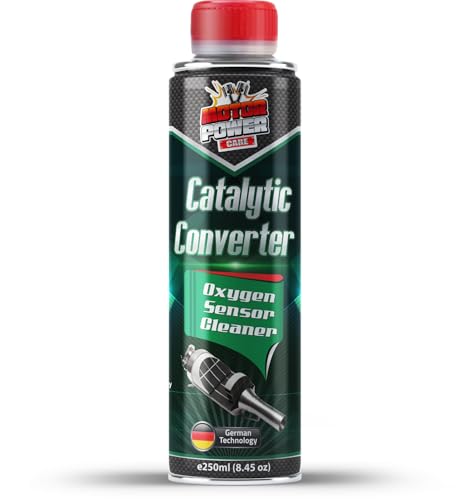
MotorPower Care Catalytic Converter Cleaner, 8.45 fl oz stands out for naming the O2 sensor, EGR valve and exhaust system alongside the catalytic converter. The maker says to add it to 5–15 gallons of gasoline and describes a 40-minute treatment; the use directions are incomplete, so check the bottle for the full procedure before use. Its 8.45-fl-oz bottle suits a buyer who wants one treatment rather than a two-bottle pack. The maker’s emissions and code-clearing claims are not a diagnosis: a failed sensor, wiring fault or exhaust leak needs a separate repair.
Bottom line: Choose this if you want one 8.45-fl-oz bottle that explicitly targets O2 sensors and EGR components.
Cataclean Fuel & Exhaust Cleaner, 16 oz, 2-Pack

Cataclean Fuel & Exhaust Cleaner, 16 oz, 2-Pack is the largest total package among these choices, with two 16-oz bottles. The maker says the gasoline-engine formula cleans catalytic converters, injectors and oxygen sensors, and supports fuel combustion and emissions performance. This suits a buyer who specifically wants two bottles for separate uses, subject to the product directions and vehicle compatibility. The maker’s claims about emissions reduction and check-engine codes should not be read as a guarantee that a fault will clear. A diagnostic code can point to an underlying sensor, exhaust or converter problem that an additive cannot correct.
Bottom line: Pick this if you want two 16-oz bottles and the maker’s gasoline-engine cleaning targets.
MotorPower Care Catalytic Converter Cleaner, 2-Pack

MotorPower Care Catalytic Converter Cleaner, 2-Pack differs from the single-bottle options by packaging two 8.45-fl-oz bottles and naming gasoline and hybrid vehicle compatibility. The maker describes it as an O2 sensor and EGR cleaner as well as a catalytic converter fuel additive. Verify the label’s directions and vehicle compatibility before use. The maker cautions that the cleaner cannot repair a cracked, broken or melted converter.
Bottom line: Choose this if you need a two-bottle option whose maker names gasoline and hybrid vehicles.
How O2 sensor cleaner additives work
Fuel additives can circulate with gasoline and may help loosen some deposits as fuel burns, but they are not a repair for every oxygen-sensor fault. An oxygen sensor measures oxygen in exhaust so the engine computer can adjust fueling; the upstream sensor primarily supports fuel control, while the downstream sensor helps monitor catalytic converter efficiency. Oil or coolant burning, rich fueling, wiring damage and exhaust leaks can cause sensor or emissions problems that a tank additive will not fix. An OBD-II P0420 code indicates catalyst efficiency below threshold, not proof that the oxygen sensor itself has failed. If a code returns after one correctly used treatment, get the fault diagnosed rather than repeating additives indefinitely.
How to choose an O2 sensor fuel additive
Choose by the vehicle and fuel compatibility first, then compare treatment instructions and bottle size. A dose is designed for a fuel volume; more concentrate is not automatically more effective, so do not exceed the label dose or combine treatments unless the directions allow it. The products here range from 8.45 to 16 fl oz per bottle, with one- or two-bottle packages. Those package sizes do not establish a safe dose for your tank. If your vehicle is diesel, confirm that the product specifically permits diesel use; the options compared here describe gasoline or gas-and-hybrid applications. Avoid using an additive as a substitute for checking a persistent warning light.
The table is a quick way to match the symptom or buyer need to the next step.
| Situation | Useful next step |
|---|---|
| Want to try a fuel treatment for possible deposits | Choose a compatible additive and follow its dose |
| P0420 or P0430 returns after treatment | Diagnose the sensor, wiring, exhaust and converter |
| Cracked, broken or melted converter | Arrange mechanical diagnosis and repair |
| Unsure whether the fuel or vehicle is compatible | Check the product label before adding it |
When a check-engine code needs diagnosis
A warning code needs diagnosis when it persists, returns, or appears with poor running; code names alone do not identify a failed part. P0420 and P0430 concern catalyst efficiency, while oxygen-sensor circuit codes can point toward sensor wiring or the circuit itself. A mechanic can read live sensor data and check for exhaust leaks, misfires and wiring faults before replacing parts. Address an active misfire promptly because unburned fuel can overheat and damage a catalytic converter. A cleaner is best treated as a limited deposit-cleaning attempt, not a way to suppress a warning light or avoid investigating a recurring fault.
Frequently Asked Questions
Can an O2 sensor cleaner additive fix a bad sensor?
No fuel additive can repair an electrically failed sensor, damaged wiring or an exhaust leak. If a sensor-related code returns after one correctly dosed treatment, have the fault diagnosed.
Does P0420 mean the oxygen sensor is bad?
No; P0420 indicates catalytic converter efficiency is below the computer’s threshold, not that a particular part has failed. A diagnosis should check sensor readings, exhaust leaks and converter condition.
Can I use an O2 sensor additive in a hybrid?
Only use a product whose label permits the vehicle and fuel type; one option here explicitly names gasoline and hybrid vehicles. Confirm the label dose for the vehicle’s fuel tank before adding it.
How much cleaner should I add to my gas tank?
Use only the dose and fuel volume on the product label, because bottle sizes are not interchangeable dosing instructions. One option’s maker specifies 5–15 gallons of gasoline; verify the complete directions before use.
Can an additive clean a cracked catalytic converter?
No; a fuel additive cannot repair a cracked, broken or melted converter. A physical converter failure calls for mechanical diagnosis, and continued driving with an emissions fault can risk further damage.