
Dry Fruit Electric Dryer: 5 Food Dehydrators Compared

For most home fruit batches, 8-Tray Food Dehydrator, 500W is the strongest fit because its eight trays pair with an adjustable 86–194°F range and a 24-hour timer. Choose 12-Layer Stainless Steel Dehydrator for larger batches, or Magic Mill 5-Tray Dehydrator if compact, stackable trays suit your counter and you do not need the wider temperature range.
An electric food dehydrator moves warm air around food to remove moisture; slice thickness and spacing affect how evenly fruit dries.
We earn a commission if you buy through links on this page. As an Amazon Associate I earn from qualifying purchases. Products are compared on manufacturer specifications, not hands-on testing.
- Best overall: 8-Tray Food Dehydrator, 500W – Eight trays, 86–194°F temperature control and a 24-hour timer suit varied home batches.
- Best for large batches: 12-Layer Stainless Steel Dehydrator – The 12-layer model has 14.8-by-11.2-inch trays and a timer adjustable up to 48 hours.
- Best for compact batches: Magic Mill 5-Tray Dehydrator – Five stackable trays adjust from 0.6 to 1.1 inches between trays for thicker ingredients.
- Best for long runs: Magic Mill Premium 15-Tray Dehydrator – Its 15 XL trays and 48-hour timer accommodate larger batches and extended drying cycles.
| Product | Best for | Trays | Temperature range | Timer | Shop |
|---|---|---|---|---|---|
| 8-Tray Food Dehydrator, 500W | Everyday fruit batches | 8 | 86–194°F | 24 hours | Check Price on Amazon |
| 12-Layer Stainless Steel Dehydrator | Large batch drying | 12 | 86–194°F | 0.5–48 hours | Check Price on Amazon |
| Magic Mill 5-Tray Dehydrator | Adjustable tray spacing | 5 | Up to 167°F | 48 hours | Check Price on Amazon |
| 8-Tray Stainless Steel Food Dehydrator, 650W | Viewing while drying | 8 | 95–167°F | 48 hours | Check Price on Amazon |
| Magic Mill Premium 15-Tray Dehydrator | Extra-large batches | 15 XL | 95–167°F | 48 hours | Check Price on Amazon |
Dry Fruit Electric Dryers
Compare tray capacity and controls to choose a dehydrator that fits your batch size and preferred drying range.
8-Tray Food Dehydrator, 500W

For a home-size batch with a broad temperature range, 8-Tray Food Dehydrator, 500W offers eight stainless steel trays, settings from 86°F to 194°F in 9°F increments, and a 24-hour timer. Its rear fan circulates air across the trays, and the glass door and interior light let you check progress without opening the unit. The maker says the motor runs below 48 dB and includes auto shut-off and overheat protection. This is a practical fit for mixed fruit and other foods. The 24-hour timer is the limitation for anyone planning a longer uninterrupted drying cycle.
Bottom line: Choose it for varied home batches when its 24-hour timer is enough.
12-Layer Stainless Steel Dehydrator

For a larger load, 12-Layer Stainless Steel Dehydrator distinguishes itself with 12 stainless steel trays measuring 14.8 by 11.2 inches and a capacity of up to 1.7 pounds per tray. Its control panel sets temperatures from 86°F to 194°F and drying times from 0.5 to 48 hours, which allows longer cycles than a 24-hour unit. This model is aimed at home or small commercial batches, so it suits someone preparing substantial quantities at once. Its larger size and 30.84-pound weight make it a less convenient choice if counter space or frequent moving matters.
Bottom line: Pick it when batch size matters more than a compact footprint.
Magic Mill 5-Tray Dehydrator
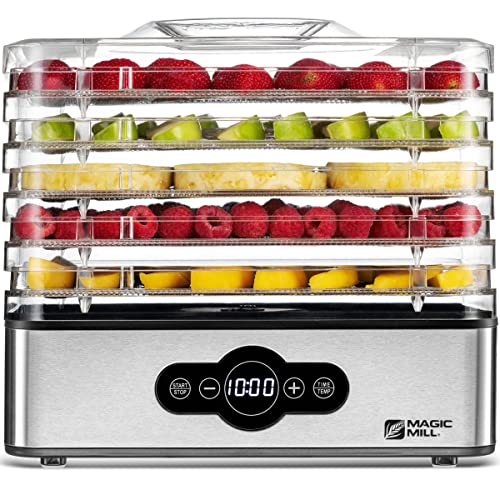
For thick-cut ingredients in a smaller stack, Magic Mill 5-Tray Dehydrator has five adjustable stainless steel trays with spacing that can increase from 0.6 to 1.1 inches. The 240W dehydrator has a digital timer adjustable up to 48 hours and temperature control up to 167°F. That lower ceiling and five-tray capacity make it a different fit from units with higher maximum temperatures or more trays; it may suit modest fruit batches and a counter where tray flexibility matters. Buyers who need the capacity for a large harvest or settings above 167°F should consider another option.
Bottom line: Choose it for modest batches that benefit from adjustable tray spacing.
8-Tray Stainless Steel Food Dehydrator, 650W

For checking a batch without opening the door, 8-Tray Stainless Steel Food Dehydrator, 650W combines eight full-size stainless steel trays with a transparent window and interior light. The 650W unit has a 48-hour digital timer and temperature control from 95°F to 167°F. Its maker says a rear-mounted fan and air-circulation system support even drying without tray rotation. The viewing features distinguish it from models whose features emphasize capacity or adjustable tray spacing. Its maximum setting of 167°F is lower than the 194°F ceiling on some alternatives, a meaningful tradeoff if you want a broader temperature range.
Bottom line: Pick it when interior visibility and a 48-hour timer are priorities.
Magic Mill Premium 15-Tray Dehydrator

For the largest tray count, Magic Mill Premium 15-Tray Dehydrator provides 15 extra-large stainless steel trays, a 48-hour countdown timer and a keep-warm function that the maker says maintains serving temperature for another 24 hours. Temperature control runs from 95°F to 167°F. Its rear-mounted fan is designed for airflow across the trays, and the maker says the unit includes automatic shut-off and overheat protection. The extra capacity suits sizable fruit preparations, but the 21.41-pound unit is less suited to buyers who want a small, easy-to-store dehydrator.
Bottom line: Choose it for large loads and the added keep-warm function.
How to choose a dry fruit electric dryer
Choose tray capacity around the amount you can slice and process at one time; more trays only help if food can be spread in a single layer. For even drying, leave space around pieces and avoid overlapping them, since blocked airflow slows moisture removal. Temperature range and timer length also matter: fruit commonly dries around 135°F, while thickness, water content and the appliance affect the cycle. A 48-hour timer can accommodate longer runs without resetting, but it does not guarantee that every batch needs that long. For home fruit batches, prioritize usable tray area and adjustable controls over wattage alone.
The table compares the models by capacity and controls.
| Need | Useful feature | Models |
|---|---|---|
| Small, thicker cuts | Adjustable tray clearance | Magic Mill 5-Tray Dehydrator |
| More temperature choice | Range up to 194°F | 12-Layer Stainless Steel Dehydrator, 8-Tray Food Dehydrator, 500W |
| Extended timer | Up to 48 hours | 8-Tray Stainless Steel Food Dehydrator, 650W, Magic Mill 5-Tray Dehydrator, 12-Layer Stainless Steel Dehydrator, Magic Mill Premium 15-Tray Dehydrator |
Preparing fruit for even drying
Cut fruit into pieces of similar thickness so they finish at a similar rate; slices around 1/8 to 1/4 inch are a practical starting range for many fruits. Remove pits, stems and damaged sections, then arrange pieces in one layer with a little space between them. Apples and pears can brown after cutting; an ascorbic-acid dip is a common pretreatment. Blot excess surface moisture before loading, because wet surfaces prolong drying. Rotate trays only if the appliance’s airflow pattern or uneven results call for it; don’t assume every dryer needs rotation. Check doneness by cooling a sample first, since warm fruit can seem more pliable than it will be after cooling.
Drying temperatures and safe handling
Fruit commonly dehydrates near 135°F, but the right cycle depends on the fruit, slice thickness and appliance airflow. Dehydrating is not a substitute for safe handling of meat: USDA guidance calls for heating beef to 160°F and poultry to 165°F before drying jerky, because a dehydrator may not reliably bring meat to those temperatures. Keep raw meat separate from fruit and wash hands and utensils after handling it. For fruit, look for a leathery texture with no visible moisture, then cool pieces before storage. Discard food that develops mold or an off odor rather than tasting it. Use the unit’s temperature controls within their range.
Cooling and storing dried fruit
Cool dried fruit completely before packing it; residual warmth can cause condensation in a storage container. Conditioning helps reveal unevenly dried pieces: place cooled fruit loosely in a jar for about 7 to 10 days and shake it daily, watching for moisture inside. If condensation appears, return the fruit to the dehydrator. Once conditioned, store dried fruit in an airtight container in a cool, dark, dry place; refrigeration can extend storage, especially in warm or humid conditions. Check containers periodically for moisture or mold. Use small batches when learning a dehydrator, since different fruit varieties and slice thicknesses can dry at different rates.
Frequently Asked Questions
What temperature should I use for drying fruit?
About 135°F is a common starting point for dehydrating fruit. Thicker slices and juicier fruit can take longer, so check texture after cooling a sample.
How thin should fruit slices be for a dehydrator?
Slices around 1/8 to 1/4 inch thick are a practical starting range for many fruits. Keep pieces similar in thickness and arrange them in one layer so air can circulate.
How can I tell when dehydrated fruit is finished?
Cool a sample before judging it, because warm fruit can feel softer than it will when cool. Properly dried pieces should have no visible moisture; leathery texture is common for many fruits.
Should I soak apples before dehydrating them?
A brief dip in ascorbic-acid solution is commonly used to limit browning after slicing. Blot excess liquid before arranging slices so surface moisture does not slow drying.
How do I store fruit after dehydrating it?
Cool the fruit fully, then condition it in a loosely filled jar for about 7 to 10 days, shaking daily and checking for condensation. After conditioning, keep it airtight in a cool, dark, dry place.
Can a food dehydrator make meat jerky safely?
Yes, but food safety requires heating beef to 160°F and poultry to 165°F before drying jerky; a dehydrator may not reliably reach those temperatures in the meat. Keep raw meat separate from fruit and clean utensils and surfaces after handling.