
Behind Stove Wall Protector: 3 Kitchen Options Compared

For a typical kitchen range, VEVOR 30 x 24-Inch Stainless Panel is the closest match because its 30-by-24-inch stainless panel covers a broad area behind the stove.
We earn a commission if you buy through links on this page. As an Amazon Associate I earn from qualifying purchases. Products are compared on manufacturer specifications, not hands-on testing.
- Best overall: VEVOR 30 x 24-Inch Stainless Panel – A 30-by-24-inch 430 stainless panel with four corner mounting holes.
- Best for brushed finish: Reversible 24 x 30-Inch 304 Panel – A reversible 304 stainless panel with a brushed surface.
| Product | Best for | Material | Size | Mounting | Shop |
|---|---|---|---|---|---|
| VEVOR 30 x 24-Inch Stainless Panel | Broad range coverage | 430 stainless steel | 29.92 x 24.02 in | 4 pre-drilled holes | Check Price on Amazon |
| Reversible 24 x 30-Inch 304 Panel | Brushed finish | 304 stainless steel | 24 x 30 in | 4 pre-drilled holes or adhesive | Check Price on Amazon |
| VENFAN 24 x 30-Inch 430 Panel | Compact metal panel | 430 stainless steel | 29.5 x 24 in | 4 pre-drilled holes | Check Price on Amazon |
Behind stove wall protectors
Match panel coverage and mounting style to the wall area behind your range.
VEVOR 30 x 24-Inch Stainless Panel

VEVOR 30 x 24-Inch Stainless Panel combines a near-30-by-24-inch footprint with a thin 430 stainless panel and four corner holes. That broad rectangle suits buyers who want a fixed metal surface behind a standard-width range and enough height to catch common cooking splashes. The smooth metal surface can be wiped with a damp cloth, and the maker says the steel resists rust, heat, and corrosion. Its limitation is the fixed panel shape: measure the exposed wall and any hood or cabinet edges before choosing it, since a rigid panel cannot be trimmed to fit an irregular space.
Bottom line: Choose this when a broad, screw-mounted metal panel fits the wall behind the range.
Reversible 24 x 30-Inch 304 Panel
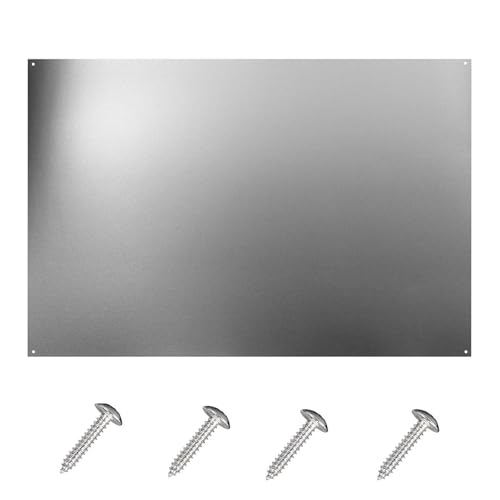
Reversible 24 x 30-Inch 304 Panel uses nonmagnetic 304 stainless steel with a brushed surface, distinguishing it from 430 steel alternatives. Its nominal 24-by-30-inch panel is intended for a 30-inch stove and hood, and four pre-drilled holes allow screw mounting; the maker also describes adhesive installation. The approximately 0.019-to-0.023-inch sheet is thin, which can help it sit close to a flat wall. This is a sensible pick when the brushed look and 304 material are priorities, but buyers should confirm the exact orientation and wall coverage since the size order differs from some other panels.
Bottom line: Pick this for a brushed 304 finish and a flat, rectangular installation area.
VENFAN 24 x 30-Inch 430 Panel

VENFAN 24 x 30-Inch 430 Panel is a 430 stainless panel measuring 29.5 by 24 inches, making it slightly narrower than a nominal 30-inch panel. Four pre-drilled holes support a straightforward fixed installation, while the smooth surface is intended to wipe clean with a damp cloth or mild detergent. The maker says it can be used behind gas, electric, and induction cooktops. Its more compact width can help where a full 30-inch panel would crowd nearby trim, but it also leaves less side coverage; measure the actual splash zone rather than assuming the stove and wall have matching widths.
Bottom line: Choose this when a roughly 29.5-inch-wide stainless panel fits the available wall space.
How to choose a behind-stove wall protector
Choose by coverage first, then by material and attachment. Measure the exposed wall from counter to hood or cabinet and across the range; a common 30-inch range may need a panel close to 30 inches wide, but adjacent trim can change the usable span. Metal panels provide a rigid wipeable surface, while adhesive film conforms to flat surfaces and can be cut. For a screw-mounted panel, confirm the wall can accept anchors or screws and that the holes land on a secure area. Keep a protector clear of open flames and cookware, and use a product only within its heat limits; a wall shield does not replace appliance clearances or a proper range hood.
Stainless steel versus adhesive film
Stainless panels and clear films solve different fit problems. Stainless steel panels are rigid and typically mount with fasteners through pre-drilled holes; the steel grades here are 430 and 304, with 304 explicitly identified as nonmagnetic and brushed. Adhesive film is thin and flexible, which makes it easier to trim but dependent on a clean, smooth wall surface. The table helps match the format to the installation need.
| Format | Best fit | Check before installation |
|---|---|---|
| Rigid stainless panel | Broad, fixed splash area | Panel dimensions and hole placement |
| Peel-and-stick PET film | Clear, narrow or cut-to-fit coverage | Surface suitability and heat exposure |
A wider panel is not automatically better if it overlaps trim or blocks a hood edge. A film should not be treated as a substitute for a metal heat shield where direct high heat is possible.
Measure the stove wall before mounting
Measure the width and height of the uncovered wall, then compare those dimensions with the panel’s actual dimensions rather than its rounded name. Leave the appliance’s required clearance and do not cover outlets, controls, or ventilation openings. Many metal splash panels use corner holes; mark level positions and check what is behind the wall before drilling. Adhesive coverings need a clean, dry, smooth surface, since texture, grease, or loose paint can undermine adhesion. For a decision rule, if the wall area is narrower than 29.5 inches, choose a solution that can be trimmed or sized to the measured span instead of forcing a near-30-inch rigid panel.
Cleaning and heat precautions
Wipe stainless steel after grease splashes with a damp cloth and mild detergent, then dry it to reduce water marks; avoid abrasive pads that can scratch a brushed finish. PET film can be wiped or washed only as its material permits, and its maker describes it as heat-resistant without providing a kitchen-specific operating limit. Do not assume a wall protector makes a combustible wall safe behind a gas flame. Keep the manufacturer-required appliance clearances, use a properly vented hood, and remove a protector that loosens, blisters, or changes shape.
Frequently Asked Questions
What size protector fits behind a 30-inch stove?
A panel close to 30 inches wide is a practical starting point, but measure the exposed wall rather than relying on stove width alone. Include the available height between the counter and hood or cabinets.
Can stainless backsplash panels be cut to size?
Rigid stainless panels are not generally a simple trim-to-fit choice for home installation because cutting metal can leave sharp edges and damage the finish. Measure first, and use a made-to-measure panel or flexible film when the opening is irregular.
How should I attach a metal stove backsplash?
Corner holes can be used for screw mounting when the wall has a suitable secure substrate. Check for wiring and plumbing before drilling, and use appropriate anchors if the wall material requires them.
Is peel-and-stick film safe behind a gas stove?
Only use film where its heat rating and the range’s clearance requirements allow it. Keep any covering away from direct flame and hot cookware, because a heat-resistant claim alone does not establish a safe distance for a gas range.
How often should a stove backsplash be cleaned?
Wipe splashes when they occur, since grease is easier to remove before it hardens. A damp cloth and mild detergent suit smooth stainless surfaces; avoid abrasive scrubbers that can scratch the finish.