
Red Light Therapy for Under Eye Bags: 5 Devices

For red light therapy for under-eye bags, Red Light Therapy Eye Glasses, 10-Minute is a practical starting point because its maker describes a 10-minute session and an automatic shutoff. Choose a different device if a shorter routine, rechargeable portability, or multiple light colors matters more; these are cosmetic devices, and light therapy may not address bags caused by anatomy or fluid retention.
We earn a commission if you buy through links on this page. As an Amazon Associate I earn from qualifying purchases. Products are compared on manufacturer specifications, not hands-on testing.
- Best overall: Red Light Therapy Eye Glasses, 10-Minute – Its maker describes a 10-minute routine with automatic shutoff.
- Best for short sessions: Amifiy 4-in-1 Eye Mask – Its maker describes a preprogrammed 3-minute session and automatic shutoff.
- Best for portability: DCPLBLIB Rechargeable Eye Massager – It has a rechargeable battery and Type-C charging.
| Product | Best for | Light wavelength | Session time | Distinct feature | Shop |
|---|---|---|---|---|---|
| Red Light Therapy Eye Glasses, 10-Minute | Timed routine | — | 10 minutes | Microcurrent; auto-off | Check Price on Amazon |
| Amifiy 4-in-1 Eye Mask | Short sessions | — | 3 minutes | Auto-off | Check Price on Amazon |
| DCPLBLIB Rechargeable Eye Massager | Portable charging | — | 3 minutes claimed | Type-C rechargeable | Check Price on Amazon |
| BAOONG 7-Color Eye Massager | Multiple light colors | 630 nm named; 7 colors claimed | — | Microcurrent; 3 modes | Check Price on Amazon |
| 650 nm Contour Eye Therapy Glasses | Contour fit | 650 nm | 10 minutes claimed | 3D contour; microcurrent | Check Price on Amazon |
Red Light Therapy Devices for Under Eye Bags
Compare the wavelength, session routine, and extra features before choosing a device for your under-eye routine.
Red Light Therapy Eye Glasses, 10-Minute

Red Light Therapy Eye Glasses, 10-Minute stands out for its 10-minute session and automatic shutoff. The maker says its contoured 3D glasses combine red light with mild microcurrent and are intended to reduce the look of dark circles, fine lines, and puffiness. That format may suit someone who wants a defined routine without holding a device by hand. Under-eye bags can have causes that a cosmetic light device cannot change.
Bottom line: Choose this if you want a wearable device with a timed 10-minute routine.
Amifiy 4-in-1 Eye Mask

Amifiy 4-in-1 Eye Mask is distinguished by a maker-described 3-minute preset session and automatic shutoff, making it the shortest routine among these options. The maker says the 4-in-1 mask targets the appearance of fine lines, wrinkles, eye bags, and dark circles. It may suit buyers who prioritize a brief routine over a wavelength or charging specification. The maker’s cosmetic claims are not a guarantee of an individual result.
Bottom line: Pick this if a brief, preset session is your main priority.
DCPLBLIB Rechargeable Eye Massager

DCPLBLIB Rechargeable Eye Massager separates itself with a built-in rechargeable battery and Type-C charging, rather than a specified glasses fit or multiple light colors. The maker describes use for three minutes and says the device is intended to support collagen production and improve the look of fine lines, dark circles, and puffiness. That makes it a fit for buyers who value charging convenience and a short routine.
Bottom line: Choose this for rechargeable convenience and a short stated session.
BAOONG 7-Color Eye Massager

BAOONG 7-Color Eye Massager stands out for its claimed seven-color LED setup and three modes, plus microcurrent with three adjustable intensity levels. The maker associates the red setting with collagen and wrinkle care and describes the device as targeting dark circles and puffy bags. This may suit someone seeking several color options rather than a single named wavelength. The product name mentions 630 nm, but the maker does not assign that number to each color; buyers focused on exact output should confirm the wavelength for the mode they intend to use.
Bottom line: Pick this if multiple color modes and adjustable microcurrent matter to you.
650 nm Contour Eye Therapy Glasses
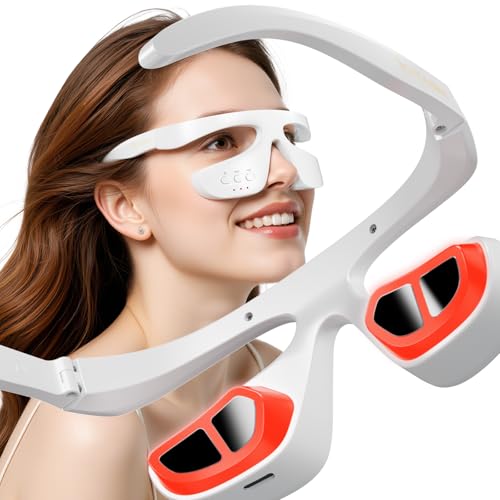
650 nm Contour Eye Therapy Glasses is the only option here with a 650 nm wavelength and a 3D contour design. The maker describes a 10-minute daily routine and says the glasses combine red light with microcurrent for the under-eye area. It may suit buyers comparing a named wavelength and hands-free fit. The input does not describe an automatic shutoff or charging method, so confirm either feature if it is important to your routine. The maker’s claims about puffiness and skin appearance are not a promise that the device will change the underlying cause of bags.
Bottom line: Choose this if a 650 nm wavelength and contoured fit are priorities.
How to Choose Red Light Therapy for Under Eye Bags
Start with the routine and light specification you can verify, not a promise to eliminate bags. These devices may differ by wavelength, session time, fit, charging, and whether they include microcurrent or multiple colors. A wavelength in nanometers describes the light, but a wavelength alone does not establish dose: irradiance and treatment distance also matter, and those figures are not provided across these options. If a published wavelength is essential, compare devices with an explicit number and confirm which mode it applies to. Choose a preset short session if routine length is your deciding constraint; choose a contoured hands-free design if you do not want to hold a device. Under-eye bags related to anatomy or persistent fluid retention may not respond to cosmetic light treatment.
Wavelengths, Session Times, and Modes
Session claims also vary: a shorter preset may be easier to fit into a routine, while a longer session is not automatically more effective. Use the manufacturer’s duration and mode rather than extending exposure to chase faster results. The table separates what is stated from what remains a comparison point; wavelength alone cannot rank overall performance.
Use this table to identify the product feature that matches your priority.
| Priority | What to compare | Decision rule |
|---|---|---|
| Exact light output | Wavelength in nm | Choose a device that names the wavelength for its intended mode. |
| Brief routine | Preset session length | Choose a 3-minute routine if time is the constraint. |
| Hands-free use | Glasses or mask fit | Favor a contoured wearable design if holding a tool is inconvenient. |
What Under-Eye Bags Can and Cannot Respond To
Under-eye bags can reflect temporary fluid buildup, allergies, lack of sleep, or normal changes in the tissue around the eyes; persistent or sudden swelling has different considerations from ordinary morning puffiness. Light-based cosmetic devices are not a way to remove structural fat pads or diagnose the cause. A cool compress may temporarily reduce the appearance of mild morning puffiness, while new swelling, pain, vision changes, or one-sided symptoms call for medical advice. Set expectations around appearance rather than treatment: a maker’s claim about collagen or dark circles does not establish that a device will change your particular cause of under-eye bags. If bags persist or worsen, consult a qualified health professional rather than increasing exposure.
Eye-Area Device Safety and Routine
Keep bright LEDs out of direct view and use an eye-area device only as its maker directs; do not extend sessions or add extra cycles because more exposure is not automatically better. Before use, check whether the device is designed to sit over closed eyes or around the orbital area, and stop if it causes discomfort, unusual visual symptoms, or skin irritation. People with light sensitivity, eye conditions, or medicines that increase light sensitivity should ask a clinician before using a light device near the eyes. Clean wearable surfaces according to the maker’s care instructions, and avoid applying eye products that could enter the eyes during wear. A timed shutoff can help bound a session, but it is not a substitute for safe positioning or appropriate use.
Frequently Asked Questions
Can red light therapy get rid of under-eye bags?
Red light therapy may be marketed to improve the appearance of puffiness, but it cannot be assumed to remove bags caused by anatomy or persistent fluid retention. Sudden or painful swelling, vision changes, or one-sided symptoms warrant medical advice.
What wavelength is used for red light therapy around the eyes?
Red light skincare devices commonly use visible red wavelengths around 600–700 nm, while some light devices extend into near-infrared wavelengths. Compare the exact wavelength and mode rather than relying on the general term “red light.”
How long should an under-eye light session last?
Use the duration set by the device maker rather than extending a session. The products here describe sessions of 3 or 10 minutes, and a longer exposure is not automatically more effective.
Can I use an eye massager with eye cream?
Check that the device maker permits topical products before applying eye cream under a wearable light device. Keep products out of the eye, since creams can migrate during wear and irritate the eye surface.
Is red light safe to look at directly?
Do not stare into bright LEDs or direct a device into open eyes. Follow its positioning and eye-use directions, and consult a clinician first if you have an eye condition, light sensitivity, or take light-sensitizing medication.