
Best Socks for Poor Circulation: 5 Options Compared

For most people looking for everyday compression, ACTINPUT Copper Compression Socks 15–20 mmHg is the clearest pick because it combines 15–20 mmHg support with multiple calf-size options. Choose a different pair if you need a 20–30 mmHg level or a multipack.
Compression socks apply graduated pressure to help support leg circulation, but they are not a substitute for medical advice. Poor circulation can have different causes, so ask a clinician whether compression is appropriate, especially if you have diabetes, artery disease, or reduced sensation.
We earn a commission if you buy through links on this page. As an Amazon Associate I earn from qualifying purchases. Products are compared on manufacturer specifications, not hands-on testing.
- Best overall: ACTINPUT Copper Compression Socks 15–20 mmHg – Offers 15–20 mmHg compression and sizes from S/M through 4XL.
- Best for firmer compression: FITRELL Compression Socks 20–30 mmHg – Specifies 20–30 mmHg and gives calf measurements for each size.
- Best for a larger multipack: Copper Compression Socks 15–20 mmHg, 8 Pairs – Includes 8 pairs and 15–20 mmHg compression.
| Product | Best for | Compression | Pack size | Size range | Shop |
|---|---|---|---|---|---|
| ACTINPUT Copper Compression Socks 15–20 mmHg | Everyday size choice | 15–20 mmHg | 4 pairs | S/M–4XL | Check Price on Amazon |
| FITRELL Compression Socks 20–30 mmHg | Firmer compression | 20–30 mmHg | 3 pairs | S/M, L/XL | Check Price on Amazon |
| Copper Compression Socks 15–20 mmHg, 8 Pairs | Eight-pair rotation | 15–20 mmHg | 8 pairs | L/XL | Check Price on Amazon |
| FuelMeFoot Copper Compression Socks, 3 Pack | Breathable daily wear | — | 3 pairs | L/XL | Check Price on Amazon |
| CHARMKING Compression Socks 15–20 mmHg, 8 Pairs | Eight-pair graduated set | 15–20 mmHg | 8 pairs | L/XL | Check Price on Amazon |
Socks for Poor Circulation
Compare compression level, pack size, and available sizing to find a pair that matches your needs.
ACTINPUT Copper Compression Socks 15–20 mmHg

Among these options, ACTINPUT Copper Compression Socks 15–20 mmHg stands out for its broader stated size range, from S/M through 4XL, alongside 15–20 mmHg compression. The knee-high socks use a nylon-based fabric and are designed for breathable daily wear and movement. That combination may suit someone who wants moderate compression for routine standing or travel and needs more size choices than S/M and L/XL. The main limitation is that the specifications do not give calf measurements for each size, so people near a size boundary should confirm the fit before choosing.
Bottom line: Choose this pair if you want moderate compression with several size options.
FITRELL Compression Socks 20–30 mmHg
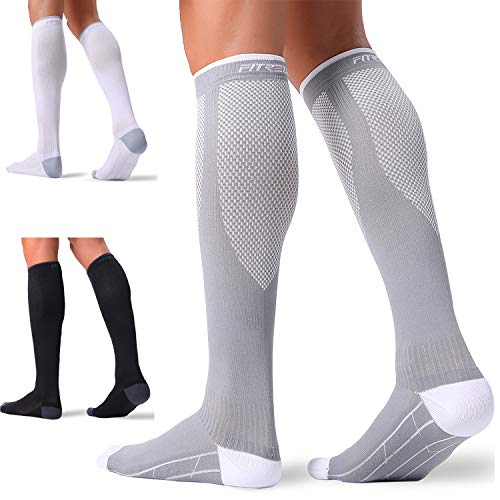
FITRELL Compression Socks 20–30 mmHg is the only option here with a 20–30 mmHg level, making it the firmer-compression choice rather than a default for everyone with poor circulation. Its sizing guidance prioritizes calf circumference: S/M fits 9–15 inches and L/XL fits 14–16 inches. The product also highlights moisture-wicking fabric, mesh around the calf, and a seamless toe. It may suit buyers whose clinician has recommended this pressure range; the overlapping calf ranges mean measuring carefully matters, and compression should not be selected by shoe size alone.
Bottom line: Pick this only if 20–30 mmHg is appropriate for you and the calf fit matches.
Copper Compression Socks 15–20 mmHg, 8 Pairs

Copper Compression Socks 15–20 mmHg, 8 Pairs provides 8 pairs, the largest pack among these socks, with 15–20 mmHg compression. The product is presented for work, travel, and activity, which may make a rotation of pairs useful for frequent wear. Its size shown is L/XL. The copper-fiber circulation language is a maker claim, not a reason to assume a medical benefit beyond compression. The limitation is the narrower size choice shown here; buyers outside L/XL should consider an option with a broader size range instead.
Bottom line: Choose this if an 8-pair pack and the L/XL size suit your needs.
FuelMeFoot Copper Compression Socks, 3 Pack
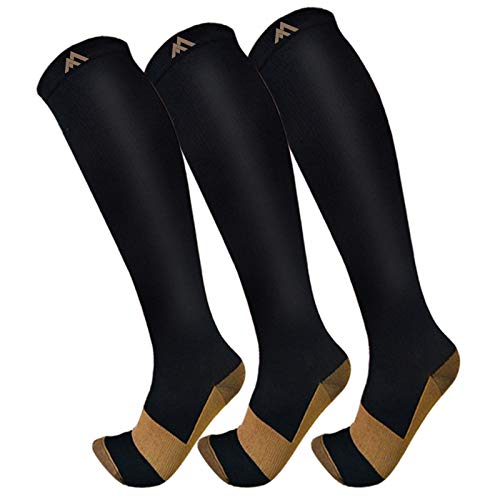
FuelMeFoot Copper Compression Socks, 3 Pack is a three-pair option made with nylon and promoted for ventilation, warmth, and a comfortable daily feel. That makes it a less precise choice for anyone seeking a clinician-prescribed mmHg range. The size shown is L/XL, so confirm that it matches your calf before choosing.
Bottom line: Consider it if breathable nylon matters more than comparing a pressure level.
CHARMKING Compression Socks 15–20 mmHg, 8 Pairs
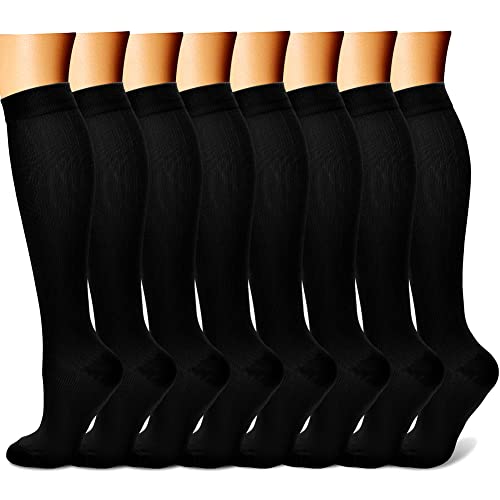
CHARMKING Compression Socks 15–20 mmHg, 8 Pairs pairs an 8-pair pack with 15–20 mmHg graduated compression and a knee-high design. The product describes targeted compression zones and construction intended to make the socks easier to put on; those features may appeal to someone who prefers a larger rotation of a moderate-pressure style. The size shown is L/XL. Its limitation is similar to other one-size-range choices here: without a broader size selection in the specifications, it is not a flexible option for calves outside that fit.
Bottom line: Choose this if you want an 8-pair graduated set in L/XL.
How to Choose Compression Socks for Poor Circulation
Start with medical suitability, then match pressure and fit to the intended use. Compression is measured in millimeters of mercury (mmHg); 15–20 mmHg is commonly treated as light-to-moderate compression, while 20–30 mmHg is firmer and may require clinical guidance. These product options span those two ranges, plus one option without a pressure. If a clinician has prescribed a pressure class, use that rather than choosing by a product’s circulation wording. Measure the calf at its widest point and follow the size chart’s measurement method; shoe size alone cannot establish a safe calf fit. For unexplained swelling, pain, coldness, or skin color change, seek medical advice rather than relying on socks.
Compression Levels and Fit
Calf circumference and pressure class matter more than pack size when choosing compression socks. A sock that is too tight can cause discomfort or skin pressure, while a loose fit may not deliver the intended graduated compression. Measure both legs if they differ, and compare the larger calf with the manufacturer’s size range. This is especially important when sizing ranges overlap, as they do between 14 and 15 inches for one option here. For 15–20 mmHg choices, the sizes vary: some show only L/XL, while one spans S/M to 4XL. Choose a measured fit, not an assumption that a wider calf will stretch adequately.
When Compression Socks Need Medical Guidance
Ask a healthcare professional before wearing compression socks if you have known peripheral artery disease, significant diabetes-related nerve loss, or a foot wound. Compression can be unsuitable when arterial blood flow is poor, and reduced sensation can make it harder to notice pressure injury. A clinician can help decide whether compression is appropriate and which pressure level to use. Remove socks and get prompt advice if the foot becomes unusually painful, numb, pale, blue, or cold. Avoid rolling the top down or bunching fabric, since a tight band can concentrate pressure; smooth wrinkles and inspect skin after removal, particularly if sensation is reduced.
Care and Wear Habits
Rotate clean pairs and check the fabric for thinning, stretched cuffs, or damaged seams before putting them on. Compression garments gradually lose their holding strength with repeated wear and washing; replace a pair when it no longer fits snugly or the fabric has become loose. Put socks on with dry skin and smooth the material up the leg without tugging hard at the top. If the socks cause persistent discomfort, marks, or numbness, take them off and reassess fit and medical suitability. Follow the care label for washing and drying because heat can damage elastic fibers.
Frequently Asked Questions
Can compression socks improve poor circulation?
Compression socks apply graduated pressure to support venous blood flow, but they do not correct every cause of poor circulation. A clinician should assess persistent symptoms or known arterial disease before you wear them.
What compression level should I choose?
The right level depends on the cause of symptoms and your clinician’s advice; 15–20 mmHg is less firm than 20–30 mmHg. Do not select 20–30 mmHg solely because symptoms seem severe.
How do I measure my calves for compression socks?
Measure around the widest part of each calf with a flexible tape while standing, and compare the larger measurement with the size range. For example, one option here places S/M at 9–15 inches and L/XL at 14–16 inches.
Can I wear compression socks while sleeping?
Most people should wear daytime compression socks only while awake unless a clinician directs otherwise. Remove them before bed and check for skin marks or discomfort.
When should I stop wearing compression socks?
Remove them if you develop new numbness, pain, unusual coldness, or a pale or blue foot. Seek medical advice promptly, especially if symptoms persist after taking the socks off.