
Jeju Aloe Vera Gel: 5 Multi-Use Options Compared

For a Jeju aloe vera gel, THESAEM Jeju Fresh Aloe Soothing Gel 99% is the direct match because its maker says it contains 99% Jeju Island aloe leaf juice. Choose another option if you prioritize a different stated aloe percentage, a particular size or a formula that names added ingredients; the other choices are aloe gels, but their names do not identify Jeju sourcing.
Aloe gels are lightweight topical products often used for a refreshed, hydrated skin feel. They do not replace sunscreen or medical care for a serious burn.
We earn a commission if you buy through links on this page. As an Amazon Associate I earn from qualifying purchases. Products are compared on manufacturer specifications, not hands-on testing.
- Best overall: THESAEM Jeju Fresh Aloe Soothing Gel 99% – The maker identifies Jeju Island as the aloe source and says the gel contains 99% aloe leaf juice.
- Best for harvest timing: Aloderma Organic Aloe Vera Gel 96% – The maker says its 96% organic aloe gel is processed within 12 hours of harvest.
- Best for named added ingredients: Nature Republic Aloe Watery Gel 10.56 oz – The formula names hyaluronic acid, madecassoside and edelweiss callus culture extract.
| Product | Best for | Aloe content | Size | Named use | Shop |
|---|---|---|---|---|---|
| THESAEM Jeju Fresh Aloe Soothing Gel 99% | Jeju sourcing | 99% aloe leaf juice | 10.14 fl oz | Face, body, hair | Check Price on Amazon |
| Aloderma Organic Aloe Vera Gel 96% | Harvest processing | 96% organic aloe | 7.05 oz | Skin, scalp, hair | Check Price on Amazon |
| Nature Republic Aloe Watery Gel 10.56 oz | Watery texture | — | 10.56 fl oz | Face, body, hair | Check Price on Amazon |
| Holika Holika Aloe 99% Soothing Gel | Quick absorption | 99% aloe | 8.5 fl oz | Face, body, hair | Check Price on Amazon |
| MIRACLAIR 100% Pure Aloe Vera Gel | Added ingredients | 100% pure aloe (claim) | 10.1 fl oz | Face, body, scalp, hair | Check Price on Amazon |
Jeju Aloe Vera Gel Options
Compare the Jeju-sourced option with related aloe gels by composition, size and intended use.
THESAEM Jeju Fresh Aloe Soothing Gel 99%

For buyers seeking Jeju-sourced aloe, this gel is the direct fit: the maker says its formula contains 99% aloe vera leaf juice from Jeju Island. The 10.14-fl-oz container is intended for face, body and hair, and the maker describes a cooling feel for skin after sun exposure or shaving. It is a useful pick when origin and a high stated aloe percentage matter more than named added ingredients.
Bottom line: Choose this if Jeju sourcing and 99% aloe leaf juice are your priorities.
Aloderma Organic Aloe Vera Gel 96%

Aloderma distinguishes itself with a harvest-to-processing claim rather than a Jeju source: the maker says its 96% organic aloe gel is made within 12 hours of harvest. The 7.05-ounce size is smaller than the other multi-use options here, making it a reasonable choice for someone who wants a compact container and uses gel on skin, scalp or hair. Its farm-to-face approach is also part of the maker’s description.
Bottom line: Pick this if quick processing after harvest matters more than Jeju origin.
Nature Republic Aloe Watery Gel 10.56 oz

Nature Republic focuses on a watery, fast-absorbing texture rather than an aloe percentage or Jeju origin. The 10.56-fl-oz gel is intended for face, body and hair, and the maker describes it as non-sticky and suitable for refreshing moisture after time outdoors. That combination may suit someone who dislikes a heavy-feeling gel and wants one product for several application areas. The name identifies it as a Korean skin-care product, but not as Jeju-sourced; buyers specifically seeking Jeju aloe should not treat Korean origin alone as proof of the island source.
Bottom line: Choose this for a watery texture and multi-area use, not for verified Jeju sourcing.
Holika Holika Aloe 99% Soothing Gel
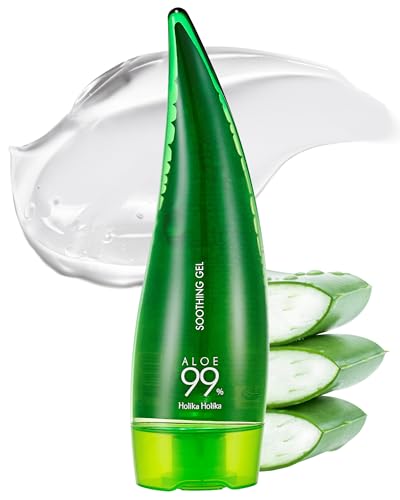
Holika Holika offers a 99% aloe gel in an 8.5-fl-oz container, giving it a smaller format than the two largest gels in this group. The maker describes fast absorption and a non-sticky feel, with intended use on face, skin, body and hair. The maker also mentions a “7 free” system without naming the excluded ingredients in the specifications, so buyers with a specific ingredient concern should verify the full ingredient list.
Bottom line: Pick this if a non-sticky feel and 99% aloe are your priorities.
MIRACLAIR 100% Pure Aloe Vera Gel

MIRACLAIR stands apart by naming hyaluronic acid, madecassoside and edelweiss callus culture extract alongside its 100% pure aloe claim. Its 10.1-fl-oz gel is intended for face, body, scalp and hair; the maker also describes it as fragrance-free and non-comedogenic. That makes the formula a candidate for shoppers comparing named additions and texture-related claims, rather than island sourcing.
Bottom line: Choose this if named added ingredients matter more than Jeju sourcing.
How to choose Jeju aloe vera gel
Choose a gel that explicitly identifies Jeju as the aloe source when island origin is the deciding requirement. Aloe percentage, intended application areas and added ingredients answer different questions: a higher percentage does not establish the source or predict how your skin will respond. Aloe gels are topical products for a hydrated or refreshed feel, not sun protection. For outdoor exposure, use broad-spectrum sunscreen with SPF 30 or higher and reapply at least every 2 hours.
Compare the product’s uses with where you plan to apply it. Face, body, scalp and hair are not interchangeable for every person; patch test a new formula on a small area and wait 24 hours before wider use. Stop if irritation develops.
What aloe percentages and sources mean
A percentage is useful only when the product gives one, and the named ingredient matters: “aloe leaf juice” and “pure aloe” are not automatically identical formula descriptions. A Jeju origin claim identifies a geographic source, while “Korean” alone does not establish that aloe came from Jeju. Products may also name added ingredients such as hyaluronic acid or madecassoside, which can help shoppers compare formulas, but do not prove the gel will suit an individual skin concern.
Use the comparison below as a screening tool, not a prediction of results. When a specific ingredient must be avoided, check the complete ingredient panel before applying the gel.
| Priority | Useful comparison | Decision rule |
|---|---|---|
| Jeju origin | Named aloe source | Require an explicit Jeju source claim |
| Aloe content | Stated percentage and ingredient wording | Compare percentages only when both are given |
| Formula preferences | Named additions or fragrance claim | Check the ingredient panel for a specific concern |
How to apply aloe gel safely
Patch test a new aloe gel on a small, inconspicuous area and wait 24 hours before broader use; discontinue it if redness, itching or irritation appears. Apply a thin layer to clean skin and avoid eyes and broken skin unless the product’s directions specifically allow otherwise. A cooling sensation does not mean a gel protects against ultraviolet radiation, so use broad-spectrum SPF 30 or higher for sun exposure and reapply every 2 hours outdoors, or sooner after swimming or sweating.
Aloe gel may feel refreshing after ordinary outdoor exposure, but it is not medical treatment for a serious burn. Extensive blistering, severe pain, fever or worsening symptoms warrant medical advice rather than more cosmetic gel.
How to compare gel size and intended use
Container volume and application area are practical selection points: a 10-fl-oz container holds more gel than a 7-oz container, while a product intended for face, body and hair covers more stated uses than one described only for skin. Check the package directions for application frequency and storage because gel formulas and packaging can differ.
For a single-purpose routine, choose according to the area you actually plan to use it on instead of assuming that a multi-use gel is necessary. For ingredient sensitivities, prioritize the full ingredient panel over general claims such as “for all skin types.”
Frequently Asked Questions
Does aloe vera gel protect skin from the sun?
No, aloe gel is not a substitute for sunscreen. Use broad-spectrum SPF 30 or higher for sun protection, and reapply at least every 2 hours when outdoors.
How should I patch test a new aloe gel?
Apply a small amount to an inconspicuous area and wait 24 hours for a reaction before wider use. Stop using it if you notice irritation, redness or itching.
Can aloe gel be used on a serious sunburn?
Aloe gel may give a cooling feel, but it does not treat a serious burn. Seek medical care for severe blistering, extensive burns, fever or worsening pain.
Should aloe gel go under moisturizer?
Aloe gel can go beneath a moisturizer when the gel alone does not leave skin comfortable. Apply a thin layer first, let it settle, then add moisturizer; discontinue use if irritation develops.