
Lock a Sliding Closet Door: 4 Options Compared

For a sliding closet door that needs code-based access control, 90-Degree Combination Rotary Latch is the closest match because it has a keyless combination latch. For child safety, choose Toddleroo Sliding Door & Window Lock instead; for other door types or simple movement limits, the alternatives work differently.
We earn a commission if you buy through links on this page. As an Amazon Associate I earn from qualifying purchases. Products are compared on manufacturer specifications, not hands-on testing.
- Best overall: 90-Degree Combination Rotary Latch – Its keyless three-digit combination lock offers code-based access control for a sliding closet door.
- Best for child safety: Toddleroo Sliding Door & Window Lock – It is designed to keep children from opening sliding glass or wood doors, including closet doors.
- Best for tool-free setup: Two-Piece Sliding Door and Window Locks – The two-piece plastic set installs without drilling or extra tools.
- Best for limiting opening: STERGDE Sliding Door Lock Bar – The four-pack is intended to restrict how far a sliding door or window can open.
| Product | Best for | Lock style | Installation | Pack size | Shop |
|---|---|---|---|---|---|
| 90-Degree Combination Rotary Latch | Code-based access | Rotary latch | — | 1 piece | Check Price on Amazon |
| Toddleroo Sliding Door & Window Lock | Child safety | Sliding child lock | Attaches; method unclear | 1 piece | Check Price on Amazon |
| Two-Piece Sliding Door and Window Locks | Tool-free setup | Sliding movement lock | No drilling or tools | 2 pieces | Check Price on Amazon |
| STERGDE Sliding Door Lock Bar | Opening restriction | Movement-limiting bar | Drill-free setup | 4 pieces | Check Price on Amazon |
Sliding Closet Door Locks
Choose by the kind of access control you need and how the lock interacts with your door.
90-Degree Combination Rotary Latch

For code-based access control, this keyless rotary latch stands apart from simple movement stops. It uses a three-digit combination and is intended for right-angle doors that open inward, including closet systems and barn doors. The maker says it supports more than 1,000 customizable codes. Its fit depends on the door meeting that right-angle, inward-opening configuration, so it is not a universal latch for every bypass closet door. Check that the door geometry allows the latch to engage before choosing it.
Bottom line: Choose this when you need a combination latch and your closet door matches its right-angle, inward-opening design.
Toddleroo Sliding Door & Window Lock

For keeping a child from opening a sliding closet door, this lock is designed for sliding glass or wood doors and windows. Its slide-and-release motion is intended to be simple for adults, and its uses also include patio doors. The single white lock is 4.5 inches long and 0.65 inches wide. This is a child-safety device rather than a code-controlled privacy latch, so choose another style if you need to restrict access from older children or adults.
Bottom line: Pick this for a child-safety barrier on a compatible sliding closet door.
Two-Piece Sliding Door and Window Locks
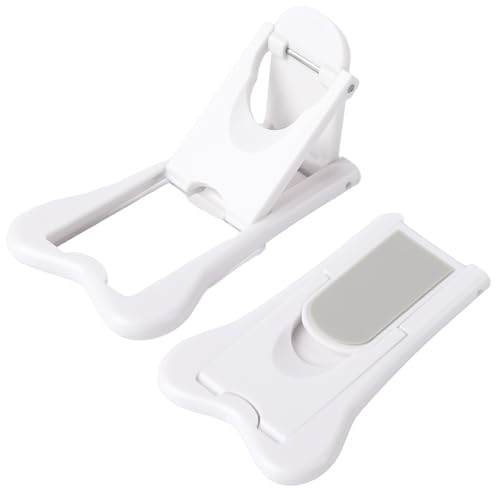
This two-piece set is a simple option for restricting sliding movement without drilling or using extra tools. The plastic locks are intended for closet, cabinet, and glass doors as well as windows, making the set useful when the same type of control is needed in more than one place. Each piece is compact, measuring 3.94 inches long and 2.76 inches wide. Compatibility still matters: a movement stop does not provide the code-based access control of a latch, and the door must allow the lock to sit securely.
Bottom line: Choose this when tool-free movement restriction is more important than coded access.
STERGDE Sliding Door Lock Bar

This four-piece set is designed to limit how far a sliding door or window can open, rather than provide a combination-controlled latch. The maker says it can be used with wardrobe sliding doors, patio doors, and sliding windows, and specifies a door-to-frame gap greater than 0.5 inches for operation. That clearance requirement makes measuring important before choosing this style. It suits buyers who want to restrict opening range; it is not the right choice when the main goal is a discrete privacy lock.
Bottom line: Pick this only if the door has more than 0.5 inches of clearance and opening restriction meets your need.
How to Choose a Sliding Closet Door Lock
Choose the lock by the job: a combination latch controls access, while a stop or child-safety lock limits movement. Sliding closet doors commonly use either bypass panels that overlap or a single panel that slides beside an opening; the lock must work with the door’s movement and available contact points. A latch needs surfaces that can meet at the right angle, while a movement stop needs a secure place to bear against. If the door is for child safety, use a child-safety device rather than assuming a privacy latch is childproof. Measure the door and frame before selecting a clearance-dependent stop.
For a coded latch, verify the door’s opening direction and geometry. For any style, confirm it will not interfere with the track or prevent normal operation when released.
Sliding Closet Door Lock Types Compared
A latch and a movement stop solve different problems, so compare their function before choosing. A combination latch is for controlled access when the door geometry suits it. A sliding lock or bar limits movement; a child-safety lock is designed to deter children from opening a sliding panel. Closet doors vary: bypass panels overlap, while other designs slide beside an opening, so hardware made for one arrangement may not engage another. The table matches the lock type to its main use.
| Need | Lock style | Fit to check |
|---|---|---|
| Code-based access | Combination rotary latch | Right-angle, inward-opening geometry |
| Child safety | Sliding child lock | Compatible sliding surface |
| Simple movement restriction | Sliding lock or bar | Secure placement and clearance |
Do not treat movement restriction as the same as privacy or access control.
Measure the Door Before Installing a Lock
Measure the gap between the door and frame where the lock will sit, then check panel overlap and how far the door travels. For the STERGDE bar, the required gap is greater than 0.5 inches; that threshold is specific to that product, not a universal sliding door measurement. The combination latch is intended for doors that meet at a 90-degree angle and open inward, so a typical bypass arrangement may not suit it. Identify whether the closet has bypass panels or a single sliding panel before selecting hardware. If the lock’s contact points cannot meet without blocking the track, choose another style.
After fitting any lock, open and close the door through its normal travel to check for interference and confirm the lock engages as intended.
Child Safety and Closet Lock Limits
A child-safety lock can make a closet harder for a young child to open, but it is not a substitute for keeping hazardous items secured and out of reach. Sliding closet doors may conceal cleaning products, tools, or other household hazards, so consider the contents as well as the door hardware. A movement limiter restricts opening range; it does not necessarily provide the same access control as a combination latch. Adults should be able to release a child lock as designed, while children should not be able to reach or operate it. Check the lock periodically for looseness or damage, especially if the door is used often.
Choose hardware for the specific safety need and door construction rather than assuming every sliding lock provides the same protection.
Frequently Asked Questions
Will a regular latch work on bypass closet doors?
Not necessarily; bypass panels overlap and may not meet a frame at a right angle. A latch designed for a 90-degree inward-opening door needs matching geometry, so check how the panels meet before choosing it.
How much clearance does a sliding door lock need?
The STERGDE bar requires more than 0.5 inches between the door and frame. Other lock styles have different fit requirements, so measure at the exact spot where the lock will sit.
Can a sliding closet lock keep children out?
A child-safety lock is intended to make a sliding door harder for children to open, but no door lock replaces safe storage of hazardous items. Keep dangerous contents secured and check that the device still engages.
Do sliding closet locks require drilling?
The two-piece sliding lock set and the STERGDE bar are described as drill-free, and the two-piece set also requires no extra tools. Do not assume every latch or lock style installs the same way; check that the door offers a suitable mounting or contact point.
What should I measure before choosing a closet door lock?
Measure the door-to-frame gap, panel overlap, and the space available at the lock’s contact point. For the STERGDE bar, the gap must exceed 0.5 inches; a combination latch also calls for a right-angle, inward-opening configuration.