
Best Korean Hair Conditioner: 5 Picks by Hair Need

Mise En Scene Perfect Serum Super Rich suits most people seeking a Korean hair conditioner because it targets severely damaged hair with a blend of seven oils. Choose another pick if frizz, fine-hair volume, or a short treatment time matters more than rich conditioning.
Conditioner coats and softens hair after shampooing; richer formulas can feel heavier on fine hair, while lighter or volume-focused formulas may better suit strands that become weighed down.
We earn a commission if you buy through links on this page. As an Amazon Associate I earn from qualifying purchases. Products are compared on manufacturer specifications, not hands-on testing.
- Best overall: Mise En Scene Perfect Serum Super Rich – Its seven-oil blend is aimed at smoothing and nourishing severely damaged hair.
- Best for frizz: UNOVE Frizz-Calming Sleek Conditioner – The brand says its system provides up to 72-hour frizz control when used together.
- Best for fine hair: RYO Strengthen & Volume Conditioner – Its formula is positioned for volume and strengthening fine, lifeless hair.
| Product | Best for | Size | Standout focus | Shop |
|---|---|---|---|---|
| Mise En Scene Perfect Serum Super Rich | Damaged hair | 17.92 fl oz | Seven-oil smoothing | Check Price on Amazon |
| UNOVE Frizz-Calming Sleek Conditioner | Frizzy hair | 9.8 fl oz | Frizz smoothing | Check Price on Amazon |
| Elizavecca Collagen Coating Treatment Rinse | Dry hair | 16.9 fl oz | Moisturizing treatment | Check Price on Amazon |
| RYO Strengthen & Volume Conditioner | Fine hair | 16.23 oz | Volume and strength | Check Price on Amazon |
| Dr. Groot Hair Thickening Conditioner | Thinning hair | 8.4 fl oz | Thickening and scalp care | Check Price on Amazon |
Korean Hair Conditioners Compared
Match the formula to your hair concern and how much conditioning your routine calls for.
Mise En Scene Perfect Serum Super Rich

Mise En Scene Perfect Serum Super Rich stands apart for its seven-oil blend, including argan, olive, coconut, apricot, marula, jojoba, and camellia oils. The brand positions the rich formula for severely damaged hair and says it leaves hair soft and glossy, including after blow-drying. Its creamy texture suits dry or rough lengths that need a more substantial conditioner. The tradeoff is that a rich formula may feel like too much on fine hair that loses volume easily, so choose a lighter, volume-focused option if fullness is the priority.
Bottom line: Choose this if dry, damaged lengths need a richer oil-based conditioner.
UNOVE Frizz-Calming Sleek Conditioner
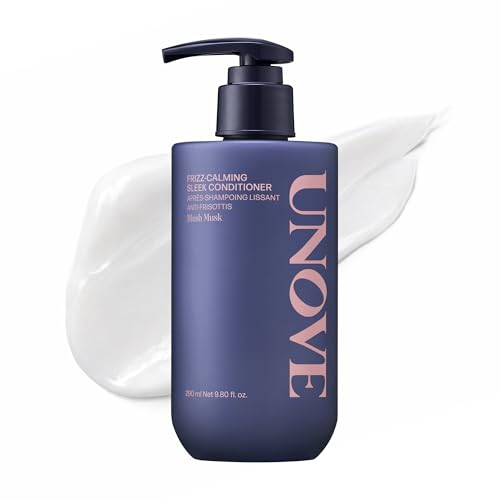
UNOVE Frizz-Calming Sleek Conditioner is the targeted option for frizz rather than a treatment centered on severe damage or volume. Its creamy formula combines plant-derived proteins, hydrating agents, and a seven-oil blend; the brand says the complete system helps control frizz for up to 72 hours. The conditioner is intended for all hair types, making it a useful direction when humidity or static disrupts a smooth finish. That duration applies to use with the UNOVE system, not this conditioner alone, so it may not fit a buyer seeking a standalone time-based result.
Bottom line: Pick this when smoothing frizz is the main goal and you can use the system.
Elizavecca Collagen Coating Treatment Rinse

Elizavecca Collagen Coating Treatment Rinse is the only pick here with a specified short treatment window: apply after shampooing, massage in, leave for 3–5 minutes, and rinse with warm water. Its name and stated purpose center on moisturizing dry, damaged hair, making it suited to someone willing to pause briefly during a wash rather than rinse immediately. It is also framed as a treatment rinse, not specifically for frizz control or fine-hair volume.
Bottom line: Choose this if you want a timed rinse-out treatment for dry, damaged hair.
RYO Strengthen & Volume Conditioner

RYO Strengthen & Volume Conditioner differs from the richer smoothing options by focusing on volume and fine, lifeless hair. The formula includes rice peptides, Korean ginseng, and caffeine, and the brand says its volume effect can last up to 48 hours; it also claims 20% less breakage. A pH-balanced formula is presented for sensitive scalp care, so it may appeal to buyers prioritizing a gentle-feeling scalp routine alongside body. The tradeoff is that volume is the emphasis, not a dedicated frizz-control system or a timed deep-conditioning step.
Bottom line: Pick this if fine hair needs a volume-focused conditioner.
Dr. Groot Hair Thickening Conditioner

Dr. Groot Hair Thickening Conditioner is the scalp-focused option, pairing biotin and encapsulated prebiotics with a protein cream base and rosemary capsules. The brand describes it as a thickening conditioner for thinning hair and cites results related to breakage, softness, and scalp sebum; those are maker claims rather than guarantees for an individual. Salicylic acid is also named, a notable difference from the oil-centered smoothing picks. This smaller-size choice is best for someone who wants a scalp-oriented formula, while buyers seeking a straightforward damaged-length conditioner may prefer a less specialized fit.
Bottom line: Choose this if a scalp-focused thickening formula matches your priority.
How to Choose a Korean Hair Conditioner
Start with the hair concern: damaged lengths generally call for more conditioning, while fine hair often benefits from a lighter approach. Conditioner is usually applied to wet hair after shampooing and rinsed after distributing it through the lengths; keeping a rich formula mainly on mid-lengths and ends can help preserve root volume. For a quick wash, choose a product without a specified treatment pause; where the routine requires 3–5 minutes, allow that time before rinsing. A useful decision rule is to choose a volume-focused formula if fine hair routinely looks flat after conditioning, and a richer oil-based formula if dry ends remain rough. Avoid selecting by ingredient names alone; how the product is positioned for your hair concern matters.
Conditioner for Frizz, Damage, or Fine Hair
Match the intended result to the formulation: smoothing conditioners target surface feel and frizz, richer oil blends are aimed at dry or damaged lengths, and volume-focused products prioritize fine hair. Use the comparison below as a need-to-formula guide rather than treating every conditioner as interchangeable. A system-based frizz claim applies when the accompanying system is used, while a timed rinse treatment adds a step to the wash routine. Fine hair can still need conditioning, but applying less product and concentrating it on the ends can reduce the chance of flattening the roots.
Choose the closest match to your routine:
| Need | Formula direction | Routine consideration |
|---|---|---|
| Dry or damaged lengths | Richer oil blend | Keep application focused on lengths |
| Frizz and humidity | Smoothing conditioner | System claim may require companion products |
| Fine, flat hair | Volume-focused conditioner | Use sparingly near roots |
| Timed treatment | Rinse-out treatment | Allow 3–5 minutes |
How to Apply Conditioner Without Flattening Hair
Apply conditioner after shampoo and spread it through wet hair, concentrating richer products on the mid-lengths and ends when root volume matters. Rinse thoroughly; leftover product can leave hair feeling coated, especially if the formula is rich. A rinse-out treatment that calls for a 3–5 minute pause needs that extra time, unlike a routine conditioner with no stated wait. Use only enough to coat the lengths rather than saturating the scalp, and adjust the amount if hair feels limp. For persistent scalp irritation or unusual hair loss, a conditioner is not a substitute for professional advice.
What Conditioner Claims Mean
Terms such as “thicker-looking,” “less breakage,” and multi-hour frizz control describe intended cosmetic results, not a guaranteed outcome for every person. Breakage is damage to the hair shaft, while shedding involves hair coming from the follicle; these are different concerns. A conditioner can improve slip and softness, but it cannot be assumed to treat hair loss. Likewise, a duration claim tied to a system depends on using the system rather than one product in isolation. If scalp sensitivity is a concern, patch-test a new rinse-off product on a small area and stop use if irritation occurs.
Frequently Asked Questions
Should conditioner go on the scalp or ends?
For most routines, concentrate conditioner on the mid-lengths and ends, especially when fine hair gets flat easily. A scalp-oriented formula may be intended for a different application, so use its specific routine.
How long should rinse-out conditioner stay in?
Many daily conditioners are rinsed after distribution, while a treatment may call for a longer pause. The Elizavecca treatment specifies 3–5 minutes before rinsing with warm water.
Can conditioner prevent hair loss?
Conditioner can help hair feel softer and may reduce breakage, but breakage is not the same as hair loss from the follicle. No conditioner should be treated as a proven hair-loss treatment.
Does anti-frizz conditioner work in humidity?
Smoothing formulas are intended to help with frizz, but results depend on hair and routine. A 72-hour control claim here is tied to using the UNOVE system, not the conditioner alone.
How often should I use hair conditioner?
A common routine is to condition after each shampoo, adjusting amount and frequency if hair becomes limp or coated. Fine hair often needs less product than dry or damaged lengths.