
Best Indoor FM Radio Antennas Compared by Fit

Bingfu 75-Ohm FM Dipole is the best indoor FM radio antenna for most receivers because its 75-ohm dipole includes three connector adapters and a 10-foot cable. Choose Antop Amplified AM/FM Antenna instead if you need an amplified, multidirectional AM/FM antenna; the magnetic-base options suit buyers prioritizing placement on metal.
We earn a commission if you buy through links on this page. As an Amazon Associate I earn from qualifying purchases. Products are compared on manufacturer specifications, not hands-on testing.
- Best overall: Bingfu 75-Ohm FM Dipole – A 75-ohm dipole with three adapters and a 10-foot coaxial cable.
- Best for AM/FM: Antop Amplified AM/FM Antenna – An amplified, multidirectional antenna with AM spring-clip and FM F-female connections.
- Best for magnetic mounting: Superbat Magnetic-Base FM Antenna – A portable magnetic base can sit on a metallic surface.
- Best for longer reach: 16-Foot Magnetic FM Antenna – A 16-foot coaxial cable offers more placement reach than the 10-foot option.
| Product | Best for | Mounting | Cable length | Connector adapters | Shop |
|---|---|---|---|---|---|
| Bingfu 75-Ohm FM Dipole | Flexible connections | Adhesive wall mount | 10 ft | 3 adapters | Check Price on Amazon |
| Antop Amplified AM/FM Antenna | AM/FM reception | Indoor bow design | — | IEC-to-F adapter | Check Price on Amazon |
| Superbat Magnetic-Base FM Antenna | Metal-surface placement | Magnetic base | — | 3 adapters | Check Price on Amazon |
| 16-Foot Magnetic FM Antenna | Longer cable reach | Magnetic base | 16 ft | — | Check Price on Amazon |
Indoor FM Radio Antennas
Match the receiver connection and antenna placement before choosing among these indoor designs.
Bingfu 75-Ohm FM Dipole

The 75-ohm dipole stands out for its three included adapters and 10-foot coaxial cable, which give more connection options than the other passive antennas here. Its F-type plug can be adapted to a TV female socket, TV male plug, or 3.5 mm audio plug, and the adhesive mount supports wall placement. Choose it when the receiver connection matches one of those options and you want to move the antenna away from the stereo. The limitation is that adhesive mounting needs a suitable surface; buyers wanting a magnetic base should choose another design.
Bottom line: Choose this if you want an adhesive-mounted dipole and multiple connector adapters.
Antop Amplified AM/FM Antenna
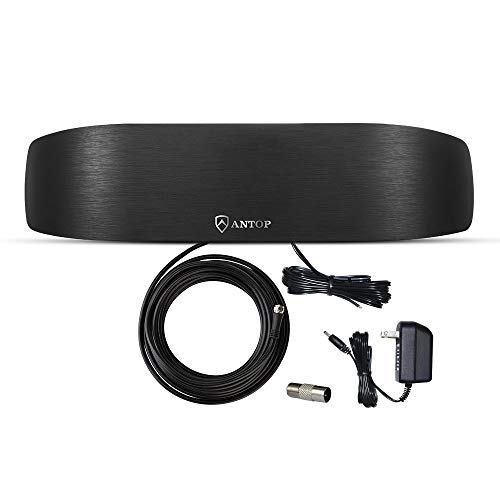
The Antop is the only amplified, multidirectional AM/FM design in this group, making it the distinct choice when AM reception matters alongside FM. It includes an FM F-female connection, AM spring clips, and an IEC male-to-F female adapter. The bow-style housing is intended for indoor use, and the maker describes it as compatible with AM/FM receivers. Its connection setup differs from the F-plug antennas, so check the receiver’s antenna input before choosing; the specifications give no cable length to compare for placement reach.
Bottom line: Pick this when you need an amplified antenna for both AM and FM.
Superbat Magnetic-Base FM Antenna

The Superbat uses a portable magnetic base rather than adhesive mounting, so it suits placement on a metallic surface at home or on the go. It has an F-type male plug and three adapters: TV female socket, TV male plug, and 3.5 mm audio plug. That connector range is useful when a receiver does not accept the F plug directly. The magnetic mount is a limitation if there is no suitable metal surface where the antenna needs to sit; cable length is not available for comparing reach.
Bottom line: Choose it if a magnetic base fits your intended metal mounting surface.
16-Foot Magnetic FM Antenna

The 16-foot coaxial cable sets this magnetic-base antenna apart for placement farther from a receiver than the 10-foot dipole option. Its retractable antenna and magnetic base are designed for indoor positioning on metal surfaces, and its 75-ohm specification identifies the connection type. The maker names compatibility with Pioneer, Onkyo, Yamaha, Marantz, and Sherwood receivers.
Bottom line: Pick this when the 16-foot cable and magnetic mounting suit your setup.
How to Choose an Indoor FM Radio Antenna
Start with the receiver’s antenna jack, then choose a mount and cable reach that let you position the antenna well. A 75-ohm coaxial connection is common on home stereo receivers; F-type, IEC/TV coaxial, and 3.5 mm connections are not interchangeable without the right adapter. A dipole is a simple wire antenna, while an amplified model adds an electronic signal booster. For FM, extend a dipole fully and try a vertical or horizontal position; station polarization and local reflections can change which orientation works best.
For a receiver near a window, a short cable may be enough; when the best placement is across a room, measure the route first. A cable should not be stretched tight or routed where it can be pinched. Choose adhesive mounting only for a surface that can hold it, and magnetic mounting only where a metal surface is available.
FM Antenna Connections and Placement
Receiver connection and antenna placement matter more than brand matching alone. F-type plugs screw onto threaded F jacks, while push-on IEC coaxial plugs fit different television-style sockets; adapters bridge these only when their ends match both devices. A 3.5 mm plug also requires a receiver with the matching antenna input. Check the rear panel label and shape before selecting an adapter, especially when a receiver has separate AM and FM terminals.
Place an indoor antenna high and near a window when possible, then test a few orientations while tuned to a weak station. Keep it away from large metal objects and powered electronics that may interfere with reception. If the antenna uses a magnetic base, put it on a stable metal surface; avoid placing any cable where a door or furniture can damage it.
Dipole, Amplified, and Magnetic Antennas Compared
A dipole is a straightforward passive choice, an amplified antenna adds a powered booster, and a magnetic base describes the mounting method rather than a guarantee of stronger reception. The right design depends on the receiver input, local signal and where the antenna can be positioned. Amplification cannot restore a station that is blocked or too weak at the antenna, and extra gain can sometimes overload a receiver near a strong transmitter. Use this comparison to narrow the type before checking the connection.
| Need | Type to consider | Tradeoff |
|---|---|---|
| Simple FM wire pickup | Passive dipole | Needs orientation and a compatible input |
| AM and FM from one antenna | AM/FM amplified design | Requires matching AM and FM connections |
| Metal-surface mounting | Magnetic-base antenna | Needs an appropriate metal location |
Common Indoor FM Reception Mistakes
Changing antenna position is often more useful than adding amplification. FM signals reflect from buildings, so moving an antenna a few feet or rotating a dipole can alter reception even when the receiver stays in place. Test at least two orientations and a window-side position before deciding the antenna cannot receive a station.
Do not assume a connector adapter converts AM terminals into FM or makes every antenna compatible; the receiver’s input still has to match the antenna’s intended signal. Avoid coiling excess cable tightly beside electronics, and do not leave a retractable element compressed if testing a different extension improves reception. If only one station remains weak, compare it with another frequency before changing equipment.
Frequently Asked Questions
How long should an indoor FM antenna cable be?
Choose a cable long enough to reach a high, open placement without tension; the options here range from 10 to 16 feet. Measure the route from the receiver to the intended spot before selecting a fixed cable length.
Does an amplified FM antenna improve every station?
No; amplification can help a weak signal at the antenna, but it cannot remove a building or terrain blockage. Near a strong transmitter, excess gain can overload a receiver, so compare reception with the booster on and off if the design allows it.
Where should I place an indoor FM antenna?
Try a high location near a window, then rotate or reposition the antenna while listening to a weak station. Keep it away from large metal objects and electronics, since reflections and interference can vary by room.
Are F-type and IEC antenna plugs the same?
No; F-type connectors screw onto threaded jacks, while IEC coaxial plugs push into a different socket. Use an adapter with the correct end for both the antenna cable and receiver input.
Can a magnetic FM antenna attach to any surface?
A magnetic base needs a suitable metal surface to hold in place; wood, glass and plastic will not provide magnetic attachment. Place it where the cable can run without being pinched or pulled.