
Full Body Body Paint: 5 Options by Color and Format

For full body body paint, the UCANBE Athena 20-color palette is the most flexible choice here because it provides the widest range for mixing and layering. Choose a single-color tube instead when a costume calls for extensive coverage in one shade, or the Depvision set when UV-reactive colors matter more than broad color selection.
Body paint is cosmetic color applied across skin, so plan for more product than a face-only design and use a clean applicator for each shade.
We earn a commission if you buy through links on this page. As an Amazon Associate I earn from qualifying purchases. Products are compared on manufacturer specifications, not hands-on testing.
- Best overall: UCANBE Athena 20-Color Palette – Twenty creamy colors, including large black and white pans, cover more mixing and layering needs.
- Best for blue coverage: MEICOLY Royal Blue Cream Paint – The single 2.37-ounce royal-blue tube is suited to full-coverage blue looks.
- Best for red looks: MEICOLY Devil Red Cream Paint – A 2.37-ounce red tube offers a single shade for broad costume coverage.
| Product | Best for | Colors | Amount | Format | Shop |
|---|---|---|---|---|---|
| UCANBE Athena 20-Color Palette | Mixed-color designs | 20 | 5.93 oz | Palette | Check Price on Amazon |
| MEICOLY Royal Blue Cream Paint | Blue full coverage | 1 | 2.37 oz | Tube | Check Price on Amazon |
| MEICOLY Devil Red Cream Paint | Red full coverage | 1 | 2.37 oz | Tube | Check Price on Amazon |
| UCANBE Athena Basic 12-Color Palette | Classic costume shades | 12 | — | Palette | Check Price on Amazon |
| Depvision UV Neon Paint Set | UV party looks | 6 | 6 × 10 ml | Tubes | Check Price on Amazon |
Full Body Body Paint Options
Compare palette breadth, single-color volume and UV-reactive effects before choosing paint for larger skin designs.
UCANBE Athena 20-Color Palette
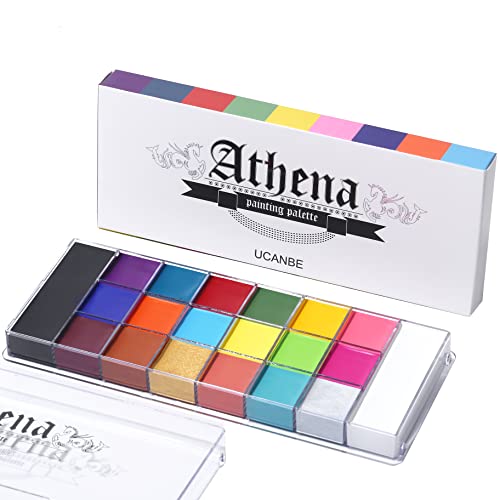
The 20-color palette gives the broadest shade selection in this group, with larger black and white pans alongside gold, silver, and vivid colors. The cream paint is designed for sponge or brush application and can be blended and layered; the maker says it dries quickly to a flexible, smudge-proof finish with minimal rub-off. This suits designs that need several colors or frequent outlining and highlights. A palette is less direct than a large single-color tube when the plan is to cover most of the body in one shade.
Bottom line: Choose this when a multi-shade design matters more than single-color volume.
MEICOLY Royal Blue Cream Paint

The royal-blue tube is the most direct option here for a large area in one color, with 2.37 ounces of paint. The water-based cream is intended to blend with a brush, sponge, or finger, and the maker says its pigment provides full coverage. It may take time to dry, so the maker recommends setting powder or spray to reduce smearing. This is a practical match for blue character or costume coverage, but a single shade cannot supply the color variety of either UCANBE palette.
Bottom line: Pick this for a predominantly royal-blue body or costume look.
MEICOLY Devil Red Cream Paint

The red tube brings 2.37 ounces in one shade, making it a focused choice for broad red coverage rather than a mixed-color design. The maker says the cream is highly pigmented and recommends shaking the tube before use to blend the paint and liquid. Soap and water or makeup remover are listed for cleanup. This format suits devil, vampire, or clown-inspired looks that rely on red; it is less useful when the design needs several colors or detailed palette mixing.
Bottom line: Choose this when red is the main color across a large design.
UCANBE Athena Basic 12-Color Palette

The 12-color basic palette focuses on classic costume shades, including extra-large black and white pans for outlines, highlights, and shadows. Its color range includes red, purple, orange, greens, yellow, brown, and blues, so it can support varied character designs without relying on a single dominant shade. The available product facts do not give a total paint weight, making it harder to estimate how much skin area the palette can cover compared with the 2.37-ounce tubes. It suits designs where shade variety and larger black-and-white pans matter most.
Bottom line: Pick this for classic character colors and frequent black-and-white work.
Depvision UV Neon Paint Set

The Depvision set is distinct for its six UV-reactive neon cream colors, supplied in individual 10-milliliter tubes. The maker says the paint is intended for use under UV lighting and washes off with soap and water or wet wipes. That format suits parties and costume designs where blacklight response is central. Its total quantity is modest beside the 2.37-ounce single-color tubes, so it is a less suitable choice for extensive full-body coverage than for accents or smaller luminous designs.
Bottom line: Choose this for UV-reactive accents rather than maximum coverage.
How to Choose Body Paint for Full Coverage
For broad coverage, first decide whether the design needs one dominant shade or several colors. A 2.37-ounce tube gives a larger single-color supply than six 10-milliliter tubes, while palettes provide more shade choices for patterns and character work. Application tools affect both speed and finish: sponges cover large areas, while brushes help with edges and small details. Work in sections and let each area dry before clothing touches it; cream paints may remain prone to smearing until set. Use this rule: if the design covers most of the body in one color, favor a larger single-shade tube; if it uses three or more colors, favor a palette.
Palette Paint and Single-Color Tubes
Palettes and tubes solve different coverage problems: palettes trade single-shade quantity for range, while tubes simplify repeated coverage in one color. The 20-color format includes more choices than the 12-color option, but both palettes are suited to mixing looks rather than measuring out a known body-sized quantity. A single-color tube can be more predictable for a full-body character color, although the exact coverage depends on skin area, opacity, and how many layers the design needs. UV paint is another specialty format: it prioritizes blacklight effect over maximum volume. For an area larger than a face, plan on testing a small patch to estimate how many coats your chosen design will require.
| Need | Format to consider | Reason |
|---|---|---|
| Many colors | 20-color palette | Widest shade selection among these options |
| Classic costume shades | 12-color palette | Includes oversized black and white pans |
| One-color coverage | 2.37-ounce tube | Single shade in a larger stated amount |
| Blacklight effect | Six-color UV set | Paint is intended for UV lighting |
Applying and Setting Body Paint
Apply body paint to clean, dry skin with a sponge for large areas and a brush for details; thin, even layers are easier to manage than one heavy coat. Allow the paint to dry before dressing or adding another layer, especially with cream formulas that may need setting powder or spray to reduce transfer. Keep paint away from eyes and lips unless its label specifically permits that use, and avoid applying it to broken or irritated skin. For a full-body design, protect clothing and surfaces from transfer during application, and use separate clean tools when changing colors to keep the shades distinct.
Removing Body Paint Safely
Water-based paint and cream makeup may have different removal needs, so use the cleanup method intended for the formula. Soap and water or wet wipes are cited for the UV set and red tube; makeup remover is another stated cleanup option for the red paint. Avoid scrubbing hard, especially over delicate areas, because friction can irritate skin. Remove paint before sleep and rinse residue rather than leaving cleanser on the skin. For a large design, start with a small area and repeat gentle washing as needed instead of using aggressive household solvents.
Frequently Asked Questions
How much body paint does full coverage take?
The amount depends on the area covered, opacity, and number of coats, so a face-sized amount cannot reliably predict full-body use. A 2.37-ounce tube contains more paint than six 10-milliliter tubes, but the product facts do not establish an exact coverage area.
Can body paint rub off on clothing?
Yes, paint can transfer before it dries or sets. Let each section dry fully and use setting powder or spray when the formula calls for it; avoid tight clothing during application.
What tool works best for body paint?
A sponge is useful for broad, even coverage, while a brush gives better control for outlines and details. For full-body designs, use separate clean tools for different colors to limit color mixing.
How should I test body paint before a large design?
Apply a small patch to clean skin and let it dry before committing to a full design. This helps check the shade, blending, drying behavior, and removal on your skin.
How do I remove body paint without harsh scrubbing?
Start with the formula’s intended cleanser, such as soap and water or makeup remover, and wash gently in repeated passes. Avoid household solvents and stop if the skin becomes irritated.