
CRC Catalytic Converter Cleaner: 5 Fuel Additives Compared

For a gasoline fuel additive aimed at emissions-system cleaning, CRC Guaranteed to Pass, 12 oz is the closest match because CRC says its 12-fluid-ounce formula works with gasoline and ethanol blends, including GDI and port-injection engines. The search term names a catalytic-converter cleaner, though, and CRC describes this product as an emissions-system cleaner rather than a converter-specific formula.
Choose Liqui Moly Catalytic System Clean 7110 if you want a product specifically described for gasoline engines with a catalytic converter, or compare the related fuel additives below for their differences.
We earn a commission if you buy through links on this page. As an Amazon Associate I earn from qualifying purchases. Products are compared on manufacturer specifications, not hands-on testing.
- Best overall: Liqui Moly Catalytic System Clean 7110 – It is explicitly suitable for gasoline engines with a catalytic converter.
- Best for multi-bottle supply: Cataclean Gasoline, 16 oz, 6-Pack – The Cataclean pack contains six 16-fluid-ounce bottles.
| Product | Best for | Fuel compatibility | Package size | Stated focus | Shop |
|---|---|---|---|---|---|
| CRC Guaranteed to Pass, 12 oz | Broad gas compatibility | Gasoline, ethanol blends | 12 fl oz, 1 bottle | Fuel-system deposits | Check Price on Amazon |
| Liqui Moly Catalytic System Clean 7110 | Catalytic system focus | Gasoline with catalytic converter | 10.14 fl oz, 1 bottle | Injection system, combustion chamber | Check Price on Amazon |
| Cataclean Gasoline, 16 oz, 6-Pack | Six-bottle supply | Gasoline engines | 16 fl oz, 6 bottles | Fuel and exhaust systems | Check Price on Amazon |
| MotorPower Care Cleaner, 8.45 oz, 2-Pack | Two-bottle pack | Gasoline and hybrid | 8.45 fl oz, 2 bottles | Catalytic converter cleaning | Check Price on Amazon |
| MotorPower Care Cleaner, 8.45 oz | Single bottle | Gasoline and hybrid | 8.45 fl oz, 1 bottle | Catalytic converter cleaning | Check Price on Amazon |
CRC Catalytic Converter Cleaner and Alternatives
Compare these fuel additives by compatibility, package size, and the cleaning target each maker describes.
CRC Guaranteed to Pass, 12 oz
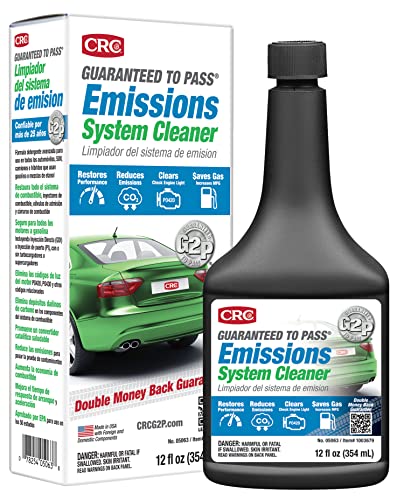
Unlike a formula described specifically for catalytic converters, CRC Guaranteed to Pass is positioned as an emissions-system fuel additive. The 12-fluid-ounce bottle uses a detergent intended to soften and dissolve sludge and deposits in the fuel system. CRC says it is suitable for gasoline or ethanol blends and for gasoline engines with GDI or port injection, turbocharging, or supercharging, as well as hybrids. That broad engine coverage may suit a buyer seeking a pre-emissions-test treatment. The limitation is its cleaning focus: the specifications do not describe it as directly cleaning the catalytic converter.
Bottom line: Choose this if broad gasoline-engine compatibility matters more than a converter-specific cleaning claim.
Liqui Moly Catalytic System Clean 7110

Liqui Moly Catalytic System Clean is the clearest fit for a catalytic-converter-specific search: its use covers gasoline engines with a catalytic converter. The 300-milliliter product cleans the injection system and combustion chamber, and the maker says it protects the converter from soot clogging and improves fuel combustion. It may suit owners looking for one bottle intended for an equipped gasoline engine. Its compatibility is narrower than an additive explicitly covering ethanol blends or hybrids, so buyers with those setups should confirm fuel compatibility before ordering.
Bottom line: Pick this when the vehicle has a gasoline engine and catalytic converter.
Cataclean Gasoline, 16 oz, 6-Pack

Cataclean stands out for its six-bottle package, with each bottle holding 16 fluid ounces, and for naming several exhaust and fuel-system components. The maker says the gasoline formula targets carbon buildup on catalytic converters, injectors, and oxygen sensors, and claims hydrocarbon emissions reductions of up to 50 percent. It may suit a buyer who wants a multi-bottle supply of a cleaner specifically aimed at gasoline exhaust systems. The package is substantially larger than a single treatment bottle, so it is less suited to someone seeking only one container.
Bottom line: Choose this if you want multiple 16-fluid-ounce bottles for gasoline applications.
MotorPower Care Cleaner, 8.45 oz, 2-Pack

MotorPower Care’s two-pack provides two 8.45-fluid-ounce bottles, unlike the single-bottle options here. Its product wording identifies it as a catalytic converter cleaner compatible with gasoline and hybrid vehicles. A specific limitation is included: the maker cautions that cleaning will not repair a cracked, broken, or melted converter. That makes the warning particularly relevant if a physical converter failure is suspected; an additive cannot substitute for repair. The fields do not give a treatment volume or a more detailed list of compatible engine configurations, so confirm the dosing requirement before ordering.
Bottom line: Pick the two-pack if you need the gasoline and hybrid compatibility.
MotorPower Care Cleaner, 8.45 oz
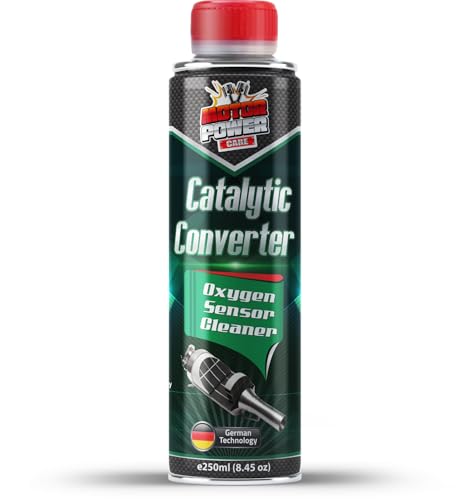
MotorPower Care’s single 8.45-fluid-ounce bottle is the one-bottle counterpart to the brand’s two-pack, and its maker describes use in gas and hybrid engines. The product claims to address emissions codes including P0420 and P0430, and says the treatment goes into a fuel tank containing 5 to 15 gallons of gas. It may suit a buyer seeking a one-bottle dose with a gasoline-volume range. The formula still cannot repair a mechanically damaged converter; the pack version explicitly cautions against expecting cleaner to fix a cracked, broken, or melted unit.
Bottom line: Choose the single bottle if its 5-to-15-gallon treatment range fits your fuel load.
How to choose a catalytic converter cleaner
Start with the vehicle’s fuel type and the component the additive is meant to clean. These products vary between fuel-system detergents, catalytic system cleaners, and broader fuel-and-exhaust formulas; a cleaner aimed at injector deposits is not automatically a repair for a converter fault. Match the maker’s compatibility to gasoline, ethanol blends, or hybrid use before pouring anything into the tank. Also compare the bottle’s dosing range with the fuel already in the tank: the MotorPower single bottle specifies 5 to 15 gallons, while other specifications give no corresponding treatment volume. A cleaner may address deposits, but a cracked, melted, or otherwise physically damaged converter needs diagnosis rather than a chemical treatment.
What catalytic converter cleaners can and cannot do
Fuel additives travel through the fuel system and combustion process; they are not poured directly into the exhaust converter. Gasoline combustion produces exhaust that passes through the catalytic converter, where catalyst-coated surfaces help convert harmful pollutants into less harmful compounds. Additives marketed for deposits aim to clean or reduce buildup along that route, but a fuel treatment cannot restore a broken substrate, repair an exhaust leak, or correct every cause of an emissions code. A check-engine code such as P0420 identifies catalyst-system efficiency concerns, not proof that deposits are the only cause. If a warning returns after a correctly dosed treatment, use diagnosis to distinguish a failing sensor, leak, engine fault, or damaged converter.
Match the additive to fuel and bottle size
Compatibility and dosing are the two practical fit checks: a gasoline-only formula should not be assumed suitable for another fuel, and bottle volume alone does not establish how much gas it treats. The chart separates stated fit from package size so shoppers can compare without treating larger bottles as stronger formulas. Confirm the vehicle uses the fuel type named for the additive and follow its label dosage; do not exceed the amount. Gasoline engines with direct injection, port injection, turbocharging, or hybrid systems have different configurations, so use only the fit claims actually given for each product.
| Need | Closest fit | Stated distinction |
|---|---|---|
| Broad gasoline engine coverage | CRC Guaranteed to Pass, 12 oz | Gasoline and ethanol blends, including GDI and port injection |
| Gasoline engine with catalytic converter | Liqui Moly Catalytic System Clean 7110 | Named catalytic-converter compatibility |
| Multiple bottles for gasoline use | Cataclean Gasoline, 16 oz, 6-Pack | Six 16-fluid-ounce bottles |
| One bottle with a fuel range | MotorPower Care Cleaner, 8.45 oz | 5 to 15 gallons of gas |
When a fuel additive is the wrong fix
A cleaner is the wrong fix when the converter is physically damaged or an engine fault is continually sending excess fuel or oil into the exhaust. Misfires, rich-running conditions, and exhaust leaks can undermine converter operation and may damage emissions components if ignored. Treat an emissions code as a diagnostic clue rather than a verdict: code P0420 alone does not establish a clogged converter, and replacing or cleaning parts without testing can miss the cause. If the engine is misfiring, address that fault first; if the converter is cracked, melted, or broken, use a repair instead of relying on an additive. A temporary code change does not confirm the underlying problem is gone.
Frequently Asked Questions
Can a catalytic converter cleaner fix a P0420 code?
A cleaner may be intended to address deposits, but P0420 signals a catalyst-system efficiency concern and does not prove deposits caused it. If the code returns, diagnose the sensor readings, exhaust leaks, and engine condition rather than repeating additive doses.
How much gas should be in the tank for treatment?
Follow the treatment’s fuel range when one is provided; the MotorPower single-bottle formula specifies 5 to 15 gallons of gas. A package’s fluid-ounce size by itself does not establish the correct dose.
Will cleaner repair a cracked catalytic converter?
No fuel additive repairs a cracked, broken, or melted converter. The MotorPower two-pack explicitly cautions that its cleaner will not fix that kind of physical damage.
Are catalytic converter cleaners safe for hybrids?
Compatibility is product-specific: CRC says its formula can be used in hybrids, and both MotorPower formulas name gasoline and hybrid vehicles. Do not infer hybrid compatibility for a product whose fit only names gasoline engines.
Does a catalytic converter cleaner go directly into the exhaust?
These products are fuel additives, so they are added to the fuel tank rather than poured into the exhaust. The fuel carries the treatment through combustion and into the exhaust stream.