
Blue Water Bottles: 4 Sizes and Styles Compared

STANLEY IceFlow 2.0 Flip Straw, 30 oz is the strongest fit for most people who want a blue water bottle with insulation, a carry handle and a 30-ounce capacity. Choose a different style if you want a lighter plastic bottle, a larger 32-ounce size or a different lid setup.
These options range from stainless steel insulated bottles to a wide-mouth plastic bottle; match the construction and drinking style to how you plan to carry and clean it.
We earn a commission if you buy through links on this page. As an Amazon Associate I earn from qualifying purchases. Products are compared on manufacturer specifications, not hands-on testing.
- Best overall: STANLEY IceFlow 2.0 Flip Straw, 30 oz – Its 30-ounce insulated stainless-steel design combines a carry handle with a flip-up straw.
- Best for lid choice: CoolSub Insulated Bottle, 32 oz – It includes both straw and spout lids in a 32-ounce stainless-steel bottle.
- Best for lightweight carry: Nalgene Wide Mouth, 32 oz – The 32-ounce wide-mouth plastic bottle weighs about 0.37 pounds.
- Best for fold-flat carry: ENCOOL Insulated Bottle, 26 oz – Its 26-ounce insulated bottle has a handle that folds flat.
| Product | Best for | Capacity | Construction | Drinking style | Shop |
|---|---|---|---|---|---|
| STANLEY IceFlow 2.0 Flip Straw, 30 oz | Commuting and workouts | 30 oz | Recycled stainless steel | Flip-up straw | Check Price on Amazon |
| CoolSub Insulated Bottle, 32 oz | Two lid options | 32 oz | 304 stainless steel | Straw or spout | Check Price on Amazon |
| Nalgene Wide Mouth, 32 oz | Lightweight daily carry | 32 oz | BPA-free plastic | Wide mouth | Check Price on Amazon |
| ENCOOL Insulated Bottle, 26 oz | Fold-flat handle | 26 oz | Stainless steel | Straw or twist cap | Check Price on Amazon |
Blue Water Bottles Compared
Compare capacity, bottle construction and drinking options to find a blue bottle suited to your routine.
STANLEY IceFlow 2.0 Flip Straw, 30 oz

STANLEY IceFlow 2.0 Flip Straw, 30 oz stands out with a 30-ounce capacity, a flip-up straw and a carry handle in a cupholder-compatible shape. The stainless-steel tumbler has double-wall vacuum insulation; the maker says drinks stay cold for 12 hours or iced for up to 2 days. Its flip straw lid is described as leakproof when snapped shut. This option suits commuters and gym-goers who want cold drinks and hands-free carrying. The 30-ounce size is smaller than the 32-ounce bottles here, so choose a larger capacity if reducing refills matters more than the compact format.
Bottom line: Choose this if you want an insulated 30-ounce bottle with a flip-up straw and carry handle.
CoolSub Insulated Bottle, 32 oz
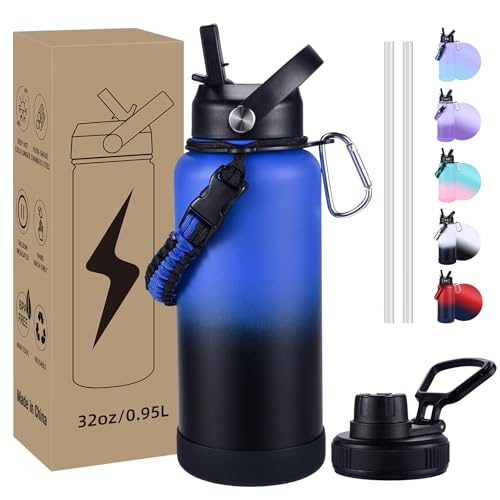
CoolSub Insulated Bottle, 32 oz differs by including two lids, a straw lid and a spout lid, with a paracord handle on its 32-ounce stainless-steel bottle. Its double-wall vacuum construction is designed to limit heat transfer to the outer wall, and the maker describes the lids as leak-proof. This larger capacity suits people who want to switch between sipping and drinking from a spout. The specifications do not give a cold-retention duration, so choose another option if a specific number of insulated hours is essential to your decision.
Bottom line: Pick this if two lid styles matter more than a cold-retention duration.
Nalgene Wide Mouth, 32 oz

Nalgene Wide Mouth, 32 oz is the non-insulated plastic choice among these bottles, with a 32-ounce capacity, a wide mouth and measurement markings in milliliters and ounces. Its impact-resistant, BPA-free plastic body is dishwasher safe, and the maker describes its lid as leak-proof. The wide opening makes it a practical fit for people who want to reach inside for cleaning or use the bottle for more than drinking water. It does not offer the stainless-steel construction or insulation of the other options, which matters if keeping drinks cold is a priority.
Bottom line: Choose this for a lightweight, dishwasher-safe wide-mouth bottle rather than insulation.
ENCOOL Insulated Bottle, 26 oz

ENCOOL Insulated Bottle, 26 oz has the smallest capacity here at 26 ounces and a handle that folds flat for backpack storage. Its double-wall stainless-steel construction is paired with a straw lid and a twist cap for drinking; the maker says it keeps drinks cold for up to 24 hours. This bottle suits active routines where a flatter handle and two drinking methods are useful. Its smaller capacity means more frequent refills than a 32-ounce option for people who drink a lot between stops.
Bottom line: Pick this if a fold-flat handle and two drinking methods suit your routine.
How to choose a blue water bottle
Start with capacity, then decide whether insulation or a lighter plastic body matters more. The choices here range from 26 to 32 ounces, a 6-ounce spread that can mean fewer refills with the larger bottles but more to carry at once. Stainless steel options use double-wall insulation; the plastic option is not described as insulated. For a long commute or outdoor day when cold water matters, select an insulated bottle and compare the maker’s cold-retention time. For a dishwasher-safe bottle with a wide opening, the plastic option is a more direct match. If you regularly drink more than 26 ounces between refills, consider a 30- or 32-ounce size.
Insulated steel or plastic bottle
Insulated stainless steel and single-wall plastic serve different priorities: insulation versus lower weight and simple cleaning. Double-wall vacuum insulation reduces heat transfer between the drink and the outside of the bottle, while steel bottles are generally heavier than plastic versions of similar capacity. These options include 26-, 30- and 32-ounce steel bottles, plus a 32-ounce plastic bottle. Choose plastic when a dishwasher-safe wide mouth and light carry matter most; choose steel when cold retention is a key need. The comparison below uses the construction and drinking style to narrow the choice.
| Need | Useful choice | Why |
|---|---|---|
| Cold drinks | Insulated stainless steel | Double-wall construction |
| Lightweight, dishwasher-safe carry | Wide-mouth plastic | Plastic body and dishwasher-safe design |
| Two lid styles | Straw and spout or twist cap | Switch drinking method |
Choose a lid and opening for your routine
A straw lid supports sipping without tipping the bottle, while a spout or twist cap allows a more direct drink. A wide-mouth opening is also easier to reach into for cleaning than a narrow opening, and it can accommodate larger ice pieces more readily. Choose a straw if you drink while walking or working at a desk; choose a spout or twist cap if you prefer to drink directly from the opening. A bottle that will ride inside a bag needs a lid that closes securely, but closure designs differ. Confirm the closure mechanism suits how you carry the bottle before relying on it in a packed bag.
Capacity, carrying and cleaning
Capacity is a useful proxy for refill frequency, but bottle dimensions and handle shape also affect how it fits a bag or cupholder. The 26-ounce option is the smallest capacity here, while the two 32-ounce bottles hold 6 ounces more. A carry handle helps lift a bottle but may add bulk; a fold-flat handle can sit closer to the bottle when stowed. Wide-mouth designs provide more room for hand cleaning, while dishwasher-safe claims are product-specific rather than universal. Check the bottle’s dimensions against your cupholder or bag pocket before buying, especially if you need a specific fit.
Frequently Asked Questions
How much water does a 32-ounce bottle hold?
A 32-ounce bottle holds 4 US cups, since 1 US cup equals 8 fluid ounces. That is 2 pints or one US quart.
Are stainless steel water bottles insulated?
Only double-wall or otherwise insulated construction is designed to slow heat transfer. The stainless-steel options here specify double-wall insulation, but their cold-retention times differ.
Is a wide-mouth bottle easier to clean?
A wide mouth gives more room to reach inside with a cleaning brush or hand than a narrow opening. Dishwasher safety depends on the specific bottle; the plastic option here is described as dishwasher safe.
Can I put a water bottle in a cupholder?
Cupholder fit depends on the holder’s inside diameter and the bottle’s base width. Measure the holder and compare it with the bottle’s dimensions; one option here is described as having a cupholder-compatible base.
Do straw lids prevent water bottle leaks?
A straw lid can still leak if its closure is not fully shut or its seal is damaged. Close the lid securely and inspect seals regularly, particularly before carrying a filled bottle inside a bag.