
Rollator Tall Handlebar Extensions: 4 Options Compared

For a rollator handlebar extension with a lift range, choose KALLORY Universal Handle Extender: its name says it adds up to 8 inches, a useful deciding figure when the existing handles sit too low for a caregiver. Choose another option if adjustable removal, a claimed capacity, or reinforced design better matches your needs.
These add-on bars raise the pushing grip; they are not replacements for the rollator’s user-facing handgrips or brakes.
We earn a commission if you buy through links on this page. As an Amazon Associate I earn from qualifying purchases. Products are compared on manufacturer specifications, not hands-on testing.
- Best overall: KALLORY Universal Handle Extender – Its name gives a maximum lift of up to 8 inches, unlike the other options.
- Best for quick removal: 400 lb Adjustable Handle Extender – The maker says the height adjusts and the extender releases without tools.
- Best for clamp features: Heavy-Duty Clamp Handle Extenders – Its name calls out upgraded heavy-duty clamps.
- Best for reinforced design: Reinforced Adjustable Handle Extenders – Its name emphasizes a reinforced design and improved stability.
| Product | Best for | Lift or adjustment | Fit claim | Notable feature | Shop |
|---|---|---|---|---|---|
| KALLORY Universal Handle Extender | More stated lift | Up to 8 in | Wheelchairs, rollators, scooters, strollers | Non-slip grips | Check Price on Amazon |
| 400 lb Adjustable Handle Extender | Tool-free removal | Adjustable; height not given | Wheelchairs, rollators, strollers, bikes | Maker claims 400 lb capacity | Check Price on Amazon |
| Heavy-Duty Clamp Handle Extenders | Clamp emphasis | Adjustable; range not given | Most standard round-tube chairs, walkers | Upgraded heavy-duty clamps | Check Price on Amazon |
| Reinforced Adjustable Handle Extenders | Reinforced design | Adjustable; range not given | Wheelchairs, rollators, walkers, strollers | Reinforced design | Check Price on Amazon |
Rollator Tall Handlebar Extensions
Compare the lift, fit claims, and design features, then verify that an extension will fit your rollator’s handle tubes and leave controls clear.
KALLORY Universal Handle Extender

KALLORY Universal Handle Extender stands apart by giving a maximum lift figure: its name says the pair adds up to 8 inches. The maker describes an adjustable extension for wheelchairs, rollators, scooters, and strollers, with textured non-slip grips intended for caregivers pushing from behind. The package is a two-piece set. Its maximum is a ceiling, not a promise that every rollator can be raised by that amount; the tube shape, clamp position, and clearance around brake cables can limit usable adjustment. Choose it when a measurable lift target matters, but confirm fit and control clearance before attaching it.
Bottom line: Pick this if you need a maximum lift and can verify your rollator’s clamp fit.
400 lb Adjustable Handle Extender

400 lb Adjustable Handle Extender is the option whose maker specifically describes quick height adjustment and tool-free release. The two-pack is described for wheelchairs, rollators, strollers, exercise bikes, and bicycle handlebars, which may suit a caregiver moving the accessory between compatible handles. Its name claims a 400-pound capacity, but that claim does not establish the safe load for a particular rollator or its frame. The specifications give no lift measurement, so this is a weaker match when you need a known amount of added height. Choose it for the claimed quick-release feature, after checking tube compatibility.
Bottom line: Pick this when tool-free removal matters more than knowing the exact lift range.
Heavy-Duty Clamp Handle Extenders

Heavy-Duty Clamp Handle Extenders differentiates itself with upgraded heavy-duty clamps in its name. The two-piece adjustable set is described for most wheelchairs, transport chairs, rollators, walkers, and many strollers with round handle tubes. That round-tube qualification matters: a universal-fit claim does not mean a clamp will secure to every handle shape or diameter. Consider it when clamp construction is the deciding feature and your rollator has compatible round tubes.
Bottom line: Pick this if the heavy-duty clamp emphasis suits your round-tube rollator.
Reinforced Adjustable Handle Extenders
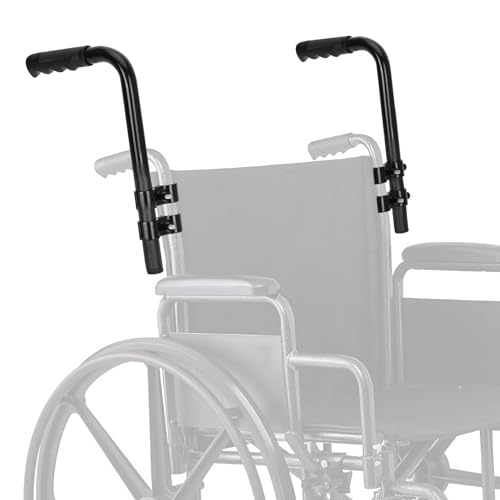
Reinforced Adjustable Handle Extenders is framed around a reinforced design and improved stability rather than a lift measurement. The maker describes adjustable handles for wheelchairs, rollators, walkers, and strollers, and says the adjustment is intended to support a more upright pushing position. No height range or clamp detail is supplied in the specifications, so buyers who need to match a particular lift or tube diameter have an important fit check to do first. This option may suit someone prioritizing the reinforced-design claim, provided the attachment fits without interfering with the rollator’s brakes or folding parts.
Bottom line: Pick this if a reinforced-design claim is your priority and the attachment clears the rollator controls.
How to choose a rollator handlebar extension
Choose an extension by lift range, attachment fit, and whether the raised push handles remain comfortable to steer. Most rollators have a height-adjustable handlebar; a common fitting rule is to set handgrips near wrist-crease height while standing upright, with elbows slightly bent when holding them. A caregiver pushing from behind may need a different height, but higher is not automatically better: a high push point can make control awkward. Measure the current handle height and the additional rise you need before choosing. A clamp must grip the tube securely without covering a brake lever, cable, folding latch, or adjustment button. When any of those clearances are uncertain, verify them before ordering.
Check tube fit and rollator controls
Clamp fit depends on handle-tube diameter, shape, and available straight length, not just the word “universal.” Round tubes are common, but a clamp designed for round tubing may not seat securely on an oval or irregular section. Measure the tube where the clamp would sit and check that both sides have room for the extender’s hardware. Rollator brakes commonly use cables running from the hand levers down the frame; keep added hardware clear of cable movement and brake-lever travel. Also check that the rollator still folds and adjusts normally. Do not use an extension that shifts, twists, or prevents a brake from returning freely.
Extension handles versus rollator handgrips
Caregiver extensions add a higher pushing position; rollator handgrips are the lower grips the user holds while walking. The two serve different people and should not be treated as interchangeable. Use the handgrips at a height that supports upright posture and slightly bent elbows, then assess caregiver reach separately. A raised caregiver bar should not block the user’s access to the brakes, seat, or folding mechanism. The choice is therefore based on who is pushing and what control access must remain open, not simply on the tallest possible setting.
The table separates the decision by need; every extension still requires a fit check on the particular rollator.
| Need | What to prioritize | Check before use |
|---|---|---|
| Known lift target | A maximum rise | Whether the adjustment fits your needed rise |
| Frequent removal | Release method | That the clamp reattaches securely |
| Round-tube attachment | Clamp compatibility | Tube diameter and straight clamp space |
| Control access | Clear positioning | Brake levers, cables, and folding parts |
Safe setup and common mistakes
Install extensions only where the clamp can hold firmly and leave the rollator’s brakes fully usable. Before each outing, check that the attachment has not rotated or loosened, then squeeze and release both brake levers and make sure they move freely. A raised bar is a caregiver pushing aid, not a certified grab handle for lifting a person or supporting body weight. Avoid loading or leaning on an extension unless its maker explicitly gives that use and load rating. A frequent mistake is raising the caregiver grip while accidentally obstructing the user’s own controls; test steering, braking, and folding with the rollator stationary before walking.
Frequently Asked Questions
How high should rollator handles be set?
Set the user’s rollator handgrips near wrist-crease height while standing upright, with elbows slightly bent when holding them. A caregiver extension serves a different pushing position, so measure the added height needed rather than changing the user’s normal grip setting.
Will a universal extender fit every rollator?
No universal-fit claim guarantees a match to every tube. Measure the clamp location’s tube diameter and shape, and ensure there is enough straight tube for the clamp to seat securely.
Can an extension block the rollator brakes?
Yes, a poorly positioned clamp or bar can interfere with brake levers or cables. Keep all hardware clear of cable movement and test both brake levers before using the rollator.
Can a caregiver lift someone by the extender?
Do not use a handle extension to lift or support a person unless its maker explicitly authorizes that use. These products are described as higher pushing handles, and an add-on clamp can shift under a load it was not designed to bear.
How can I tell if the clamp is secure?
With the rollator stationary, check that the attachment does not rotate or slide when you apply ordinary pushing pressure. Recheck brake operation and folding clearance before each outing, and stop using it if the clamp moves.