
Best Fly Fishing Reading Glasses by Fit and Features

For most anglers, HIPPO OUTDOOR Magnetic Release Glasses is the best fit because its magnetic release is designed for quick, one-handed fly changes. Choose Fishoholic Polarized Bi-Focal Sunglasses or V.W.E. Polarized Bifocal Sunglasses, 2-Pack instead if you want polarized sunglasses with integrated bifocal readers; they combine sun protection and magnification rather than a detachable magnifier.
We earn a commission if you buy through links on this page. As an Amazon Associate I earn from qualifying purchases. Products are compared on manufacturer specifications, not hands-on testing.
- Best overall: HIPPO OUTDOOR Magnetic Release Glasses – Magnetic release is designed for fast, one-handed fly changes.
- Best for magnification options: Fishoholic Polarized Bi-Focal Sunglasses – Offers three reader magnifications and polarized lenses.
- Best for a two-pair set: V.W.E. Polarized Bifocal Sunglasses, 2-Pack – Includes two pairs of polarized bifocal sunglasses with 3.00 magnification.
| Product | Best for | Magnification | Attachment | Sun protection | Shop |
|---|---|---|---|---|---|
| HIPPO OUTDOOR Magnetic Release Glasses | Quick fly changes | — | Magnetic release | — | Check Price on Amazon |
| HIPPO OUTDOOR Lanyard Glasses | Clip-on nose fit | — | Clip-on nose | — | Check Price on Amazon |
| Fly Fishing Magnifying Glasses 8295 | Simple clip-on use | — | Clip-on nose | — | Check Price on Amazon |
| Fishoholic Polarized Bi-Focal Sunglasses | Adjustable reader choice | 1.5x, 2.0x, 2.5x | Integrated bifocal | UV400 | Check Price on Amazon |
| V.W.E. Polarized Bifocal Sunglasses, 2-Pack | Two-pair set | 3.00x | Integrated bifocal | UVA/UVB protection | Check Price on Amazon |
Fly Fishing Reading Glasses Compared
Choose between glasses with attached bifocal readers and compact magnifiers designed for quick fly changes.
HIPPO OUTDOOR Magnetic Release Glasses

HIPPO OUTDOOR Magnetic Release Glasses stands out for its magnetic release, which is designed for quick, single-handed access when changing flies. The orange, one-size sport glasses weigh about 0.04 ounces and have a compact 4-inch length, making them a lightweight option for anglers who want a magnifier close at hand. The maker emphasizes a secure nose fit during active river use. Magnification strength and sun protection are not included among the product features, so anglers who need a known reader power or polarized UV protection should choose a different style.
Bottom line: Pick this for a lightweight magnetic magnifier intended for fast fly changes.
HIPPO OUTDOOR Lanyard Glasses
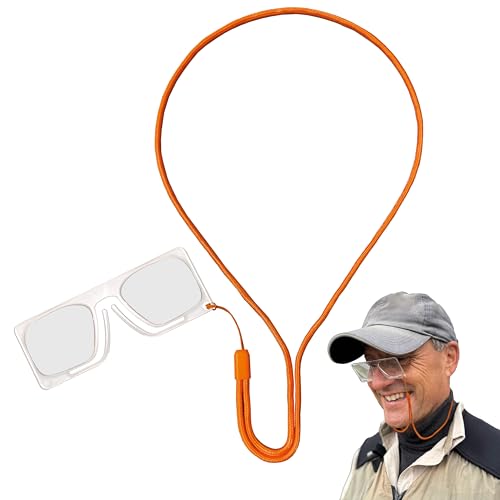
HIPPO OUTDOOR Lanyard Glasses uses a clip-on nose design rather than a magnetic release, making it the alternative for anglers who prefer a fixed fit over a detachable magnetic connection. Its thin optics and lightweight build are intended for extended sessions, and the maker describes magnification for handling small flies and leader lines. The orange, one-size model measures 4 inches long.
Bottom line: Choose this if a clip-on nose design suits you better than magnetic release.
Fly Fishing Magnifying Glasses 8295

Fly Fishing Magnifying Glasses 8295 is a compact magnifier with a clip-on nose and magnetic release, one-handed use, without the sport-glasses framing of the HIPPO options. The maker positions it for use across fishing types, so it may suit anglers who want a small magnifier within reach rather than bifocal sunglasses. It measures 4 inches long and weighs about 0.03 ounces.
Bottom line: Pick this for a compact fishing magnifier with clip-on and one-hand use.
Fishoholic Polarized Bi-Focal Sunglasses

Fishoholic Polarized Bi-Focal Sunglasses differs from the clip-on magnifiers by integrating a bifocal reader into polarized sunglasses. Buyers can choose among 1.5x, 2.0x, and 2.5x magnification options, while UV400 protection and wide sides intended to reduce side glare suit bright-water use. The maker says the polycarbonate frame and lenses are lightweight for all-day wear, and a hard case and cleaning pouch are included. The reader strength is chosen as an option rather than adjustable on one pair, so select the magnification you need before settling on this style.
Bottom line: Choose this if you want polarized sunglasses with a choice of bifocal strength.
V.W.E. Polarized Bifocal Sunglasses, 2-Pack

V.W.E. Polarized Bifocal Sunglasses, 2-Pack is the only two-pair set here, with one black and one brown pair of polarized sunglasses, each with bifocal reader windows. The specified magnification is 3.00, a stronger fixed option than the selectable powers offered by Fishoholic Polarized Bi-Focal Sunglasses. The maker states 100% protection against UVA and UVB rays; two microfiber cleaning and storage pouches are included. Each pair measures 5 5/8 inches wide by 1 5/8 inches high. The fixed reader strength offers less choice, so anglers who need a lower magnification should consider another pair.
Bottom line: Pick this if 3.00x suits you and you want two polarized pairs.
How to Choose Fly Fishing Reading Glasses
Start with how you want magnification to reach your eyes: an attached bifocal stays in the sunglasses, while a compact nose-mounted magnifier can move out of the way between fly changes. Choose a magnetic or clip-on design if you want quick access without swapping glasses; choose bifocals if you want sun lenses and reading power together. Reader strength is a personal fit, not a measure of lens quality, so use a power you can focus through comfortably at your normal tying distance. For a sunglasses-style option, compare UV protection and polarization separately: UV protection addresses ultraviolet exposure, while polarization reduces reflected glare.
The table separates the main designs represented here by their use and tradeoff.
| Design | Good fit when | Tradeoff |
|---|---|---|
| Magnetic/clip-on magnifier | You need quick fly access | Sun protection may not be included |
| Integrated bifocal sunglasses | You want readers and sun lenses together | Magnification may be fixed or selected as a version |
Magnification and Tying Distance
Higher reader power makes near objects appear larger but narrows the comfortable range of focus, so stronger is not automatically better for tying. A practical decision rule is to choose the lowest magnification that lets you clearly see a hook eye and leader at your usual tying distance. The options here range from 1.5x to 3.00x for bifocal styles, while the magnifying clip-ons do not give a numeric power. If you already use reading glasses, use that strength as a starting point, then consider whether the focal window sits where you look while tying. A bifocal window can require a downward glance; a nose-mounted magnifier is positioned for close work.
Polarization and UV Protection on the Water
Polarized lenses reduce reflected glare from water, but they do not replace ultraviolet protection. Look for an explicit UV claim when choosing sunglasses for long days outside, and remember that a darker tint alone does not confirm UV blocking. Brightness, cloud cover, and time on the water affect glare, while polarization can make some screens harder to read. Anglers who frequently check a phone or fish finder should verify that their display remains legible through polarized lenses before relying on that setup. Keep lenses clean with a microfiber cloth rather than a rough shirt, which can scratch lens coatings.
Using and Caring for Fly Fishing Readers
Keep a compact magnifier secured when it is not in use, since a small accessory can be easy to drop in moving water. A lanyard or magnetic connection can help keep the device accessible, but neither replaces a secure fit; check retention before leaning over a current. Rinse grit from sunglasses before wiping them, because dry particles can scratch polycarbonate lenses. Store eyewear in a case between sessions and avoid leaving it on a hot dashboard, where heat can warp frames or damage lens coatings. At the water’s edge, use readers for tying while keeping attention on footing and changing current conditions.
Frequently Asked Questions
Are polarized lenses useful for fly fishing?
Polarized lenses reduce reflected glare from water, which can make the surface easier to view in bright conditions. They do not by themselves confirm UV protection, so check for a separate ultraviolet claim.
What magnification is best for tying flies?
Use the lowest magnification that lets you see the hook eye and leader clearly at your usual tying distance. Higher power enlarges close details but makes the comfortable focus range narrower.
Do fly fishing readers need UV protection?
UV protection is a useful feature for sunglasses worn outdoors because tint alone does not show whether lenses block ultraviolet radiation. Choose eyewear with a UV claim rather than judging by lens darkness.
Can magnetic fly fishing glasses stay attached in a river?
A magnetic connection is intended to keep a magnifier close and allow quick access, but no attachment should be assumed secure in every current. Check that it is retained before leaning over moving water.
How should I clean polarized fishing lenses?
Rinse away grit before wiping, then use a microfiber cloth to reduce scratching. Store the glasses in a protective case when they are not being worn.