
Best Colored Concrete Crack Filler: 3 Colors Compared

For a brown-toned surface, ConSandtrate Brown Crack Filler is the best colored concrete crack filler here because it comes in brown and activates with water. Choose ConSandtrate Coral Buff Crack Filler for coral buff or ConSandtrate Brick Red Crack Filler for brick red when those shades better suit your concrete.
Concrete crack fillers are materials used to fill gaps in concrete; a colored filler can make a repair less conspicuous, but exact shade matching depends on the surrounding surface.
We earn a commission if you buy through links on this page. As an Amazon Associate I earn from qualifying purchases. Products are compared on manufacturer specifications, not hands-on testing.
- Best overall: ConSandtrate Brown Crack Filler – Brown color and water-activated application suit brown-toned concrete.
- Best for coral buff: ConSandtrate Coral Buff Crack Filler – The coral buff shade gives a distinct alternative to brown and brick red.
- Best for brick red: ConSandtrate Brick Red Crack Filler – The brick red option is made for surfaces where that shade is a closer match.
| Product | Best for | Color | Shop |
|---|---|---|---|
| ConSandtrate Brown Crack Filler | Brown-toned concrete | Brown | Check Price on Amazon |
| ConSandtrate Coral Buff Crack Filler | Coral buff surfaces | Coral buff | Check Price on Amazon |
| ConSandtrate Brick Red Crack Filler | Brick-red surfaces | Brick red | Check Price on Amazon |
Colored Concrete Crack Fillers
Compare the available shades and application formats, then choose the one closest to the surrounding concrete.
ConSandtrate Brown Crack Filler
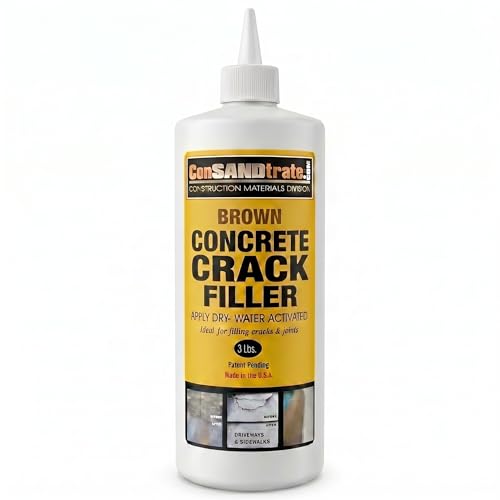
The brown shade distinguishes this filler from the coral buff and brick red alternatives. ConSandtrate is a polymer-based material intended for cracks in concrete and stonework around driveways, walkways, patios and pool decks. Pour the material into the crack, then mist with water; the maker says its polymers react as concrete expands and contracts. This approach suits someone who wants a dry, pour-in material rather than a mixed repair compound. The main limitation is color: brown may stand out against gray or strongly red-toned concrete, so choose it only when that shade is a reasonable visual match.
Bottom line: Pick this when brown is the closest available shade for your concrete.
ConSandtrate Coral Buff Crack Filler

Coral buff gives this option a warmer shade than the brown filler and a different appearance from brick red. The 3-pound powder is poured into the crack and sprayed with water; the maker says the water activates the polymer material and that the polymers react when wet. It is intended for cracks in driveways, pathways, patios and pool decks, and the maker describes the application as avoiding messy polyurethane and cement mixes. This is a sensible fit when the surrounding concrete has a buff or coral cast. Its limitation is the same as any colored repair: a shade mismatch can make the filled line more noticeable.
Bottom line: Choose this for concrete with a coral-buff tone and a pour-and-mist application.
ConSandtrate Brick Red Crack Filler

Brick red is the defining difference here, making this option distinct from the brown and coral buff shades. The maker describes it as a water-activated polymer filler: pour it into the crack and mist with water. Its intended settings include concrete surfaces such as patios, driveways and pool decks. That makes it worth considering when the surrounding concrete has a pronounced red or brick-like tone and a contrasting gray fill would be distracting. The limitation is that the shade is specialized; on neutral gray concrete, brick red can draw more attention to the repair rather than blend with it.
Bottom line: Pick this when brick red is closer to the surrounding surface than the other shades.
How to Choose a Colored Concrete Crack Filler
Choose by shade first, then by the type of crack and application you can manage. Concrete color can vary from one area to another because of age, aggregate, finish and weathering, so compare the filler with the concrete next to the crack rather than a distant section. These choices are brown, coral buff and brick red; none is a universal match for gray concrete. A water-activated powder is poured into the prepared crack and misted, while liquid or caulk-style fillers are applied differently and may need different tools. Colored granular products are intended for surface cracks, not for rebuilding a slab or correcting movement. If the crack is actively widening or the slab has shifted vertically, address the underlying movement before treating it as a cosmetic fill.
How to Match the Filler Color
Match the color to the concrete immediately beside the crack, because shade and texture change the way a repair reads. Use a small, inconspicuous area as a visual comparison when possible, and assess it after the material has set and dried according to its label. A gray surface can still have warm, red or brown undertones, while a weathered surface may be lighter than a newly exposed crack edge. Choose the closest shade rather than assuming a color name guarantees a precise match. Also consider whether the concrete is smooth, broom-finished or exposed aggregate: a granular fill may remain more visible in a textured surface. Avoid coloring or coating the repair until the filler has fully cured as directed.
Where Crack Filler Fits in Concrete Repair
Crack filler is appropriate for narrow, stable surface cracks; it is not a substitute for repairing a moving slab or a failed joint. Control joints are deliberate grooves that help manage concrete cracking, and they should not be treated as ordinary cracks without checking the joint’s purpose. Water entering a crack can contribute to freeze-thaw damage in cold climates, so keep drainage and runoff in mind when planning a repair. For a basic fill, clear loose debris and dirt from the crack so the material can reach the sides, then use the specified activation method. Do not assume a dry-powder crack filler is suitable for a deep void or a crack wider than its label allows.
Preparing and Applying Water-Activated Filler
Start with a clean, dry crack unless the package directions call for a damp surface, and remove loose concrete and debris before adding filler. Water-activated powders need enough water to trigger setting, but excess water can wash material away or dilute the fill; use a controlled mist rather than a heavy stream. Apply the powder evenly and avoid walking or driving on the repair until its cure time has passed. Keep the material out of eyes and avoid breathing dust while pouring; gloves and eye protection reduce contact during concrete repair. For any crack that is growing, has a height difference across its edges, or admits significant water, get a repair assessment instead of relying on a cosmetic filler.
Frequently Asked Questions
Can colored concrete crack filler match old concrete?
It may blend, but exact matching is difficult because weathering, aggregate and surface texture change the appearance. Compare the filler with the concrete directly beside the crack, not a newer or distant area.
Should I fill a concrete expansion joint?
Do not treat an expansion or control joint like an ordinary crack without checking its purpose. Joints are designed to accommodate movement, and a rigid fill can interfere with that movement.
How wide a concrete crack can I fill?
Use the product label’s width and depth limits; fillers differ in how much space they can bridge. For a widening crack or one with a vertical offset, address the movement or slab problem rather than relying on surface filler.
Does concrete crack filler need a dry surface?
Many fillers require a clean, dry surface, but water-activated powders may require misting as part of application. Remove loose debris first and use only the moisture level directed for that specific material.
When can I walk or drive over a filled crack?
Wait for the product’s cure time before use, since set times vary by formulation and weather. Keep foot and vehicle traffic off the repair until the label allows it.