
Best Bee Venom Products: 5 Skin Care Picks Compared

KUSHI Bee Venom Serum is the best bee venom product for most people because its serum formula gives a specific 0.5% bee venom concentration alongside honey, royal jelly, propolis and jojoba oil. Choose a cream instead if you prefer a moisturizer format or want a larger container.
Bee venom skin care is topical cosmetic care, not an injectable treatment. Anyone with a bee-sting allergy should avoid bee venom products; patch-test new skin care before applying it broadly.
We earn a commission if you buy through links on this page. As an Amazon Associate I earn from qualifying purchases. Products are compared on manufacturer specifications, not hands-on testing.
- Best overall: KUSHI Bee Venom Serum – Its serum format lists 0.5% bee venom and four complementary ingredients.
- Best for a two-jar set: Bee Venom Cream, 2-Pack – The product name specifies two 2.12-ounce jars and names hyaluronic acid and vitamin E.
- Best for a simple cream: Bee Venom Skin Cream, 2 Pcs – Its formula pairs bee venom with vitamin K12 and hyaluronic acid.
| Product | Best for | Format and size | Formula highlights | Shop |
|---|---|---|---|---|
| KUSHI Bee Venom Serum | Serum routine | Serum, 0.5 fl oz | 0.5% bee venom, honey, royal jelly, propolis | Check Price on Amazon |
| Bee Venom Cream, 2-Pack | Two-jar set | Cream, 2.12 oz each | Bee venom, hyaluronic acid, vitamin E | Check Price on Amazon |
| Bee Venom Skin Cream, 2 Pcs | Hydrating cream | Cream, 2.12 fl oz | Bee venom, vitamin K12, hyaluronic acid | Check Price on Amazon |
| JISKG Bee Venom Restoration Cream, 2 Pcs | Light-texture cream | Cream, 2.12 fl oz | Bee venom, vitamin K12, plant extracts | Check Price on Amazon |
| Bee Venom Skin Treatment Cream, 2.12 oz | Manuka honey cream | Cream, 2.12 oz | Bee venom, Manuka honey, plant essences | Check Price on Amazon |
Best bee venom products compared
Compare each formula’s format and named ingredients to find a topical option that suits your routine.
KUSHI Bee Venom Serum

KUSHI Bee Venom Serum stands apart as a serum with a 0.5% bee venom concentration, rather than a cream. Its formula also names Manuka honey, royal jelly, propolis and jojoba oil, and the maker presents it as a lightweight hydrating and firming face serum. That makes it a fit for someone who wants a small serum step instead of a jar moisturizer. The maker says regular use helps the look of firmness and fine lines; those are cosmetic claims, not guaranteed results. At 0.5 fl oz, it is the smallest container among these picks, so it may not suit buyers who prefer a larger cream.
Bottom line: Pick this if a concentrated, small-format serum suits your routine.
Bee Venom Cream, 2-Pack

Bee Venom Cream, 2-Pack is the only option whose name specifies two 2.12-ounce jars, making the set format its main distinction. The maker says the cream is designed for hydration and the appearance of firmer, smoother skin over time. Choose it if you want a cream and value having two jars in the set; the formula includes salicylic acid, which may not suit every skin-care routine. Check compatibility with other exfoliating products before combining them.
Bottom line: Choose this if you want a cream set with two full-size jars.
Bee Venom Skin Cream, 2 Pcs

Bee Venom Skin Cream, 2 Pcs combines bee venom with vitamin K12 and hyaluronic acid, a different ingredient pairing from the serum and two-jar cream options. The maker describes it as a moisturizing cream for dry skin and says to massage an even amount into skin until absorbed. Its 2-piece name makes it relevant for someone seeking more than one cream container, though the size is given as 2.12 fl oz per pack rather than a clear per-piece amount. The maker also claims a firmer-looking complexion and less visible fine lines; treat those as cosmetic aims rather than assured outcomes.
Bottom line: Pick this if vitamin K12 and hyaluronic acid are priorities.
JISKG Bee Venom Restoration Cream, 2 Pcs

JISKG Bee Venom Restoration Cream, 2 Pcs distinguishes itself by emphasizing a light texture that absorbs quickly and does not feel greasy, according to the maker. Its named ingredients include bee venom, vitamin K12 and plant extracts, and the maker also says it is intended to hydrate and soften skin. Choose it if a lighter-feeling cream matters more than a serum format or a formula naming hyaluronic acid. As with any cosmetic, “for all skin types” is not a guarantee that an individual will tolerate it, so patch-test before routine use. The 2-piece name and 2.12-fl-oz pack size do not clarify the amount in each piece.
Bottom line: Choose this if you prefer a cream marketed for a light, quick-absorbing feel.
Bee Venom Skin Treatment Cream, 2.12 oz
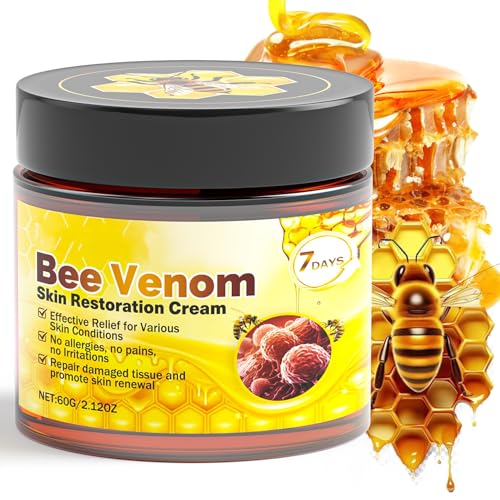
Bee Venom Skin Treatment Cream, 2.12 oz is the only cream here that names Manuka honey in its formula, alongside plant essences. The maker describes it as a day-and-night moisturizer and claims visible changes in firmness in 7–14 days; that timing is a product claim, not a promise. It may suit someone looking for a single 2.12-ounce cream with Manuka honey rather than a multi-piece set. Its formula is less specifically detailed than the serum’s, so it is not the strongest choice if ingredient concentration is your deciding factor.
Bottom line: Pick this if a single cream with Manuka honey fits your preferences.
How to choose a bee venom skin product
Choose by format and ingredient transparency first: a serum is a thinner leave-on step, while a cream is a moisturizer format. Among these products, only one gives a bee venom concentration, 0.5%, so buyers prioritizing a concentration can use that as a clear comparison point. Next, compare the added ingredients and container size against your existing routine. A simple rule: if you want a serum step, choose the serum; if you want a cream, compare its named ingredients and whether it is a single jar or a set. Cosmetic claims about firmness or fine lines do not guarantee an individual result, so avoid choosing solely on a promised timeline.
Bee venom allergy and skin precautions
People with a known bee-sting allergy should avoid topical products containing bee venom, because exposure can provoke an allergic reaction. For other buyers, patch-test a small area of skin and wait 24–48 hours before broader use; do not apply a new formula to broken or irritated skin. Stop using it if burning, swelling, hives or persistent irritation develops, and seek urgent care for breathing trouble or facial/throat swelling. Keep creams and serums away from eyes and mucous membranes. “Natural” or “gentle” wording does not rule out an allergic or irritant response, and a claim of suitability for all skin types cannot predict an individual reaction.
Serum and cream formats compared
Serums are usually thinner and intended to layer under moisturizer; creams are thicker products used to moisturize the skin. A practical routine is to apply a serum first and a cream afterward, allowing each layer to settle rather than applying several new products at once. This comparison includes both formats, and only the serum names a bee venom percentage. Use the table to match the format to your routine, then check the specific product’s ingredients if you have sensitivities.
| Format | Typical role | Choose when |
|---|---|---|
| Serum | Lightweight layer before moisturizer | You want a serum step or a concentration |
| Cream | Moisturizing layer | You prefer a cream texture or want a jar format |
How to add a new product to a routine
Introduce one new skin-care product at a time and keep the rest of the routine steady for several days, so irritation is easier to trace. Apply a small amount to clean, dry skin as directed by the maker, and avoid layering multiple products with potentially irritating active ingredients until you know your tolerance. The cream with salicylic acid may be a poor match for a routine already using exfoliating acids if your skin becomes dry or irritated. Store each product as directed on its packaging and keep it out of reach of children. Bee venom products are cosmetic skin care, not a substitute for medical advice or treatment.
Frequently Asked Questions
Can bee venom skin care cause an allergic reaction?
Yes, bee venom can trigger a reaction, especially in someone with a bee-sting allergy. Avoid these products if you have that allergy; for other users, patch-test a small area and wait 24–48 hours before wider use.
How should I patch-test a new bee venom cream?
Apply a small amount to a limited area of clean skin and wait 24–48 hours before using it more broadly. Do not continue if you develop swelling, hives, burning or persistent irritation.
Should I apply serum or cream first?
Apply a serum before a cream because serums are generally thinner and creams provide a more occlusive moisturizing layer. Let the serum settle before applying the cream, and introduce only one new formula at a time.
Can I use bee venom cream with salicylic acid?
One cream in this comparison names salicylic acid, an exfoliating ingredient that can irritate or dry some skin. Avoid combining it at first with other exfoliating acids, and introduce products gradually rather than layering several new actives together.
Is bee venom skin care an alternative to injections?
No; a topical serum or cream is not an injectable treatment. Claims about collagen, firmness or fine lines are cosmetic claims and should not be taken as guaranteed effects.