
Deck Crevice Cleaning Tools: 5 Options Compared

For deck-board debris and patio weeds, Sporty’s Telescoping Crevice Cleaning Tool stands out for its telescoping handle and heat-treated stainless steel blade. Choose another style if you need a pole-mounted head, an adjustable long handle, or a brush for surface buildup.
A deck crevice cleaning tool is a manual scraper or weeder made to reach joints between boards or hardscape. Match the blade to the gap, and avoid forcing a blade into a tight joint.
We earn a commission if you buy through links on this page. As an Amazon Associate I earn from qualifying purchases. Products are compared on manufacturer specifications, not hands-on testing.
- Best overall: Sporty’s Telescoping Crevice Cleaning Tool – Its telescoping handle and stainless steel blade are made for clearing debris from deck-board cracks.
- Best for broom-pole use: Zenith by Danco Crack and Crevice Cleaner – The head screws onto a standard push broom pole or paint handle.
- Best for multiple tasks: BARAYSTUS Adjustable 3-in-1 Crevice Tool – It combines two scrapers with a metal wire brush.
| Product | Best for | Handle setup | Blade or head | Extra feature | Shop |
|---|---|---|---|---|---|
| Sporty’s Telescoping Crevice Cleaning Tool | Deck debris removal | Telescoping | Heat-treated stainless steel | Hanging ring | Check Price on Amazon |
| 43.7-Inch Manual Crevice Weeder | Upright weeding | 43.7-inch handle | L-shaped blade | Ergonomic grip | Check Price on Amazon |
| Zenith by Danco Crack and Crevice Cleaner | Existing pole owners | Screws onto pole | Long and short blades | Pole attachment | Check Price on Amazon |
| KLDOLLAR Adjustable Crevice Weeder | Adjustable reach | Three adjustable lengths | Serrated tine blade | Soft grip | Check Price on Amazon |
| BARAYSTUS Adjustable 3-in-1 Crevice Tool | Scraping and brushing | Adjustable | Two scrapers and wire brush | Stainless steel blade | Check Price on Amazon |
Deck Crevice Cleaning Tools Compared
Compare handle styles and blade designs to find a tool suited to your deck gaps and cleanup tasks.
Sporty’s Telescoping Crevice Cleaning Tool

Unlike the pole-mounted or multi-head options, Sporty’s Telescoping Crevice Cleaning Tool has a telescoping handle and a heat-treated stainless steel blade for removing debris from cracks. The hard rubber grip is intended to provide a firm hold, and the handle has a ring for hanging storage. A sharpened edge on the back is designed for cutting weeds, so this tool can address both loose debris and growth between boards. It suits someone who wants a dedicated hand tool with reach adjustment. The size is Small, so buyers seeking a wide brush or interchangeable heads should choose a different design.
Bottom line: Choose this for deck debris and a telescoping handle in a dedicated scraper.
43.7-Inch Manual Crevice Weeder

43.7-Inch Manual Crevice Weeder is the long-handled option here, with a 43.7-inch total length and an L-shaped blade meant to dig into soil and loosen hard earth. Its ergonomic grip is intended to let the user weed while standing upright rather than repeatedly bending. The high-carbon-steel construction has an anti-rust treatment. This design suits stubborn weeds in deck gaps and nearby stone joints. Its blade is aimed at digging and pulling weeds, not brushing broad surface buildup, so choose a multi-tool if cleaning loose debris across joints is also a priority.
Bottom line: Choose this for upright weeding with a long, fixed-length handle.
Zenith by Danco Crack and Crevice Cleaner

Zenith by Danco Crack and Crevice Cleaner differs from the long-handled weeders because its head screws onto a standard push broom pole or paint handle. Its long and short blades are intended for different joint depths: the longer blades for deeper cracks in concrete or wood decks, and the shorter blades for composite decks. That makes it a useful choice for someone who already owns a compatible handle and wants blade options. The specifications give no handle with the head, so this choice matters most when a suitable pole is already available.
Bottom line: Choose this if you have a compatible broom pole or paint handle.
KLDOLLAR Adjustable Crevice Weeder
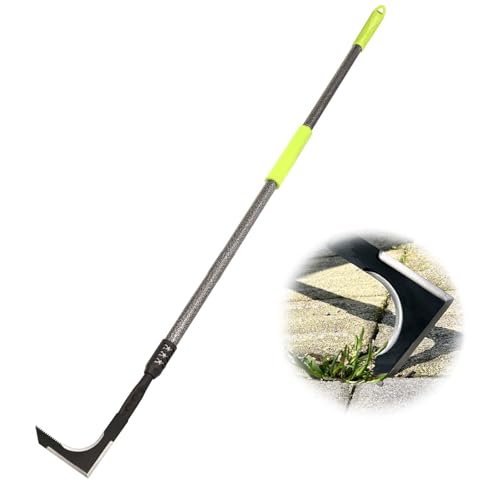
KLDOLLAR Adjustable Crevice Weeder focuses on adjustable reach: its handle has three length settings, and the upgraded blade has a serrated tine. Stainless steel is used for the weeding tool, while the handle is alloy steel with a rust-resistant coating. A soft grip is included. It suits buyers who want to adapt the handle length while working sidewalk, paver, or wooden-floor gaps. Unlike BARAYSTUS Adjustable 3-in-1 Crevice Tool, it does not include a brush and two separate scraper shapes, so it is less suited to buyers who want dedicated tools for both narrow and wider joints.
Bottom line: Choose this when adjustable handle length matters more than multiple heads.
BARAYSTUS Adjustable 3-in-1 Crevice Tool

BARAYSTUS Adjustable 3-in-1 Crevice Tool is the only option here with two scraper shapes plus a metal wire brush. The curved scraper is intended for standard crevices, with a minimum width of 0.08 inch and maximum depth of 1.5 inches; the triangular scraper is for wider crevices. Its stainless steel blade is 0.08 inch thick, and the tool weighs 2 pounds. It suits someone who wants to scrape joints and brush surface buildup with one tool. The dimensions indicate a broader tool than a simple crevice blade, so consider storage space and narrow access before choosing it.
Bottom line: Choose this for multiple scraper shapes and a wire brush in one tool.
How to Choose a Deck Crevice Cleaning Tool
Choose a blade that fits the joint and a handle that suits the work position. Narrow, deep cracks call for a slim blade; wider joints may accommodate a broader scraper or brush. A long handle can reduce repeated bending, while a pole-mounted head saves buying another handle if you already own a compatible one. Metal edges can scratch painted or composite surfaces if dragged across the board face, so keep the working edge inside the gap. Stop if the blade binds rather than levering against the board edge. For a measured decision, choose a blade narrower than the clear joint width; if you cannot measure the gap, test gently in an inconspicuous area before working across the deck.
| Need | Tool feature |
|---|---|
| Loose debris in deck gaps | Dedicated blade |
| Weeding while standing | Long handle |
| Existing compatible pole | Pole-mounted head |
| Scraping and surface buildup | Multiple scrapers and brush |
Match the Blade to Deck Board Gaps
Match the working edge to the gap rather than forcing a thick blade between boards. A blade that wedges can mar board edges or become difficult to withdraw, especially where debris has compacted. Work along the joint with short, controlled strokes and lift out loosened material instead of using the board as a fulcrum. Composite, painted, or sealed deck surfaces can show scratches, so keep steel edges within the joint and avoid scraping across the finish. If a tool’s working width or shape does not suit the gap, use a narrower hand tool or a soft brush for loose material. Clear debris before rinsing so wet leaves and dirt are not pushed farther into the joint.
Remove Weeds Without Damaging the Deck
Use a weeding blade for rooted growth and a scraper or brush for loose material. Digging tools work by getting beneath roots, while a brush is better suited to surface residue; they are not interchangeable for every task. Pull slowly and keep the blade pointed away from feet and hands, since a sudden release from a tight joint can shift the tool. Wear eye protection when scraping dry grit or brittle plant matter, which can flick upward. Avoid prying boards or striking the deck with the tool; a crevice cleaner is for the joint, not lifting or repairing boards. For large or stubborn growth, clear a short section first and check that the board surface remains undamaged before continuing.
Care for Crevice Cleaning Tools
Remove damp plant matter and soil from the blade after each use, then dry the metal before storage to reduce corrosion risk. Rust-resistant coatings and stainless steel can help resist rust, but they do not make a tool maintenance-free. Check the blade and handle connection before use; a loose head can twist under pressure. Keep sharp or serrated edges covered or stored where children cannot reach them, and hang tools by a secure ring or store them with the blade away from walkways. Wire brushes can shed or bend with wear, so inspect the bristles and replace a damaged head rather than brushing with loose wire. Store long-handled tools so they cannot tip or fall.
Frequently Asked Questions
Can I use a crevice cleaner on composite decking?
Yes, but keep a metal edge inside the gap and avoid dragging it across the board face. A short-blade design is intended for composite deck cracks; test gently in an inconspicuous area first.
How do I clear debris between deck boards?
Use short strokes along the joint to loosen leaves and dirt, then lift the debris out. Avoid levering against board edges, which can scratch or damage them.
Should I use a scraper or a wire brush for deck gaps?
Use a scraper for compacted material or rooted weeds and a brush for surface buildup. A brush may not reach deep debris, while a scraper can scratch a finished deck if it slips.
How can I avoid scratching deck boards while weeding?
Keep the blade inside the gap and pull with controlled strokes rather than prying sideways. Stop if the edge binds, and test the tool in a hidden spot before cleaning a visible area.
Do I need a long handle for cleaning deck crevices?
A long handle can reduce bending for jobs that cover many joints, while a hand tool can offer more control in tight spaces. Choose a pole-mounted head if you already have a compatible handle.