
Best Vinyl Siding Repair Kit: 3 Patch Options Compared

Guppyhill Vinyl Siding Repair Kit, 12 Patches is the best vinyl siding repair kit for most small repairs because it includes 12 PVC patches measuring 6.3 by 4.75 inches. Choose Mendyl Vinyl and Stucco Patch Kit, 2 Patches instead if you want patches you can trim to shape, or Stepsaver Vinyl Siding Repair Patch Kit, 8 Patches if center reinforcement and irregular edges matter more than having a larger count.
These adhesive patches cover surface damage; they do not replace a damaged siding panel or fix water intrusion behind it.
We earn a commission if you buy through links on this page. As an Amazon Associate I earn from qualifying purchases. Products are compared on manufacturer specifications, not hands-on testing.
- Best overall: Guppyhill Vinyl Siding Repair Kit, 12 Patches – It includes 12 patches, each measuring 6.3 by 4.75 inches.
- Best for custom shapes: Mendyl Vinyl and Stucco Patch Kit, 2 Patches – The PVC patches can be trimmed with ordinary scissors.
- Best for reinforced patches: Stepsaver Vinyl Siding Repair Patch Kit, 8 Patches – Center reinforcement patches are included, and uneven edges help blend the repair.
| Product | Best for | Patch size | Quantity | Temperature range | Shop |
|---|---|---|---|---|---|
| Guppyhill Vinyl Siding Repair Kit, 12 Patches | Multiple small repairs | 6.3 × 4.75 in. | 12 patches | 5°F–140°F | Check Price on Amazon |
| Mendyl Vinyl and Stucco Patch Kit, 2 Patches | Trim-to-fit repairs | 6.5 × 4.75 in. | 2 patches | 40°F–130°F | Check Price on Amazon |
| Stepsaver Vinyl Siding Repair Patch Kit, 8 Patches | Reinforced patching | 5 × 7 in. | 8 patches | — | Check Price on Amazon |
Vinyl Siding Repair Kits Compared
Compare patch dimensions, quantity, and any temperature range before choosing a kit for the damaged area.
Guppyhill Vinyl Siding Repair Kit, 12 Patches
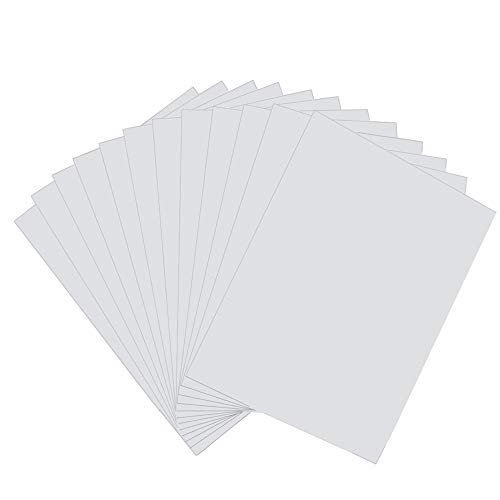
For several small repairs, this kit provides 12 thin PVC patches measuring 6.3 by 4.75 inches. The maker says the patches work from 5°F to 140°F, and the installation sequence is clean, peel, stick, flatten, and paint. That combination suits homeowners addressing more than one crack, hole, or blemish without buying a single large patch.
Bottom line: Choose this kit when you need multiple patches and the damage fits its dimensions.
Mendyl Vinyl and Stucco Patch Kit, 2 Patches
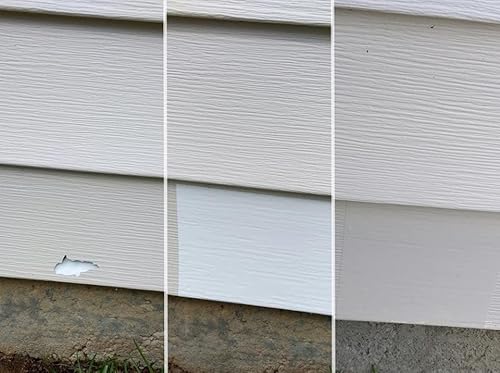
For a shaped repair, this kit’s patches can be cut with ordinary scissors, giving it more flexibility than a fixed-outline patch. Each white PVC patch measures 6.5 by 4.75 inches, and the maker says the temperature range is 40°F to 130°F. The uses include vinyl siding, stucco, and skirting, with a paintable finish after application. Its two-patch count is the smallest among these options, so it is a better match for one or two repairs than for a long list of damaged spots.
Bottom line: Pick this option when the patch needs trimming to fit a particular outline.
Stepsaver Vinyl Siding Repair Patch Kit, 8 Patches

For buyers who prioritize reinforcement, this kit includes center reinforcement patches alongside eight self-adhesive patches measuring 5 by 7 inches. Its upper surface is paint-ready, and the uneven edges are intended to help blend the patch into the surrounding repair area. The manufacturer also identifies vinyl siding and fence damage as intended uses. Unlike the other two options, the features do not give a temperature range, so this is less suitable when operating conditions are a key selection factor; focus instead on patch dimensions and the reinforcement feature.
Bottom line: Choose this kit when center reinforcement and uneven edges suit the repair.
How to Choose a Vinyl Siding Repair Kit
Choose a patch that extends beyond the damaged edge on every side, while staying on a flat, clean area of siding. As a practical target, allow about 1 inch of overlap around a small hole or crack; for a larger tear or damage near an edge, a patch may not adhere reliably. Compare the dimensions with the actual damaged area, not just the kit’s patch count. Vinyl siding is a rain screen, not a structural wall, so a surface patch cannot restore a broken panel or address moisture behind it. If the damage is extensive, loose, or accompanied by soft sheathing, replacing the affected panel or repairing the underlying wall is the more appropriate fix.
Patch Size and Fit for Vinyl Siding
Measure the widest and tallest points of the damage, then add overlap before deciding whether a patch fits. For example, a 2-inch-wide defect with 1 inch of overlap on each side needs at least 4 inches of patch width. A patch should sit flat without crossing a panel seam, corner, or trim edge, where a raised or moving surface can undermine adhesion. Vinyl expands and contracts with temperature, so avoid trapping a siding panel or bridging a joint with a rigid repair. Cut only patches identified as trimmable, and round sharp corners where possible to reduce a snag point. If the damage reaches the panel edge or affects its locking connection, a patch is not a substitute for panel repair.
Adhesive Patch Versus Siding Panel Replacement
An adhesive patch is for localized surface damage; a replacement panel is the better route when a siding section is cracked through, detached, or no longer locks into adjacent courses. Vinyl siding panels are installed with room to move in their fastening slots, so a repair that clamps a panel tightly can interfere with that movement. Use this decision rule: patch only when the defect is small, the surrounding vinyl is sound and flat, and the patch can cover it with about 1 inch of margin. A defect spanning a seam or sitting at a panel edge calls for a siding repair approach that preserves the panel connection. Do not seal over signs of trapped water; address the source before covering the surface.
| Repair condition | Better approach |
|---|---|
| Small surface hole or blemish on sound, flat siding | Adhesive patch with margin on all sides |
| Crack reaches a panel edge or seam | Panel repair or replacement |
| Soft wall surface or water staining behind siding | Investigate and repair the underlying cause |
Preparing Vinyl Siding for a Patch
Clean and dry the repair area before applying an adhesive patch; dust, chalking, and moisture can prevent a bond. Use the kit’s application sequence, and press the patch onto a flat surface rather than across a seam or profile ridge. Apply it only when the surface temperature falls within the maker’s working range for that product. Avoid painting until the patch is secure and the paint is suitable for exterior vinyl; dark paint can absorb more heat than light finishes and may contribute to distortion. Work from a stable ladder when damage is above reach, keep three points of contact, and do not lean sideways to cover a larger area. If a repair cannot be reached safely, use a qualified siding professional.
Frequently Asked Questions
How much overlap should a siding patch have?
Aim for about 1 inch of overlap beyond the damaged edge on each side of a small repair. The patch must lie on sound, flat siding, so damage near a seam or panel edge may need panel repair instead.
Can vinyl siding patches be painted?
Paint only patches with a paint-ready or paintable surface, and use exterior paint suitable for vinyl. Dark colors can absorb extra heat, so confirm paint compatibility before coating the repair.
Can a siding patch fix a crack across a panel seam?
A surface patch should not bridge a moving panel seam or replace a broken locking connection. If a crack reaches the seam or edge, repair or replace the affected panel instead.
Should the siding be dry before applying a patch?
Yes, the area should be clean and dry so moisture does not interfere with adhesive contact. Dirt, chalking, and water on the surface can also weaken a patch bond.
When should a damaged siding panel be replaced?
Replace or professionally repair a panel when it is detached, cracked through, or no longer locks into neighboring panels. A patch covers surface damage but cannot restore the panel connection or address moisture behind the siding.