
Knee Support for Big Thighs: 4 Fits Compared

For knee support for big thighs, the KARM Plus Size Knee Brace is the strongest match because its 4XL/5XL/6XL sizing and three adjustable straps are designed for large thighs and calves. Choose the AGPTEK strap instead if its 20.87–27.56-inch fit range matches your leg and you want targeted patellar-tendon compression; the other options offer less explicit sizing for larger thighs.
We earn a commission if you buy through links on this page. As an Amazon Associate I earn from qualifying purchases. Products are compared on manufacturer specifications, not hands-on testing.
- Best overall: KARM Plus Size Knee Brace, Size 3 – Its 4XL/5XL/6XL sizing and three adjustable straps target a fit for large thighs and calves.
- Best for measured fit: AGPTEK Plus Size Patella Strap, 2-Pack – The adjustable range is 20.87–27.56 inches, so you can compare it directly with your leg measurement.
- Best for crossed straps: ABYON Knee Brace, 4XL/5XL – It combines a 4XL/5XL size with crossed compression straps and side stabilizers.
| Product | Best for | Fit or size | Support design | Pack | Shop |
|---|---|---|---|---|---|
| KARM Plus Size Knee Brace, Size 3 | Adjustable plus fit | 4XL/5XL/6XL | Side stabilizers; 3 straps | 1 brace | Check Price on Amazon |
| AGPTEK Plus Size Patella Strap, 2-Pack | Measured strap range | 20.87–27.56 in | Patellar tendon strap; silicone pad | 2 straps | Check Price on Amazon |
| ABYON Knee Brace, 4XL/5XL | Crossed strap support | 4XL/5XL | 4 side stabilizers; crossed straps | 1 brace | Check Price on Amazon |
| Copper Knee Supports, Large, 2-Pack | Pair of sleeves | Large; measure by chart | 3D-knit compression sleeves with straps | 2 sleeves | Check Price on Amazon |
Knee Support for Big Thighs
Compare the fit ranges and brace designs, then choose by your thigh measurement and preferred support style.
KARM Plus Size Knee Brace, Size 3

The KARM is the clearest choice when a dedicated plus-size knee brace matters: it comes in Size 3, marked 4XL/5XL/6XL, and uses three adjustable straps. The maker says the brace is designed for large thighs and calves and has side stabilizers for more stability than a compression sleeve or patellar strap. Its adjustability suits someone who wants to set the fit and support independently.
Bottom line: Choose this if you want a plus-size brace with three adjustable straps and side stabilizers.
AGPTEK Plus Size Patella Strap, 2-Pack
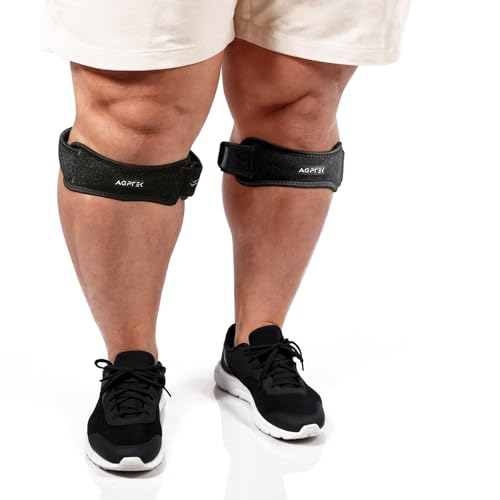
The AGPTEK gives a measurable fit range rather than a numbered plus-size label: its adjustable strap covers 20.87–27.56 inches. This makes it useful when you can measure the intended fit area and want to compare the result directly with the product range. The design focuses compression on the patellar tendon and includes a silicone gel pad; the package contains two straps. Unlike a full knee brace with side stabilizers, this is a targeted strap, so choose another style if you want support around the sides of the knee as well.
Bottom line: Choose this if your measurement falls within its range and you want a patellar-tendon strap.
ABYON Knee Brace, 4XL/5XL

The ABYON differs from the dedicated large-thigh options by pairing a 4XL/5XL size with crossed compression straps and four flexible side stabilizers. The maker describes silicone strips intended to help keep the brace in place during activity, plus an X-ring strap design. That combination may suit someone seeking a more structured brace in a larger labeled size. The size information does not include a circumference range, and the product is presented as covering small through plus sizes rather than specifically as a large-thigh fit, so buyers needing a confirmed thigh measurement should verify fit before ordering.
Bottom line: Choose this if crossed straps and four stabilizers matter more than an inches-based fit range.
Copper Knee Supports, Large, 2-Pack

The copper support set is a different style from the explicitly plus-size braces: it is a two-pack of Large knitted compression supports with straps. The maker says the fabric is 3D knitted and advises measuring thigh circumference against its size chart; that measurement step is important when shopping for a large-thigh fit. The product also contains a small amount of latex, which matters for anyone with a latex or silicone allergy. Because the size is Large and no numerical range appears here, it is a less certain fit choice than the options with explicit plus sizing or an inch range.
Bottom line: Choose this if a Large compression sleeve fits your measured thigh and you want a two-pack.
How to choose knee support for big thighs
Start with the fit measurement, then decide whether you need a strap or a brace with stabilizers. For an adjustable product with a published range, compare your measurement directly with that range; the AGPTEK spans 20.87–27.56 inches. If a product gives only a size label, such as 4XL/5XL/6XL, do not assume that label maps to the same circumference across brands. Measure the area indicated by the maker’s size chart, and prioritize a fit that does not pinch or slide. A patellar strap concentrates contact near the tendon below the kneecap, while side stabilizers add structure beside it; choose based on where you want coverage rather than treating the styles as interchangeable.
Brace styles and what they support
A knee sleeve generally wraps the joint with compression, while a patellar strap is narrower and targets the tendon below the kneecap. Braces with side stabilizers add structure along the sides; the KARM and ABYON both use stabilizers, while the AGPTEK is a targeted strap. This difference matters if your priority is a secure wrap versus a small contact area. Compression fit should feel snug rather than numb or painful. Stop using a support if it causes tingling, skin color changes, or worsening discomfort, and seek medical advice for persistent symptoms or a suspected injury. A brace is not a substitute for evaluation of severe swelling, inability to bear weight, or a deformed knee.
How to measure a larger thigh for fit
Use a flexible tape and follow the maker’s specified measurement location; thigh size and the circumference around the knee are not the same measurement. Keep the tape level and snug without compressing the skin, then compare the result with the product’s actual size range. A numbered size alone is less useful than a circumference range, especially when swelling changes fit. The AGPTEK’s 20.87–27.56-inch range allows a direct comparison, but a label such as Large or 4XL/5XL does not provide that same precision here. If your measurement falls outside the range, do not assume extra strap length will make the brace safe or comfortable.
Common fit and material mistakes
The most common mistake is choosing by clothing size instead of the maker’s knee-support measurement chart. A second is expecting a narrow tendon strap to provide the same side coverage as a brace with stabilizers. Check the product’s fit range, strap placement, and whether the design matches the support area you want before wearing it. Material sensitivity matters too: the copper support set contains a small amount of latex, so anyone allergic to latex or silicone should avoid it. Keep straps flat and closures secured, and check the skin after removing a snug support. Persistent numbness, discoloration, or irritation is a reason to remove the brace rather than tighten it further.
Frequently Asked Questions
How do I measure my thigh for a knee brace?
Use a flexible tape at the exact location requested by the maker’s size chart, keeping it level and snug without pressing into the skin. Compare that number with a published circumference range, such as 20.87–27.56 inches, rather than relying on a clothing-size label.
Should a knee brace feel tight on my leg?
A knee brace should feel secure without causing pain, tingling, numbness, or skin color changes. Remove it if those symptoms appear, and do not tighten straps to compensate for a brace that slips.
What is the difference between a knee strap and brace?
A patellar strap is narrower and focuses contact around the tendon below the kneecap, while a brace wraps more of the knee. Some braces add side stabilizers, so choose that style if you want structure beside the joint.
Can I wear a knee support over pants?
A support is generally intended to contact the leg closely, because fabric can change how snugly it sits and may encourage slipping. If wearing it over clothing, avoid bulky seams and check that it remains flat and secure without constriction.
When should I stop wearing a knee brace?
Remove the brace if it causes numbness, tingling, worsening pain, skin irritation, or a color change. Severe swelling, a visibly deformed knee, or inability to bear weight warrants prompt medical evaluation rather than relying on a support.