
Super Diamond Mud Seal for Iron: 3 Metal Repair Options

For a metal repair where a full-cure time matters, Super Diamond Metal Repair Glue, 3-Piece is the clearest match: its maker says to mix the paste 1:1 and allow 24 hours for full curing. Choose another option if you need a different pack count or its repair claims do not match your job; these products are repair adhesives, not a substitute for assessing a damaged or pressurized part.
We earn a commission if you buy through links on this page. As an Amazon Associate I earn from qualifying purchases. Products are compared on manufacturer specifications, not hands-on testing.
- Best overall: Super Diamond Metal Repair Glue, 3-Piece – Its maker gives a 1:1 mixing ratio and a 24-hour full-cure time.
- Best for two-piece packs: Super Diamond Metal Repair Glue, 2-Piece – The product name identifies a two-piece set for metal repair.
- Best for wear resistance: Super Diamond Mud Seal for Metal, 3-Piece – Its maker claims wear resistance after curing.
| Product | Best for | Pack count | Mix ratio | Shop |
|---|---|---|---|---|
| Super Diamond Metal Repair Glue, 3-Piece | Stated cure timing | 3 pieces | 1:1 | Check Price on Amazon |
| Super Diamond Metal Repair Glue, 2-Piece | Two-piece set | 2 pieces | — | Check Price on Amazon |
| Super Diamond Mud Seal for Metal, 3-Piece | Wear-resistant repairs | 3 pieces | 1:1 | Check Price on Amazon |
Super Diamond mud seal for iron
Compare the metal repair options by pack count and the specific mixing or curing guidance each provides.
Super Diamond Metal Repair Glue, 3-Piece

Super Diamond Metal Repair Glue, 3-Piece is the only option here with a full-cure time: its maker says the mixed metal repair paste solidifies in 1 hour and fully cures in 24 hours. The three-piece set is presented as an all-purpose repair glue for cracks, welds and other problems, with post-cure finishing such as drilling, sanding and painting also claimed by the maker. This suits buyers who need a mixing and curing schedule. The claims do not establish suitability for every metal, joint geometry or pressurized pipe, so assess the repair’s load and service conditions before relying on it.
Bottom line: Choose this when a 1:1 mix and 24-hour full cure fit your repair schedule.
Super Diamond Metal Repair Glue, 2-Piece
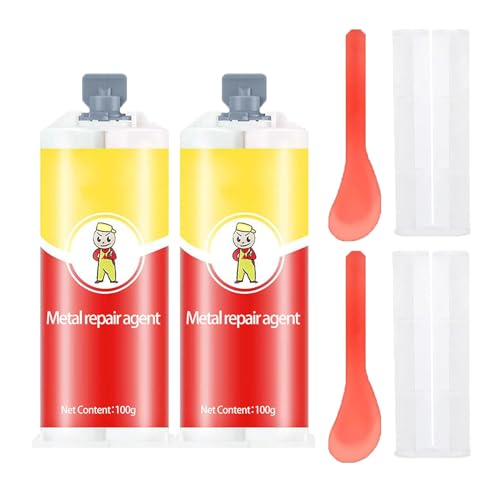
Super Diamond Metal Repair Glue, 2-Piece is the two-piece metal repair option, with maker claims for waterproofing, oil resistance, impact resistance and wear resistance after curing. The maker also says the cured adhesive can be painted, drilled, polished, sanded or tapped, which may suit a repair that needs later finishing. Its product name identifies the pack as two pieces, unlike the three-piece sets. The maker does not give a usable cure schedule or mixing ratio, so this is a weaker fit when timing is critical; confirm the required cure time before planning to return a repaired part to service.
Bottom line: Pick this if a two-piece set and post-cure finishing claims suit your repair.
Super Diamond Mud Seal for Metal, 3-Piece

Super Diamond Mud Seal for Metal, 3-Piece stands out for explicitly claiming wear resistance and heat-resistant adhesion compared with welding; its maker also claims waterproof, oil-resistant and impact-resistant performance after curing. The name indicates a three-piece metal repair product, and the available mixing instruction calls for a 1:1 ratio. This may suit a buyer prioritizing the maker’s durability claims over a curing schedule. The cure-time sentence is incomplete, so it cannot support a reliable return-to-service plan; allow for that uncertainty and verify cure timing before using the repair under load or exposure.
Bottom line: Choose this for its 1:1 mix and wear-resistance claims, not for a timed cure.
How to choose metal repair putty
Choose metal repair putty by matching its cure schedule and intended job to the part’s load and exposure. Two-part products need thorough mixing; a 1:1 ratio means equal parts by the measure the maker specifies, not necessarily equal weights. Metal prep is important: remove oil, loose rust and scale, then roughen the bonding area and wipe away dust so the adhesive can contact a sound surface. For a repair that will carry pressure or a safety-critical load, adhesive claims alone are not proof of safe service. Use a purpose-rated replacement or professional repair when failure could cause injury, leakage or equipment damage.
Mixing and curing metal sealant
Plan around full cure rather than the point when a putty feels firm; this product group includes a maker-stated 24-hour full cure, while other entries lack a complete schedule. Temperature and the amount mixed can change working and curing behavior for two-part adhesives, so keep conditions consistent with the product’s instructions. Mix equal portions only when the 1:1 ratio applies, and blend until the color and texture are uniform. Do not load, sand or expose a repair to water or oil until the required cure is complete. Wear gloves and avoid skin contact when handling uncured adhesive.
Where metal repair adhesive is a poor fit
Use metal repair adhesive only when the repair’s material, temperature and mechanical demands suit the product. A crack in a noncritical housing differs from a split pressure pipe or a structural support; the latter can fail suddenly even when a surface patch appears firm. Adhesive repairs also need sound surrounding material, so widespread corrosion, movement at the joint or a gap too large to bridge calls for another repair method. Keep children away from uncured compounds and tools, and work with ventilation rather than breathing vapors close to the mixing area. If the part carries pressure, verify the repair is specifically appropriate before returning it to service.
Frequently Asked Questions
How long should metal repair putty cure before use?
Wait for the full-cure time, not just the initial hardening period. One option here gives a maker-stated 24-hour full cure; cure conditions and timing for the others need confirmation before use.
Does a 1:1 epoxy mix mean equal weights?
Not automatically: a 1:1 instruction means equal parts by the measurement method specified for that product. Follow the included mixing directions, since equal volumes and equal weights are not interchangeable for every formulation.
Can metal repair putty fix a leaking pipe?
A repair adhesive should not be assumed safe for a pressurized pipe. Depressurize the line before repair, and verify the product is suitable for the pipe material, pressure and service conditions before putting it back in use.
How should metal be prepared before applying repair putty?
Remove oil, loose rust and scale, then roughen the surface and clear away sanding dust. Sound, clean contact area matters; adhesive over loose corrosion can detach with the material beneath it.