
Air Conditioner Flush Solvent: 3 Options Compared

For professional automotive and HVAC/R work, Mastercool 91049-32 A/C Flush Solvent is the closest fit because it is a 32-ounce flush solvent intended for system components such as hoses, condensers and evaporators. Choose a different option if lubricant compatibility, bulk quantity or workplace and industrial use is the deciding factor.
We earn a commission if you buy through links on this page. As an Amazon Associate I earn from qualifying purchases. Products are compared on manufacturer specifications, not hands-on testing.
- Best overall: Mastercool 91049-32 A/C Flush Solvent – Professional automotive and HVAC/R use, with a 32-ounce container.
- Best for lubricant compatibility: TSI Supercool FFQ High-Temp A/C Flush – Compatible with R134a, 1234yf and R12 A/C lubricants.
- Best for bulk professional supply: Mastercool 91049-128-4 A/C Flush Solvent – Professional automotive and HVAC/R use in a four-pack of one-gallon containers.
| Product | Best for | Package size | Intended use | Safety or compatibility | Shop |
|---|---|---|---|---|---|
| Mastercool 91049-32 A/C Flush Solvent | Professional shop work | 32 oz | Automotive and HVAC/R | Non-flammable; non-corrosive | Check Price on Amazon |
| TSI Supercool FFQ High-Temp A/C Flush | Lubricant compatibility | 32 fl oz | A/C system cleaning | R134a, 1234yf and R12 lubricants | Check Price on Amazon |
| Mastercool 91049-128-4 A/C Flush Solvent | Bulk professional supply | 4 gallons, 4-pack | Automotive and HVAC/R | Non-flammable; non-corrosive | Check Price on Amazon |
Air conditioner flush solvent options
Compare the intended application and package before choosing a solvent for a particular system or job.
Mastercool 91049-32 A/C Flush Solvent

Mastercool 91049-32 A/C Flush Solvent is a 32-ounce solvent for professional automotive and HVAC/R system flushing. The maker says it removes refrigerant oil, debris and sludge from hoses, condensers and evaporators, and that the formula is non-flammable and non-corrosive. Its use restrictions matter: do not flush compressors, expansion valves, orifice tubes, filter driers or accumulators. It is compatible with Mastercool’s 91046-A flush kit, but the product instructions also prohibit use with CFC-based or—so confirm refrigerant compatibility before choosing it. This is the clearest fit for technicians who need the component-cleaning application.
Bottom line: Choose this for professional automotive or HVAC/R component flushing when the excluded parts are kept out of the flush circuit.
TSI Supercool FFQ High-Temp A/C Flush

TSI Supercool FFQ High-Temp A/C Flush stands out for its compatibility with lubricants used with R134a, 1234yf and R12 systems. The maker says the 32-fluid-ounce flush removes old oil and other contaminants, is non-flammable and non-hazardous, and is biodegradable. Its flash point is greater than 250°F. That combination makes it a useful candidate when lubricant compatibility is the main selection criterion, but the specifications do not establish an approved use for every component or flushing method. Confirm that the solvent is appropriate for the specific system components and procedure before use.
Bottom line: Pick this when compatibility with R134a, 1234yf and R12 lubricants is the deciding factor.
Mastercool 91049-128-4 A/C Flush Solvent
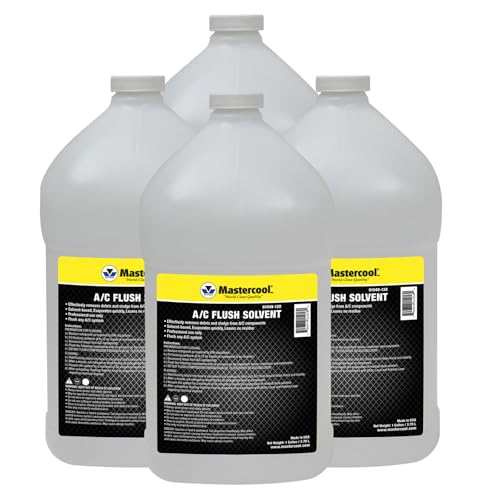
Mastercool 91049-128-4 A/C Flush Solvent provides the same professional automotive and HVAC/R flush solvent application as the smaller Mastercool container, in a four-pack of one-gallon containers. The maker says it removes refrigerant oil, debris and sludge from hoses, condensers and evaporators and describes the solvent as non-flammable and non-corrosive. The same component exclusions apply: compressors, expansion valves, orifice tubes, filter driers and accumulators should not be flushed. Its bulk format is the distinguishing factor, so it suits shops with recurring flush work; a smaller package may be a better match for an occasional job or limited storage space.
Bottom line: Pick this for professional shops that need the Mastercool flush solvent in a multi-gallon package.
How to choose an air conditioner flush solvent
Start with the system and components being cleaned, then match the solvent’s application and compatibility. Automotive A/C circuits use refrigerant oil matched to the refrigerant and compressor; a compatibility claim covering R134a, 1234yf and R12 lubricants can be a useful screening point, but it does not automatically approve every component or procedure. Separate component flushing from whole-system cleaning: the Mastercool products exclude compressors, expansion valves, orifice tubes, filter driers and accumulators. If the work involves any excluded part, do not route solvent through it. Choose a single 32-ounce container for limited work or a four-gallon package only when recurring use and storage needs justify the larger quantity.
Which A/C components can be flushed
Flush only components allowed by the solvent maker and service procedure; do not assume every part of a sealed refrigerant circuit can take liquid cleaner. The Mastercool products specifically rule out compressors, expansion valves, orifice tubes, filter driers and accumulators. Those parts can retain solvent or debris, and filter driers are intended to capture moisture and contaminants rather than be cleaned and reused after a contaminated-system repair. Before opening an automotive refrigerant circuit, recover the refrigerant with approved recovery equipment; venting refrigerant is prohibited under U.S. federal rules. Keep flush solvent out of the compressor and metering device, and replace contaminated filter driers as part of the repair plan. The exact flushing route depends on the component and equipment procedure.
Container size and job fit
Package size helps distinguish a one-off job from repeat shop use, but the amount needed depends on the component, contamination and flushing equipment. A 32-ounce bottle is the smaller format in this group; the Mastercool four-pack contains four one-gallon containers. Compare these options by need:
| Need | Option to consider | Decision point |
|---|---|---|
| Professional automotive or HVAC/R work | Mastercool 91049-32 A/C Flush Solvent or Mastercool 91049-128-4 A/C Flush Solvent | Choose between 32 ounces and a four-gallon package. |
| Lubricant compatibility emphasis | TSI Supercool FFQ High-Temp A/C Flush | Compatibility names R134a, 1234yf and R12 lubricants. |
With occasional work and limited storage, choose a 32-ounce format; with recurring professional jobs, consider the larger package only if its application matches.
Safe handling and preparation
Recover refrigerant before opening the system, and treat flush solvent as a separate chemical requiring its own handling controls. Non-flammable does not mean harmless: use the product’s safety data sheet for ventilation, gloves, eye protection, spill response and disposal requirements. Never use ignition as a test of whether a solvent is safe, and do not mix cleaners or substitute shop air for a specified drying procedure. Remove or isolate the components the product excludes before flushing; solvent left in a compressor or metering device can interfere with repair. Keep the original container identified and closed when not in use, and follow local hazardous-waste rules for collected solvent and residue.
Frequently Asked Questions
Can A/C flush solvent go through a compressor?
No for the Mastercool solvents here: their exclusions include compressors. Isolate the compressor from the flush path and use the vehicle or equipment service procedure for the repair.
Should refrigerant be recovered before flushing?
Yes, recover refrigerant with approved recovery equipment before opening an automotive A/C circuit. Venting refrigerant is prohibited under U.S. federal rules.
Can an expansion valve be flushed with solvent?
The Mastercool products specifically exclude expansion valves and orifice tubes from flushing. Keep cleaner out of the metering device and follow the repair procedure for that component.
Do I replace the filter drier after an A/C flush?
A contaminated-system repair generally calls for replacing the filter drier rather than flushing it; the Mastercool products explicitly exclude filter driers. Confirm the required repair steps for the system before recharging.
Is a non-flammable flush solvent safe to use indoors?
Non-flammable does not remove the need for chemical handling controls. Review the solvent’s safety data sheet for ventilation and protective equipment, and keep it away from incompatible materials and uncontrolled spills.