
Wire for Making Fishing Lures: 3 Options Compared

For most lure makers, Fishing Looped Spinner Shaft, 6.4 in is the closest match because it specifies 6.4-inch stainless wire with a 0.03-inch diameter and a looped end. Choose urmetimern Looped Spinner Wire, 0.023 in instead if its thinner 0.023-inch wire better suits your build; Fishing Wire Spinner, 100 Piece is another pre-looped stainless option, but its diameter is unclear.
We earn a commission if you buy through links on this page. As an Amazon Associate I earn from qualifying purchases. Products are compared on manufacturer specifications, not hands-on testing.
- Best overall: Fishing Looped Spinner Shaft, 6.4 in – A 6.4-inch stainless shaft with a 0.03-inch diameter and a formed loop.
- Best for thinner wire: urmetimern Looped Spinner Wire, 0.023 in – The 0.023-inch diameter is the smallest among these options.
- Best for general builds: Fishing Wire Spinner, 100 Piece – A 100-piece set of pre-looped stainless wire shafts.
| Product | Best for | Length | Diameter | Shop |
|---|---|---|---|---|
| Fishing Looped Spinner Shaft, 6.4 in | Sturdier spinner builds | 6.4 in | 0.03 in | Check Price on Amazon |
| urmetimern Looped Spinner Wire, 0.023 in | Thinner shaft designs | 6.4 in | 0.023 in | Check Price on Amazon |
| Fishing Wire Spinner, 100 Piece | Pre-looped replacements | 6.3 in | — | Check Price on Amazon |
Wire for Making Fishing Lures
Compare the dimensions and end preparation to match the wire to your lure design.
Fishing Looped Spinner Shaft, 6.4 in

Fishing Looped Spinner Shaft, 6.4 in has the largest diameter here, at 0.03 inch, and its 6.4-inch stainless shaft arrives looped at one end. The loop saves the step of forming that end by hand, while the 100-piece pack supports multiple builds. The maker says the wire resists bending and rust and is suitable for freshwater and saltwater. Choose it when your design calls for a thicker shaft; the larger diameter may not fit components sized for thinner wire.
Bottom line: Pick this when your spinner design takes a 0.03-inch shaft.
urmetimern Looped Spinner Wire, 0.023 in
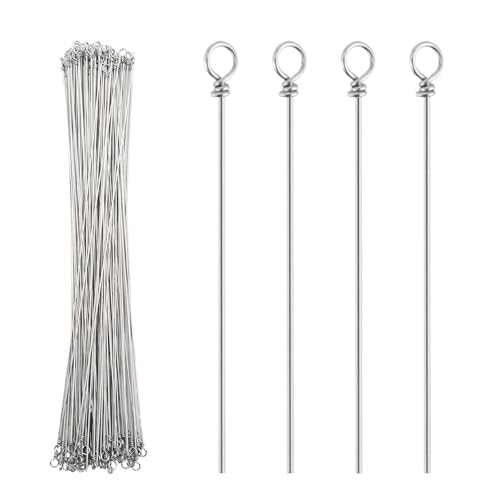
urmetimern Looped Spinner Wire, 0.023 in is the thinner defined option: each of its 100 pre-looped stainless wires is 6.4 inches long and 0.023 inch in diameter. That smaller shaft can suit a design whose beads, blades or other components need a narrower wire than Fishing Looped Spinner Shaft, 6.4 in. The maker says it resists bending and describes it for freshwater use. Its diameter is the deciding constraint, so choose it only when your lure components and intended build are designed around 0.023-inch wire.
Bottom line: Choose this for builds that call for a 0.023-inch shaft.
Fishing Wire Spinner, 100 Piece

Fishing Wire Spinner, 100 Piece provides 100 pre-looped stainless spinner wires, with a length of 6.3 inches. The preformed loop is useful when you want an attachment point ready for rig assembly, and the pack count matches the other two choices. The maker says the wire is rust-resistant for freshwater or saltwater use.
Bottom line: Pick this if the 6.3-inch length and ready-made loop suit your rig.
How to choose wire for making fishing lures
Start with the diameter required by your lure components, then match length and end style. A thicker shaft may be more resistant to bending, but must still pass through the blade, bead or clevis openings in your design. These options span 0.023 to 0.03 inch where diameter is stated, and their lengths are about 6.3 to 6.4 inches. If a component opening is under 0.03 inch, choose a thinner shaft rather than forcing it through; allow a little clearance for assembly.
Stainless steel is a common choice when corrosion resistance matters, but saltwater use still calls for rinsing and drying tackle after a trip. A pre-looped end saves forming time and gives a connection point; a plain shaft would require forming one yourself. Decide whether the loop orientation and length leave room for your lure hardware before building a full batch.
Wire diameter and spinner fit
Match shaft diameter to the smallest hole in the lure assembly: a 0.023-inch shaft is narrower than a 0.03-inch shaft by 0.007 inch. That difference can determine whether a bead or blade rotates freely or binds. Measure the component opening with a caliper when possible, and leave clearance rather than selecting a wire that exactly equals the hole size.
Length also affects layout. A 6.3- to 6.4-inch shaft provides extra wire to space components and form or connect the lure, but the finished length depends on bends and hardware. Cut stainless wire with a tool intended for wire, secure the shaft before trimming, and protect your eyes from cut ends. Do not assume a diameter from pack count or appearance; confirm it before ordering if your components require a precise fit.
Pre-looped shafts versus straight wire
Pre-looped spinner shafts arrive with one attachment loop already formed, which removes a bending step and makes the connection end consistent. Straight wire offers more freedom to choose loop size and placement, but requires pliers and practice to make repeatable bends. The three choices here are pre-looped, so the practical differences are diameter, length and whether the diameter is stated.
| Build need | Useful choice | Reason |
|---|---|---|
| Narrow components | 0.023-inch shaft | Smallest diameter |
| Thicker shaft required | 0.03-inch shaft | Largest diameter |
| Length around 6.3 inches | 6.3-inch option | Its length is 6.3 inches |
Use the diameter as the fit decision, not a general label such as spinner wire. If your design calls for a specific shaft thickness, confirm that measurement before selecting a wire with no stated diameter.
Working safely with lure wire
Cut and bend wire with the right pliers or cutters and keep the work end pointed away from your face. Short wire offcuts can spring or fly when cut, so wear eye protection and collect scraps rather than leaving them on a bench or floor. Needle-nose pliers help control small loops; smooth jaws reduce marks when a clean finish matters.
Stainless wire can still be bent, kinked or damaged by repeated sharp bends. Make gradual bends around a suitable mandrel instead of folding the shaft back on itself, and inspect the loop and shaft before attaching hooks or fishing. After saltwater use, rinse assembled tackle with fresh water and dry it to limit corrosion on connected components, which may use different metals than the shaft.
Frequently Asked Questions
What wire diameter works for spinner lures?
The right diameter is the one that fits through every component opening without binding. These choices include 0.023-inch and 0.03-inch wire; measure the smallest hole and leave some clearance.
How long should fishing lure wire be?
A shaft around 6 inches long gives room for spacing and end connections in many spinner builds. Final usable length is shorter after bends, so sketch the hardware layout before cutting.
Can stainless lure wire be used in saltwater?
Stainless wire is commonly chosen for corrosion resistance, and the makers of these options describe saltwater suitability. Rinse and dry the assembled lure after saltwater use because attached hardware may use other metals.
How do I make a loop in lure wire?
Grip the wire with round-nose or needle-nose pliers and bend it gradually around a small mandrel to form a loop. Leave enough straight tail to wrap securely, and wear eye protection when trimming the end.
Does thicker wire make a spinner bait stronger?
A larger diameter generally resists bending more than a thinner wire of the same material, but it must fit the lure hardware. For these options, 0.03 inch is thicker than 0.023 inch.