
Best Vulcanized Rubber Flooring for Garage Compared

For most garages, American Floor Mats 3/8-Inch Vulcanized Roll is the best fit because its 3/8-inch vulcanized rubber roll provides a broad 40-square-foot surface with non-slip texture. Choose American Floor Mats 1/2-Inch Vulcanized Roll instead for a thicker 1/2-inch roll, or Grytfit 22.5-Inch Interlocking Tiles if modular tiles are easier to fit around equipment.
Rubber flooring protects the floor beneath gym equipment, but garage moisture and vehicle traffic can call for different flooring than a workout area.
We earn a commission if you buy through links on this page. As an Amazon Associate I earn from qualifying purchases. Products are compared on manufacturer specifications, not hands-on testing.
- Best overall: American Floor Mats 3/8-Inch Vulcanized Roll – Its vulcanized rubber construction and 4-by-10-foot roll provide substantial continuous coverage.
- Best for thicker coverage: American Floor Mats 1/2-Inch Vulcanized Roll – The 1/2-inch roll is thicker than the 3/8-inch roll option.
- Best for modular layouts: Grytfit 22.5-Inch Interlocking Tiles – Four interlocking tiles can be arranged around equipment.
| Product | Best for | Thickness | Format | Coverage | Shop |
|---|---|---|---|---|---|
| American Floor Mats 3/8-Inch Vulcanized Roll | Broad gym coverage | 3/8 in | 4 × 10 ft roll | 40 sq ft | Check Price on Amazon |
| American Floor Mats 1/2-Inch Vulcanized Roll | Thicker roll flooring | 1/2 in | 4 × 12 ft roll | 48 sq ft | Check Price on Amazon |
| Grytfit 22.5-Inch Interlocking Tiles | Modular tile layouts | — | 22.5 × 22.5 in tile | 14.1 sq ft per 4-pack | Check Price on Amazon |
Vulcanized rubber flooring for garage compared
Compare construction, thickness, and format to match the floor area and equipment you need to cover.
American Floor Mats 3/8-Inch Vulcanized Roll

American Floor Mats 3/8-Inch Vulcanized Roll is the only option here explicitly identified as 100% vulcanized rubber, and its 4-by-10-foot roll covers 40 square feet. The 3/8-inch thickness and slightly textured, non-slip surface suit a home garage gym with treadmills, bikes, or weight equipment. The maker says the non-porous roll lies flat without curling and includes a five-year warranty. Its single large roll is less adaptable than interlocking tiles when you need to work around irregular corners or move sections independently.
Bottom line: Choose this for a continuous, textured surface under a garage gym setup.
American Floor Mats 1/2-Inch Vulcanized Roll
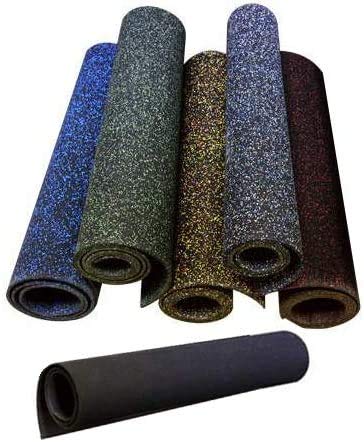
At 1/2 inch thick and 48 square feet per roll, American Floor Mats 1/2-Inch Vulcanized Roll is the thicker and larger-format vulcanized option. Its non-porous rubber surface has a slight texture, and the maker says the rolls fit together and lie flat without curling. That combination fits a garage gym covering a broader area or using heavy weight-lifting machines. A full-size roll is less convenient to rearrange than tiles, and thickness alone does not establish whether a particular floor or equipment setup is suitable.
Bottom line: Pick this when you want the thicker vulcanized roll and its larger coverage.
Grytfit 22.5-Inch Interlocking Tiles

Grytfit 22.5-Inch Interlocking Tiles differs from the roll flooring with four solid-rubber interlocking tiles, each 22.5 inches square, allowing a modular arrangement around gym equipment. The maker says the tiles use 100% rubber without foam or fillers and have a slip-resistant surface that tolerates moisture. That construction suits smaller workout zones where a large roll is awkward to place.
Bottom line: Choose these for a modular solid-rubber workout area rather than a vulcanized roll.
How to choose garage rubber flooring
Choose by construction, thickness, and coverage before comparing color or layout. Solid rubber offers a dense, durable surface; rubber-top foam combines a wear surface with a more compressible core. Among these options, two rolls are explicitly identified as vulcanized rubber, while the tile and mat choices have other constructions or are not identified as vulcanized. Measure the footprint of the equipment and add room for movement: one 4-by-10-foot roll covers 40 square feet, while a 4-by-12-foot roll covers 48. For a defined single station, a 4-by-6-foot mat covers 24 square feet. With irregular corners or equipment islands, modular tiles may be easier to arrange than a full roll, though they do not match a request for vulcanized construction.
| Need | Format to consider | Reason |
|---|---|---|
| Continuous vulcanized surface | Rubber roll | Broad, joined coverage |
| Small or irregular zone | Interlocking tile | Modular placement |
| One equipment station | Single mat | Localized coverage |
How much thickness does a garage gym need
For ordinary exercise equipment, 3/8-inch rubber is a common middle ground; heavier lifting or more impact can make thicker flooring worth considering. Here, the vulcanized roll choices are 3/8 inch and 1/2 inch, while the foam-core tiles are 0.56 inch but have a different construction. Thickness is not a substitute for checking load suitability: concentrated feet under a rack or machine put more pressure on a small patch than a person standing on the floor. Match thickness and surface type to the equipment footprint and activity, and confirm that the floor can bear concentrated loads. A thicker foam product should not be treated as equivalent to solid rubber merely because its dimension is larger.
Rubber rolls versus interlocking tiles
Rolls create broad coverage with fewer joints, while interlocking tiles make it easier to cover a smaller or unevenly shaped workout area. A 4-by-10-foot roll spans 40 square feet, and a 4-by-12-foot roll spans 48; four 22.5-inch tiles cover about 14.1 square feet. Seams are the practical difference: fewer seams mean fewer edges to catch debris, but a large roll can be harder to place and adjust. Tiles can be lifted or rearranged individually, yet every joint needs to stay engaged for a stable surface. For a garage exposed to water, sweep grit from seams and avoid trapping moisture beneath flooring; rubber’s moisture tolerance does not make the floor assembly waterproof.
Garage installation and care
Prepare a clean, dry, level floor before laying rubber, because grit under a mat can abrade the surface and unevenness can create rocking under equipment. Letting rolls lie flat and checking seams before moving heavy machines helps avoid raised edges. Rubber flooring is heavy, so plan placement before positioning a full roll; never drag loaded equipment across a seam or tile edge. Keep floors dry before installation, and lift mats periodically to inspect for trapped water, especially in a garage where wet vehicles or snow can raise humidity. Rubber can reduce impact to the floor but does not make heavy lifting harmless: use controlled drops and verify the flooring and underlying slab are suitable for the equipment load.
Frequently Asked Questions
How many square feet does each roll cover?
The 4-by-10-foot roll covers 40 square feet, and the 4-by-12-foot roll covers 48 square feet. Add extra area for cuts and to avoid leaving narrow uncovered strips around equipment.
Can garage rubber flooring go over concrete?
Rubber flooring is commonly placed over a clean, dry, level concrete slab. Concrete should be fully cured and free of standing moisture; dampness trapped beneath a mat can cause problems even when the rubber surface tolerates moisture.
Does thicker rubber protect against dropped weights?
Thicker flooring can add cushioning, but thickness alone does not guarantee protection against repeated heavy drops. A 1/2-inch roll is thicker than a 3/8-inch roll, and controlled lifting with a dedicated platform may be needed for frequent heavy deadlifts.
How do I calculate the number of tiles needed?
Divide the area in square feet by the coverage of one tile, then round up. A 22.5-inch square tile covers about 3.52 square feet, so four tiles cover about 14.1 square feet before allowing for cuts or extra coverage.
Can a garage floor mat stay down in wet weather?
Rubber can tolerate moisture at its surface, but water trapped underneath a mat can remain against the slab. Keep the floor dry before installation and lift the flooring periodically to inspect and dry beneath it.