
Best Reflective Gear for Walking: 5 Types Compared

For most walkers, Simket Rechargeable LED Reflective Sash stands out for combining a rechargeable LED light with a reflective sash, a useful mix when a route has both lit and dark stretches. Choose Darlingao 4-Pack Reflective Bands instead if you want separate bands for your wrists, arms or ankles, or Ylzzrs LED Reflective Sash with Phone Holder if carrying a phone in a built-in holder matters more.
Reflective gear returns light toward its source, while powered LEDs make light of their own; neither replaces walking attentively or using sidewalks and crossings.
We earn a commission if you buy through links on this page. As an Amazon Associate I earn from qualifying purchases. Products are compared on manufacturer specifications, not hands-on testing.
- Best overall: Simket Rechargeable LED Reflective Sash – Combines a rechargeable LED light with a reflective sash for visibility on mixed-light routes.
- Best for carrying a phone: Ylzzrs LED Reflective Sash with Phone Holder – Adds a phone holder with a waterproof zipper to a lighted reflective sash.
- Best for flexible placement: Darlingao 4-Pack Reflective Bands – Four adjustable bands can be worn on arms, wrists, ankles or legs.
- Best for vest coverage: Topward LED Reflective Vest – Uses a vest format with front and back LEDs and reflective strips.
| Product | Best for | Form | Lighting | Included pieces | Shop |
|---|---|---|---|---|---|
| Simket Rechargeable LED Reflective Sash | Mixed-light routes | Sash | Rechargeable LED | 1 sash | Check Price on Amazon |
| Ylzzrs LED Reflective Sash with Phone Holder | Phone-carrying walks | Sash with phone holder | Front and rear light strips | 1 sash | Check Price on Amazon |
| Topward LED Reflective Vest | Vest-style coverage | Vest | Front and rear LEDs | 1 vest | Check Price on Amazon |
| Fokia Kunbio Reflective Sash and Armbands | Reflective-only set | Sash and armbands | Reflective material | 1 sash, 2 armbands | Check Price on Amazon |
| Darlingao 4-Pack Reflective Bands | Flexible band placement | Adjustable bands | Reflective material | 4 bands | Check Price on Amazon |
Reflective Gear for Walking
Compare the form, lighting and included pieces to match your route and preferred way to wear visibility gear.
Simket Rechargeable LED Reflective Sash

Unlike a plain reflective band set, this sash pairs reflective material with a rechargeable LED flash light, giving walkers both passive reflection and active lighting. The maker says it provides 360-degree visibility and can be seen from 800 feet or more; actual visibility depends on conditions and the light source. Its universal, one-step fit is aimed at people who want a quick layer for walking, jogging or biking. The trade-off is the sash format: it does not provide a vest-style body panel or a phone pocket, so choose another form if either is a priority.
Bottom line: Pick this for a fast-wearing sash with both reflection and active light.
Ylzzrs LED Reflective Sash with Phone Holder

The built-in phone holder separates this sash from the other lighted options, making it useful when you want a phone and small valuables close at hand. The holder measures 3.9 by 8.3 inches and has a TPU inner layer and waterproof zipper. Front and rear light strips sit alongside reflective strips; the maker says the Type-C rechargeable battery lasts longer and charges faster, but gives no runtime figure here. The phone pocket adds bulk compared with a simple sash, so walkers who travel light may prefer a simpler band or sash.
Bottom line: Choose this when a zippered phone holder matters during a walk.
Topward LED Reflective Vest
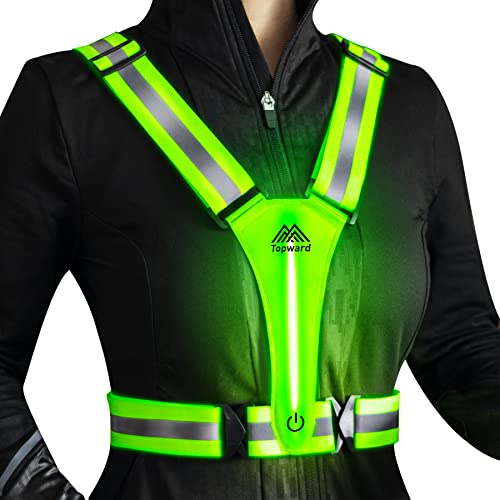
This option uses a vest format rather than a diagonal sash, with reflective strips and LED flash lights at the front and back. The maker says the gear offers 360-degree visibility and can be seen from 1,000 feet or more; these are maker claims, not a guarantee of visibility in every setting. Adjustable waist and shoulder straps let the wearer tailor the fit over clothing. The size measurement is 7.9 by 3.9 by 0.19 inches, so confirm the vest’s fit over your intended layers before choosing it.
Bottom line: Pick this if you prefer a vest format with front and rear LEDs.
Fokia Kunbio Reflective Sash and Armbands

Unlike the LED-equipped options, this set focuses on passive reflection: it includes one widened sash and two armbands. The maker says the reflective gear can be seen from over 700 feet when illuminated by headlights. Its 1-inch safety strip offers more width than a 0.6-inch strip, but the set does not add a powered light for conditions without an incoming light source. This makes it a straightforward choice for walks where cars or other lights can illuminate the material, rather than a substitute for active lighting on very dark routes.
Bottom line: Choose this set when reflective-only gear and separate armbands suit your route.
Darlingao 4-Pack Reflective Bands
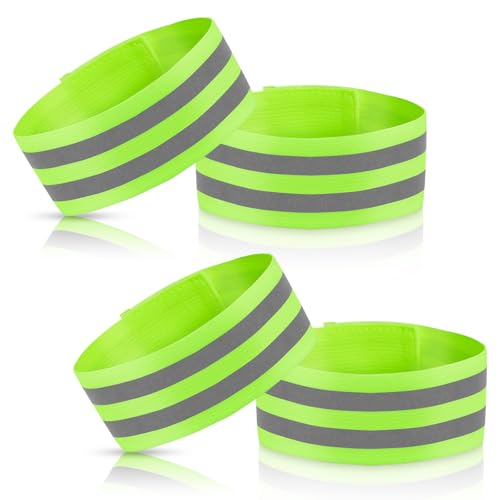
These four separate bands offer more placement options than a single sash: the maker says they can be worn on the arm, wrist, ankle or leg. Hook-and-loop closures allow adjustment, and elastic fabric helps the bands stay in place during movement. The maker describes the material as weather-resistant and the bands as 360-degree reflective. Bands cover less of the body than a vest or sash, so choose a larger garment format if you want a more continuous visible area over your clothing.
Bottom line: Pick these adjustable bands when you want to position reflectors on several limbs.
How to Choose Reflective Gear for Walking
Choose based on the light on your route and how much coverage you want. Retroreflective material sends light back toward its source, so it is most useful when headlights or a flashlight illuminate it; an LED makes its own light and can remain visible without incoming headlights. For routes with dark stretches, favor gear that combines both approaches. For well-lit streets with approaching traffic, a sash, vest or bands can make your movement easier to notice. Fit matters too: gear should sit on the outside of your clothing and stay visible while you move, rather than being covered by a coat, backpack or loose layer.
ANSI/ISEA 107 is a US standard for high-visibility safety apparel, with performance classes based on garment design and visibility materials. Do not assume a consumer walking sash or band meets that standard unless its certification is explicitly established. No reflective product guarantees that a driver will see or yield to a pedestrian.
Reflective Sash, Vest and Bands Compared
The main difference is how much of the body the gear covers and where you can place it. A sash crosses the torso, a vest covers a larger area, and bands let you place separate reflective sections on moving limbs. Moving material can help draw attention to a walker’s motion, but each format still needs to remain uncovered.
| Form | Coverage approach | Useful when |
|---|---|---|
| Sash | Diagonal torso strip | You want a quick, compact layer |
| Vest | Torso garment | You prefer a garment with broader coverage |
| Bands | Separate limb placements | You want adjustable placement on arms or legs |
Choose bands if you want multiple placement points, or a sash or vest if you want a continuous torso element. A powered light adds visibility when there is no beam to reflect, but reflective material can still add a return signal when headlights reach it.
Where to Wear Reflective Gear
Wear reflective material on the outside of your clothing, where headlights can reach it from several directions. Place bands on moving areas such as wrists or ankles, and avoid hiding them under sleeves or pant cuffs. A sash or vest should remain visible over a coat and not be obscured by a backpack. If you carry a light, aim it toward the path without shining it into drivers’ eyes.
Reflective gear is a supplement to pedestrian safety, not a substitute for it. Use sidewalks when available, cross at marked crossings where practical, and make eye contact with drivers before crossing rather than assuming they have seen you. At intersections, pause and check all traffic lanes, including turning vehicles.
Reflective Gear Safety and Care
Reflective material works by returning light; it does not generate illumination, and it cannot make a person visible when no light reaches it. LEDs provide active illumination but still need a charged battery, so check their charge before a long walk and carry a separate light if your route requires one. Keep any powered gear secured so straps or loose parts cannot catch on objects.
Wash and care for reflective gear according to its maker’s care directions because abrasion, dirt and damage can reduce reflective performance. Inspect seams, hook-and-loop closures and reflective surfaces regularly; replace gear if the reflective area is peeling, torn or heavily worn. Treat water resistance as a feature of the particular item, not as proof that its battery or charging port is safe to immerse.
Frequently Asked Questions
Do reflective bands work without headlights?
Retroreflective bands need light to return, so they do not create visibility in complete darkness by themselves. A flashlight, streetlight or vehicle headlight must illuminate them; powered LEDs can provide their own light.
Where should I wear reflective bands for walking?
Wear bands on the outside of clothing, such as around a wrist, arm, ankle or lower leg, where light can reach them. Avoid covering them with sleeves or pant cuffs, and make sure hook-and-loop closures stay secure while walking.
Are reflective walking vests ANSI certified?
ANSI/ISEA 107 sets performance requirements for high-visibility safety apparel, but a vest shape alone does not establish certification. Verify the garment’s certification and class if your work or safety rules require compliant apparel.
How often should I replace reflective walking gear?
Replace reflective gear when its material is peeling, torn, heavily abraded or no longer securely attached. Dirt and wear can reduce the return of light, so inspect the surface and closures regularly and clean it according to the maker’s care directions.
Is an LED light better than reflective material for walking?
An LED can be seen without an incoming beam, while reflective material returns light from headlights or a flashlight. For routes that alternate between lit and dark areas, combining active light and reflective material covers both situations.