
No Sugar Added Pineapple Juice: 3 Options Compared

For ready-to-portion servings, choose Dole Pineapple Juice 8 oz, 24-Pack: its 8-ounce containers make it the clearest fit for individual drinks, while Dole Pineapple Juice 52 oz comes in a 52-ounce bottle for sharing. Choose R.W. Knudsen Organic Just Pineapple 32 oz instead if USDA Organic certification and a short ingredient list matter more.
“No added sugar” does not mean sugar-free: pineapple juice naturally contains sugars. Check the Nutrition Facts panel if you are comparing total or added sugars.
We earn a commission if you buy through links on this page. As an Amazon Associate I earn from qualifying purchases. Products are compared on manufacturer specifications, not hands-on testing.
- Best overall: Dole Pineapple Juice 8 oz, 24-Pack – The 8-ounce containers make portions easy to separate and serve.
- Best for sharing: Dole Pineapple Juice 52 oz – The 52-ounce bottle gives you a larger format for multiple servings.
- Best organic option: R.W. Knudsen Organic Just Pineapple 32 oz – It is USDA Organic and uses filtered water and organic pineapple juice concentrate.
| Product | Best for | Container size | Ingredients or format | Certifications | Shop |
|---|---|---|---|---|---|
| Dole Pineapple Juice 8 oz, 24-Pack | Individual servings | 8 fl oz; 24-pack | 100% juice | Kosher | Check Price on Amazon |
| Dole Pineapple Juice 52 oz | Shared servings | 52 fl oz; 1 bottle | 100% juice | — | Check Price on Amazon |
| R.W. Knudsen Organic Just Pineapple 32 oz | Organic ingredients | 32 fl oz; 1 bottle | Water, organic concentrate | USDA Organic; Non-GMO; OU Kosher | Check Price on Amazon |
No Sugar Added Pineapple Juice Options
Compare package size and ingredient preferences to find the pineapple juice format that suits your routine.
Dole Pineapple Juice 8 oz, 24-Pack
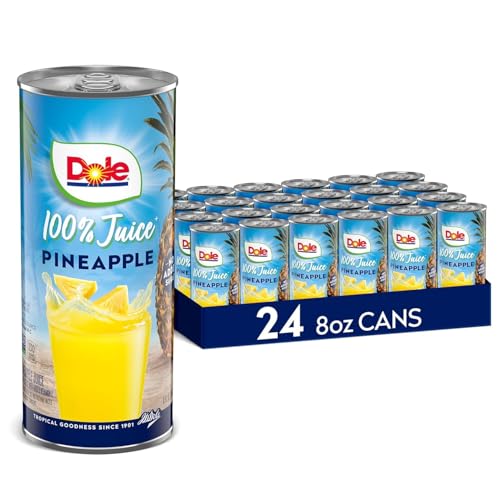
Dole Pineapple Juice 8 oz, 24-Pack stands apart with 24 individual 8-ounce containers, rather than one large bottle. Dole says the 100% pineapple juice has no added sugar and is an excellent source of vitamin C; it also identifies the juice as gluten-free and made from non-GMO ingredients. The pack suits lunch bags, portioned drinks, or recipes that call for one small serving at a time. Its tradeoff is the fixed single-serve format: choose a larger bottle if you want to pour several glasses without opening separate containers.
Bottom line: Choose this pack for individual 8-ounce servings and easy portioning.
Dole Pineapple Juice 52 oz

Dole Pineapple Juice 52 oz is the large-bottle choice among these options, with 52 fluid ounces in one container. Dole says it has no added sugar, no artificial sweeteners, and no added preservatives; the maker also says each serving provides a cup of fruit and is an excellent source of vitamin C. That format suits households pouring multiple servings or using juice in recipes. The limitation is that a large bottle is less portion-ready than individual containers, so it is a less convenient match when you need separately packed servings.
Bottom line: Pick this bottle for a larger supply to pour or share.
R.W. Knudsen Organic Just Pineapple 32 oz

R.W. Knudsen Organic Just Pineapple 32 oz is the organic option, made from filtered water and organic pineapple juice concentrate in a 32-ounce PET bottle. The product identifies itself as 100% juice with no added sugar, and its certifications include USDA Organic, Non-GMO Project Verified, and OU Kosher. It suits shoppers who prioritize organic ingredients and want a mid-size bottle for sipping, blending, or cooking. The tradeoff is its 32-ounce size: it holds less than the 52-ounce Dole bottle and is not divided into individual servings.
Bottom line: Choose this bottle when organic certification is a priority.
How to Choose No Sugar Added Pineapple Juice
Start with the label claim and the format you will actually use. “No added sugar” concerns sugars added during processing; it does not mean the juice contains zero total sugars, because pineapple itself contains naturally occurring sugars. Check the Nutrition Facts panel for total sugars and added sugars when those numbers matter to your choice. Next, compare the ingredient list: a juice made from concentrate is reconstituted with water, while certifications such as USDA Organic describe production standards rather than sugar content. For individual drinks, choose containers near your usual serving size; for recipes or several people, a larger bottle may be more practical.
Juice Formats and Serving Sizes
Package size changes convenience, not the meaning of “no added sugar.” Individual 8-ounce containers separate portions, while a 32-ounce or 52-ounce bottle lets you pour servings as needed. Use this quick guide to match format to routine.
| Use | Useful format | What to consider |
|---|---|---|
| One packed serving | 8-ounce container | Pre-portioned; less flexible for larger pours |
| Small household or recipes | 32-ounce bottle | Mid-size; check ingredients and certifications |
| Several pours | 52-ounce bottle | Larger container; refrigerate after opening |
These are format comparisons, not nutrition serving recommendations. A container’s serving size may differ from how much you pour.
Reading Pineapple Juice Labels
Use two parts of the package for different questions: the ingredient list tells you what went into the juice, and the Nutrition Facts panel reports sugars per serving. “100% juice” and “no added sugar” are distinct statements; neither means that a serving has no naturally occurring sugar. Concentrate is juice with much of its water removed, and reconstituted juice has water added back. Organic certification is also separate from the sugar claim. When comparing bottles, keep the serving sizes aligned on the panels before comparing grams, and do not treat a vitamin C claim as a measure of sugar.
Storing Pineapple Juice After Opening
Refrigerate opened pineapple juice and follow the package’s storage and discard directions. Shelf-stable packaging can be stored unopened according to its label, but that does not make an opened container shelf-stable. Keep the cap closed and return the bottle to the refrigerator promptly after pouring; avoid drinking directly from a shared container because that can transfer microbes. If juice has an unusual odor, appearance, or damaged packaging, do not taste it to decide whether it is safe. For a bottle that will be used slowly, choose a container size you can finish within the package’s after-opening guidance.
Frequently Asked Questions
Does no added sugar pineapple juice contain sugar?
Yes. Pineapple naturally contains sugars, so “no added sugar” does not mean sugar-free. Check total sugars on the Nutrition Facts panel for the amount per serving.
Is pineapple juice from concentrate still 100% juice?
It can be: concentrate is juice with water removed, and water can be added back to reconstitute it. Check the ingredient list and the package’s juice statement to confirm the product you are considering.
Should opened pineapple juice be refrigerated?
Yes, refrigerate it after opening and follow the package’s storage directions. Shelf-stable storage applies to unopened containers, not automatically to opened juice.
How do I compare sugar in different juice bottles?
Compare total sugars per serving on each Nutrition Facts panel, using the same serving volume. “No added sugar” alone does not tell you the total sugar amount.