
Leg Braces for Weak Legs: 3 Support Types Compared

For broad lower-limb support, Full Leg Hinged Hip-Knee-Ankle-Foot Orthosis is the closest match because it spans the hip, knee, ankle, and foot with adjustable hinges. Choose Azmec 12-Inch Tri-Panel Knee Immobilizer for a shorter knee immobilizer or Ergonomic Power Knee Brace, 2-Pack for spring-assisted knee support; leg weakness caused by a medical condition or surgery calls for clinician guidance before choosing a brace.
We earn a commission if you buy through links on this page. As an Amazon Associate I earn from qualifying purchases. Products are compared on manufacturer specifications, not hands-on testing.
- Best overall: Full Leg Hinged Hip-Knee-Ankle-Foot Orthosis – Its adjustable hip, knee, ankle, and foot hinges cover the full lower limb.
- Best for knee immobilization: Azmec 12-Inch Tri-Panel Knee Immobilizer – The 12-inch tri-panel design and four straps are made to hold the knee straight.
- Best for assisted knee movement: Ergonomic Power Knee Brace, 2-Pack – Spring-loaded stabilizers are designed to assist knee flexion and extension during movement.
| Product | Best for | Coverage | Movement support | Fit or size | Shop |
|---|---|---|---|---|---|
| Full Leg Hinged Hip-Knee-Ankle-Foot Orthosis | Full leg alignment | Hip to foot | Adjustable hinges | Height 61–79 in | Check Price on Amazon |
| Azmec 12-Inch Tri-Panel Knee Immobilizer | Straight knee support | Knee | Straight support | 12 in; calf 14–17 in, thigh 17–22 in | Check Price on Amazon |
| Ergonomic Power Knee Brace, 2-Pack | Spring-assisted knee | Knee | Spring-assisted flexion and extension | Adjustable pads | Check Price on Amazon |
Leg Braces for Weak Legs
Compare the support area and movement control before choosing a brace for leg weakness.
Full Leg Hinged Hip-Knee-Ankle-Foot Orthosis

Unlike knee-only options, this orthosis spans the hip through the foot and has adjustable hinges at the hip, knee, ankle, and foot. The maker says the design is intended to support alignment and restrict unwanted movement during postoperative rehabilitation. Its height range is 61 to 79 inches. This broad coverage may suit someone whose clinician has prescribed support across several lower-limb joints. It is not a simple sleeve or a general-purpose walking aid, so buyers seeking light compression or a single-joint brace should consider a narrower option instead.
Bottom line: Choose this when a clinician recommends hinged support from hip to foot.
Azmec 12-Inch Tri-Panel Knee Immobilizer

This brace focuses on the knee rather than the entire leg, with a 12-inch tri-panel construction, removable side panels, and four adjustable straps. The maker says it provides straight support and describes the fabric as breathable and flexible. Its fit ranges are a 14-to-17-inch calf and a 17-to-22-inch thigh, which makes measuring both areas important before choosing it. A knee immobilizer limits motion, so it is a poor fit for someone who needs a flexible sleeve or spring assistance while bending the knee.
Bottom line: Choose this if straight knee support is the specific need and your measurements fit.
Ergonomic Power Knee Brace, 2-Pack
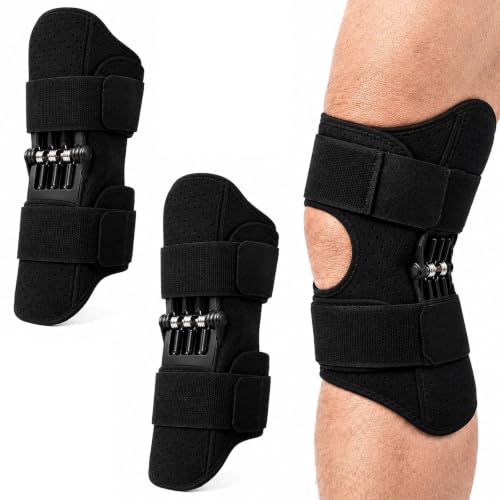
Rather than holding the knee straight, this two-brace set uses spring-loaded stabilizers intended to assist bending and straightening during everyday movement. The maker says the design provides directional support for activities such as stairs and standing up. Adjustable stabilizer pads distinguish it from a fixed immobilizer, but the product focuses on the knee and does not provide hip, ankle, or foot support. Because spring assistance is not the same as immobilization, anyone recovering from surgery or needing restricted motion should confirm the appropriate brace type with a clinician.
Bottom line: Choose this for spring-assisted knee movement, not full leg stabilization.
How to Choose Leg Braces for Weak Legs
Start by identifying which joint needs support and whether movement should be limited or assisted. A knee immobilizer is designed to hold the knee straighter, while a hinged orthosis can span multiple joints and an elastic sleeve offers flexible compression rather than rigid control. Match coverage to the clinician’s recommendation, especially after surgery or when weakness affects walking. Measure the body areas specified for the brace: the Azmec fit ranges, for example, use both calf and thigh circumference. A brace should feel secure without causing numbness, tingling, increasing pain, or a change in skin color; remove it and seek clinical advice if those occur. Do not choose a multi-joint brace solely because it covers more area.
Full Leg Orthoses Versus Knee Braces
Full leg orthoses support more joints, while knee braces concentrate support at the knee. A hip-knee-ankle-foot orthosis can use hinges to manage alignment and motion across the leg; a knee immobilizer instead prioritizes restricting knee movement. Spring-assisted knee braces are a different category because their design aims to aid bending and straightening rather than keep the joint straight. Use the table to narrow the type by the support goal, not by the word “leg” in a product name.
| Support goal | Brace type | Key distinction |
|---|---|---|
| Support multiple lower-limb joints | Hip-knee-ankle-foot orthosis | Hinges span hip through foot |
| Limit knee movement | Knee immobilizer | Holds knee straighter |
| Assist knee movement | Spring-assisted knee brace | Designed to aid flexion and extension |
Getting the Fit Right
Measure the areas a brace uses for sizing rather than relying on clothing size or height alone. Circumference measurements should be taken with the leg relaxed, and the tape should sit flat without digging into the skin. A brace that slides can rub; one that is too tight can create pressure or interfere with circulation. For a knee immobilizer, compare both thigh and calf measurements with its ranges before selecting it. For multi-joint orthoses, confirm the height range and fit with the prescribing clinician, since correct alignment depends on placement at several joints. Recheck skin under straps after wear, particularly when sensation is reduced.
When to Get Clinical Guidance
Leg weakness after surgery, a fall, or a sudden change in walking warrants assessment before selecting a brace. Braces differ in whether they restrict motion, guide alignment, or add flexible compression, and using the wrong type can conflict with a recovery plan. Ask the clinician which joint needs support, whether bending should be limited, and how long the brace should be worn. A new brace should not cause worsening pain, numbness, tingling, coldness, or pale or bluish skin; remove it and contact a clinician if these signs appear. Do not use a brace to push through worsening weakness or instability.
Frequently Asked Questions
Can a knee brace help with general leg weakness?
A knee brace supports the knee area, not weakness throughout the entire leg. If weakness affects the hip, ankle, or foot too, get clinical guidance on which joints need support.
How should I measure for a knee immobilizer?
Use a flexible tape to measure thigh and calf circumference where the brace will sit. Compare both measurements with the specific size ranges before choosing a fit.
Should a leg brace feel tight when worn?
A brace should feel secure but should not cause numbness, tingling, increasing pain, or a skin-color change. Remove it and contact a clinician if any of those signs occur.
Can I walk in a knee immobilizer?
Walking depends on the injury, the prescribed brace, and any weight-bearing restrictions. Ask the treating clinician whether walking is permitted and whether an assistive device is needed.
When should I seek care for leg weakness?
Sudden weakness, weakness after a fall, or new trouble walking needs prompt medical assessment. Do not rely on a brace to manage a rapidly worsening symptom.