
Corset for Back Support: Braces and Shapewear Compared

For back support, Mueller Adjustable Back Brace is the closest match because it wraps the waist and uses eight steel springs for targeted compression; a back brace is not the same garment as a shapewear corset. Choose a waist trainer or full-body shaper instead if your priority is clothing fit and torso shaping, not lumbar support.
Measure at the widest part of your waist for Mueller Adjustable Back Brace, and use each garment’s own size guidance because fit ranges are not interchangeable.
We earn a commission if you buy through links on this page. As an Amazon Associate I earn from qualifying purchases. Products are compared on manufacturer specifications, not hands-on testing.
- Best overall: Mueller Adjustable Back Brace – Eight steel springs and adjustable closure straps make it the closest match for lumbar support.
- Best for lumbar padding: Sparthos Back Brace, Large – An adjustable lumbar pad and vertical stays add targeted lower-back support.
- Best for torso shaping: Nebility Waist Trainer Vest – A zip-front waist trainer has three hook rows and adjustable shoulder straps.
| Product | Best for | Waist sizing | Support structure | Garment type | Shop |
|---|---|---|---|---|---|
| Mueller Adjustable Back Brace | Adjustable back support | 28–50 in. | 8 steel springs | Wraparound brace | Check Price on Amazon |
| Sparthos Back Brace, Large | Lumbar pad support | Large; range not given | Vertical support stays | Lumbar brace | Check Price on Amazon |
| TESETON Lumbar Support Belt, Medium | Reinforced lumbar support | 28–31 in. | 6 reinforced bones | Lumbar belt | Check Price on Amazon |
| Nebility Waist Trainer Vest | Torso shaping | Medium; range not given | Steel bones | Waist trainer vest | Check Price on Amazon |
| SHAPSHE Full-Body Belt Shaper | Full torso shaping | Large; range not given | Double-layer compression | Full-body belt shaper | Check Price on Amazon |
Corsets for Back Support and Related Braces
Compare the support-oriented braces with shaping garments by construction and intended fit.
Mueller Adjustable Back Brace

Unlike the shaping garments here, this wraparound brace is built around eight steel springs for targeted compression. Its breathable mesh body and adjustable closure straps let the wearer tighten the fit, and the maker says the fabric is treated to prevent odor. The one-size version fits waists from 28 to 50 inches; measure around the widest part of the waist before choosing it. It suits adults seeking adjustable support across the back during activity. The limitation is its 8.75-inch height, which may not provide the coverage of a longer torso garment.
Bottom line: Choose this if you want a spring-supported wraparound brace with adjustable tension.
Sparthos Back Brace, Large
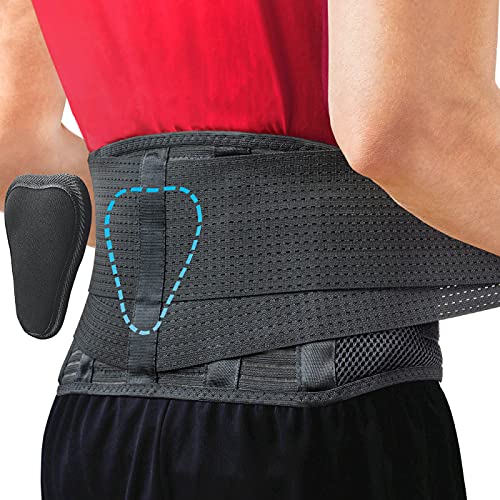
The adjustable lumbar pad sets this brace apart from the other back-support options, while vertical support stays help stabilize the brace and resist rolling, according to the maker. Breathable mesh is intended for wear under clothing, and the model is sized Large. This is a closer fit for someone looking for focused lower-back support than for someone who wants a corset-style shaping garment.
Bottom line: Pick this for an adjustable lumbar pad rather than corset-style coverage.
TESETON Lumbar Support Belt, Medium
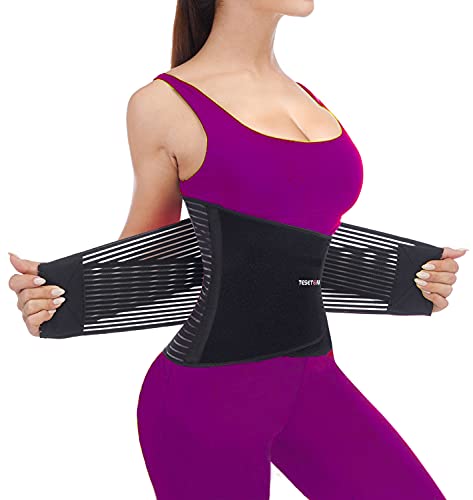
Six reinforced bones and two elastic straps distinguish this lumbar belt, giving it a more structured belt design than the zip-front shaping garments. The Medium size fits a 28- to 31-inch waist, and the belt measures 39.4 inches long. The maker says its 360-degree support helps reduce pressure and prevent excessive rolling during activities such as lifting or prolonged standing. It suits buyers who want a sized lumbar belt. Its narrow waist range makes accurate measuring especially important; the garment is not a full torso corset.
Bottom line: Choose this for a measured Medium fit and reinforced lumbar structure.
Nebility Waist Trainer Vest

This is a shaping vest, not a lumbar brace: its 90% polyester and 10% spandex fabric, front zipper, three hook rows and adjustable shoulder straps are designed to customize a close torso fit. The maker describes it as high-compression shapewear for waist shaping, with a U-shaped bust design. It may suit someone who wants a vest-style garment for daily wear or workouts and values adjustable straps.
Bottom line: Pick this when a vest-style shaping fit matters more than lumbar-brace construction.
SHAPSHE Full-Body Belt Shaper

Among the shaping options, this garment covers the waist, back and torso with double-layer compression and has a built-in bra. A zipper plus three rows of hook-and-eye closures create its front fastening, rather than the wraparound straps used by lumbar braces. The maker recommends measuring the natural waist and choosing the larger size when between sizes. It suits buyers seeking full-body smoothing under everyday clothing. Its limitation for back-support shoppers is that its described construction focuses on compression and shaping, not a defined lumbar pad or spring support.
Bottom line: Choose this for full-torso shaping, not focused lumbar support.
How to choose a back-support corset
Choose by the structure that matches the support you want: spring-supported wraps and lumbar belts are different from waist-shaping garments. A brace may use steel springs, vertical stays, reinforced bones or a lumbar pad to add structure; shapewear instead emphasizes compression, smoothing or a contoured torso fit. Measure your waist where the specific garment instructs—Mueller Adjustable Back Brace uses the widest part, while SHAPSHE Full-Body Belt Shaper calls for the natural waistline. If your measurement falls between labeled sizes, SHAPSHE Full-Body Belt Shaper recommends the larger size for comfort. Treat size labels such as Medium or Large as brand-specific, not universal. If you need support for a particular medical condition or work task, ask a qualified clinician whether a brace is appropriate before relying on a garment.
Back brace and shapewear types compared
For focused lumbar structure, compare braces by their support elements; for a shaped silhouette, compare closures and coverage. The table distinguishes those purposes without treating a waist trainer as a substitute for a lumbar brace.
| Type | Construction example | Choose when |
|---|---|---|
| Wraparound back brace | Springs and adjustable straps | You want adjustable compression |
| Lumbar belt | Reinforced bones and elastic straps | You want a structured belt fit |
| Shaping vest | Front zipper, hook rows, shoulder straps | You want torso shaping |
| Full-body shaper | Double-layer compression and built-in bra | You want broader garment coverage |
A corset-style look alone does not tell you whether a garment has lumbar support. Look for a described support element and a waist range that includes your measured size.
How to measure for fit
Measure your body at the location specified for the garment, using a flexible tape held level and snug rather than tight. Mueller Adjustable Back Brace gives a 28- to 50-inch range for its one-size option and specifically calls for measurement around the widest waist point; TESETON Lumbar Support Belt, Medium gives a 28- to 31-inch Medium range. Those ranges show why the same size label can fit differently across products. For a garment with no stated range, do not infer fit from its label alone—confirm the applicable waist chart before ordering. If the tape measure falls outside a range, choose another size or design rather than forcing a compressed fit.
Wear and safety considerations
A back brace should fit securely without restricting normal breathing, circulation or movement. Stop wearing a garment if it causes numbness, tingling, skin irritation or increasing discomfort, and seek medical advice for persistent or severe back symptoms. Compression shapewear is not a treatment for back pain, and a shaping garment should not be assumed to stabilize the spine. For lifting, a brace does not make an unsafe load safe: keep loads close, avoid twisting while carrying, and ask for help with an awkward object. Breathable mesh can aid comfort, but inspect the skin after extended wear and keep closures and support elements from pressing painfully against the body.
Frequently Asked Questions
How tight should a back brace feel?
A back brace should feel secure, not painful or restrictive. Loosen or remove it if breathing, circulation or normal movement is affected.
Can waist trainers support the lower back?
A waist trainer can compress the torso, but that is not the same as a brace with defined lumbar support. Check for named support elements such as stays, springs or a lumbar pad if lower-back structure is the goal.
Where should I measure my waist for a brace?
Follow the measurement point specified for the garment: Mueller Adjustable Back Brace calls for the widest part of the waist, while SHAPSHE Full-Body Belt Shaper specifies the natural waistline. Keep the measuring tape level and snug.
Can I wear a back brace while lifting?
Some braces are designed for activities such as lifting, but a brace does not replace safe lifting technique. Keep loads close to your body and avoid twisting under load.
What should I do if a brace causes numbness?
Remove the brace if numbness, tingling or increasing discomfort occurs. A fit that causes these symptoms is not appropriate; seek medical advice if symptoms persist.