
Best Vent Deflectors for Floor Vents: 3 Picks

Adjustable Magnetic Deflector, 8.5–15 in suits most people because its adjustable 8.5-to-15-inch span covers more vent widths than a fixed-size register model. Choose 2-in-1 Floor Register Deflector, 4×12 instead if you want a 2-in-1 cover and deflector for a 4-by-12-inch floor register.
Floor vent deflectors redirect supply air into a room rather than letting it rise straight from the register; measure the metal opening and check whether magnets can attach to it.
We earn a commission if you buy through links on this page. As an Amazon Associate I earn from qualifying purchases. Products are compared on manufacturer specifications, not hands-on testing.
- Best overall: Adjustable Magnetic Deflector, 8.5–15 in – The adjustable 8.5-to-15-inch width accommodates a broader range of vents.
- Best for 9–14-inch vents: Binazon Magnetic Deflector, 9–14 in – The magnetic deflector is sized for vents from 9 to 14 inches wide.
- Best for 4×12 registers: 2-in-1 Floor Register Deflector, 4×12 – It combines a floor register cover with adjustable directional airflow.
| Product | Best for | Fit range | Attachment | Material | Shop |
|---|---|---|---|---|---|
| Adjustable Magnetic Deflector, 8.5–15 in | Flexible width fit | 8.5–15 in | Magnets | Clear plastic | Check Price on Amazon |
| Binazon Magnetic Deflector, 9–14 in | Midrange vent widths | 9–14 in | Magnets | Plastic | Check Price on Amazon |
| 2-in-1 Floor Register Deflector, 4×12 | 4×12 floor registers | 4 × 12 in register | Tool-free | ABS | Check Price on Amazon |
Vent Deflectors for Floor Vents
Match the deflector’s width and attachment style to the floor register before choosing a design.
Adjustable Magnetic Deflector, 8.5–15 in
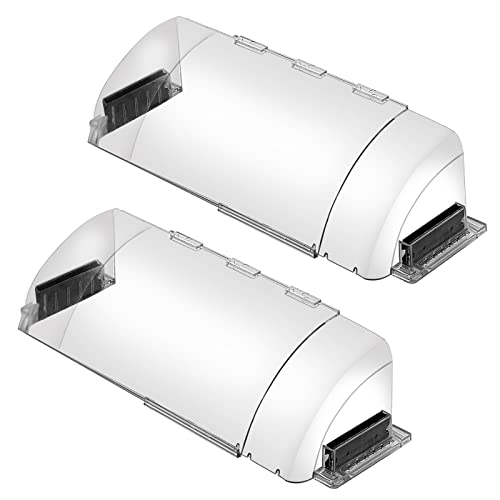
The broad adjustable width sets this clear-plastic deflector apart: it expands from 8.5 to 15 inches, compared with the narrower range of Binazon Magnetic Deflector, 9–14 in and the fixed register size of 2-in-1 Floor Register Deflector, 4×12. Built-in magnets attach it to metal vents without tools, and its two-part design can direct heated or cooled air from floor registers. The maker says it can also fit wall and ceiling vents. This is the most flexible choice when the floor vent’s width falls within its range. Because the attachment is magnetic, confirm the vent surface is metal before relying on it to stay in place.
Bottom line: Choose this if you want a wide adjustable range and have a metal register.
Binazon Magnetic Deflector, 9–14 in

Binazon Magnetic Deflector, 9–14 in targets vents from 9 to 14 inches wide, making it a narrower-span alternative to Adjustable Magnetic Deflector, 8.5–15 in for common midrange openings. The clear plastic deflector uses magnets and can be adjusted to redirect heated or cooled air from floor registers; the maker also says it fits sidewall and ceiling positions. Its material is plastic, and the maker describes it as suitable for hot and cold environments. Choose it when your measured opening is within that range and you prefer a straightforward magnetic design. A nonmetal register surface is a limitation, since the magnets need metal to hold securely.
Bottom line: Pick this for a metal floor vent measuring 9 to 14 inches wide.
2-in-1 Floor Register Deflector, 4×12

2-in-1 Floor Register Deflector, 4×12 is the only option here that combines a floor register cover with a deflector, sized for a 4-by-12-inch register. Its ABS construction is nonmetal, so unlike Adjustable Magnetic Deflector, 8.5–15 in and Binazon Magnetic Deflector, 9–14 in, it does not depend on magnetic attachment. The adjustable airflow feature lets it serve as a regular ventilation opening when closed or redirect air when opened. This format suits someone replacing or covering that specific register size, rather than someone seeking a broad adjustable-width magnetic deflector. Its fixed 4-by-12 size is the key limitation: verify the register dimensions before selecting it.
Bottom line: Choose this for a 4-by-12-inch register when you want a cover as well as redirection.
How to Choose a Floor Vent Deflector
Choose by measuring the register opening, checking how the deflector attaches, and deciding where the air should go. Measure the inside width of the register, not the surrounding floor cutout or trim; a difference of even 1 inch can put a vent outside an adjustable product’s range. Magnetic models need a ferrous metal surface, while plastic or wood registers will not hold them by magnet alone. A deflector should steer supply air away from a nearby bed, sofa, or curtain without sealing the outlet. If the register is under furniture, measure the clearance and the distance to the furniture edge, then compare those measurements with the deflector’s height and reach.
Floor Register Sizing and Fit
Floor register sizes refer to the duct opening, and common nominal widths include 4, 6, and 8 inches, with lengths often 10, 12, or 14 inches. Measure the opening where the register fits, because the grille’s outer dimensions are larger than the duct opening. For adjustable magnetic deflectors, compare the opening width with the adjustment range and make sure the magnets land on metal. For a fixed-size replacement cover, match both opening dimensions; a 4-by-12 register is not interchangeable with a 4-by-10 one. When a deflector sits beneath furniture, leave room for airflow and confirm its height will clear the furniture base.
Use this fit check before choosing a style.
| Need | What to measure | Choice |
|---|---|---|
| Adjustable magnetic deflector | Register width and metal surface | Width within the adjustment span |
| Cover plus deflector | Opening width and length | Exact register size |
Airflow Direction and Room Comfort
Floor registers generally supply conditioned air, so a deflector is useful when the outlet sends air directly at a person or into furniture. Set the direction to guide air into open room space rather than into a wall or beneath a tightly fitted rug. A deflector redirects the outlet stream; it does not increase the heating or cooling capacity of the HVAC system. Keep rugs, bedding, and furniture clear of the register, since obstructed supply airflow can reduce circulation through the room. Avoid closing multiple supply registers to force air elsewhere; HVAC systems are designed around balanced airflow, and major changes can affect duct pressure. If comfort remains uneven, check the filter and system airflow rather than blocking more outlets.
Magnet and Register Safety
Magnetic deflectors attach only where magnets can grip, so verify that a register is steel or another magnetic metal before choosing that attachment style. Aluminum, wood, and plastic surfaces do not provide the same magnetic hold. Keep floor outlets unobstructed and avoid placing loose fabric over a deflector, especially when warm air is flowing. A deflector changes direction rather than controlling temperature, so hot supply air can still feel uncomfortable at close range. For a child’s room or a walkway, position the outlet stream away from direct contact and keep the unit secure so it cannot shift under foot traffic. Check periodically that a magnetic unit remains seated after adjustments or cleaning.
Frequently Asked Questions
How do I measure a floor register for a deflector?
Measure the width of the register opening where it meets the floor, rather than the outer grille. For a fixed cover, measure both opening width and length; for an adjustable deflector, make sure the width falls inside its range.
Will a magnetic vent deflector stick to any register?
No; the magnets need a magnetic metal surface to hold securely. Plastic, wood, and many aluminum registers will not provide the same grip, so check the register material before choosing a magnetic style.
Can a floor vent deflector block heating or cooling?
A deflector redirects supply air but should not seal the outlet. Keep rugs and furniture clear, and do not close several registers to redirect airflow because doing so can affect system balance.
How much clearance does a vent deflector need under furniture?
The deflector must clear the furniture base, and its reach must extend past the furniture edge to guide air into the room. Measure both the vertical gap and the distance from the register to the edge before choosing an under-furniture design.