
Strongest Stretchy Cord for Bracelets: 5 Options Compared

For the strongest stretchy cord for bracelets, choose the 1 mm Paxcoo cord when bead holes can accommodate its flat 1 mm width; thickness and bead-hole fit decide the choice. For smaller holes, a thinner cord such as the 0.5 mm Stretch Magic is more likely to fit, though the product facts do not establish a direct strength ranking.
We earn a commission if you buy through links on this page. As an Amazon Associate I earn from qualifying purchases. Products are compared on manufacturer specifications, not hands-on testing.
- Best overall: Paxcoo Flat Elastic Cord, 1 mm – Its 1 mm width is the largest and the 328 ft spool offers the most cord.
- Best for two colors: LUSTEMBER Elastic String, 1 mm, Two Rolls – Includes two 1 mm rolls, black and white.
- Best for small holes: Stretch Magic Clear Cord, 0.5 mm – Its 0.5 mm diameter can fit smaller bead holes.
| Product | Best for | Cord width or diameter | Material | Spool length | Shop |
|---|---|---|---|---|---|
| Paxcoo Flat Elastic Cord, 1 mm | Larger bead holes | 1 mm wide, 0.7 mm thick | Elastic polyester spandex | 328 ft | Check Price on Amazon |
| LUSTEMBER Elastic String, 1 mm, Two Rolls | Two color options | 1 mm | Nylon-polyester fabric, braided rubber | Two rolls | Check Price on Amazon |
| JULIMAIDONG Clear Elastic Cord, 0.8 mm | Long clear spool | 0.8 mm | Elastic polyester spandex | 200 ft | Check Price on Amazon |
| Paxcoo Clear Elastic String, 0.8 mm | Maximum cord length | 0.8 mm | Elastic plastic rubber | 4,716 ft | Check Price on Amazon |
| Stretch Magic Clear Cord, 0.5 mm | Small bead holes | 0.5 mm diameter | Polyurethane | 32.8 ft | Check Price on Amazon |
Stretchy Cord for Bracelets Compared
Compare cord dimensions and materials against your bead-hole size before choosing.
Paxcoo Flat Elastic Cord, 1 mm
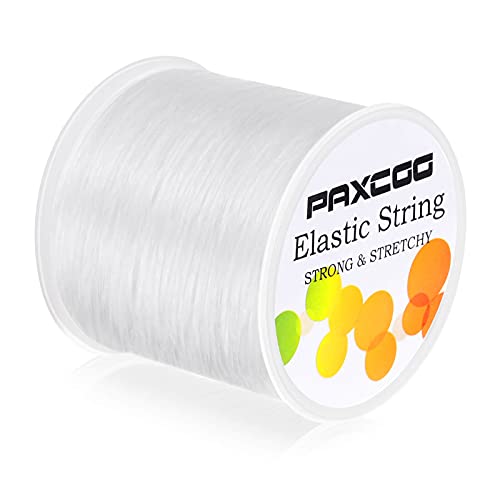
The flat 1 mm Paxcoo cord combines the largest width with the longest spool among these options. Its flat profile measures 1 mm wide by 0.7 mm thick, and the 328 ft roll gives makers ample cord for repeated projects. The maker says the polyester-spandex cord is flexible, works with small and large beads, and ties into a compact knot that can be tucked between beads. Choose it when bead holes can pass the wider cord; the width may rule it out for tightly drilled beads.
Bottom line: Choose this when your bead holes accept a flat 1 mm cord.
LUSTEMBER Elastic String, 1 mm, Two Rolls

The LUSTEMBER set stands apart by including black and white 1 mm cord rather than a single color. The maker describes a nylon-polyester fabric construction with braided rubber and says the cord is easy to cut and tie. That combination suits projects where the cord color should blend with different beads or where two color choices are useful. The product facts do not give a spool length, so it is harder to compare total supply with measured rolls; prioritize the two-color set when that matters more than footage.
Bottom line: Pick this for black-and-white cord choices in one set.
JULIMAIDONG Clear Elastic Cord, 0.8 mm

The JULIMAIDONG cord offers a clear, round 0.8 mm profile on a 200 ft roll, a useful middle ground between fine cord and the wider 1 mm options. The maker says the elastic polyester-spandex line is easy to tie and can hide knots among beads. Its clear appearance suits designs where visible cord would distract, while the 0.8 mm diameter still requires a bead hole large enough for the cord and knot. Choose it for a long clear spool, not if you specifically need the thinnest cord.
Bottom line: Choose this for clear cord in a substantial spool.
Paxcoo Clear Elastic String, 0.8 mm
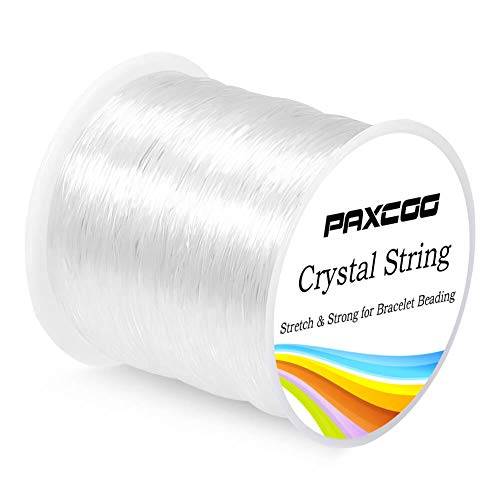
The 0.8 mm Paxcoo roll supplies 4,716 ft, the longest measured spool here, while keeping to a clear, round cord size. The maker describes the elastic plastic-rubber cord as stretchy and suited to seed, gemstone and glass beads. Its diameter makes it a practical candidate for many standard bead projects, but hole size remains the deciding constraint: test the cord and a tied knot against a bead before stringing a full bracelet. The material differs from the polyester-spandex options, so buyers wanting that specific construction should choose another cord.
Bottom line: Pick this when a long 0.8 mm clear roll is the priority.
Stretch Magic Clear Cord, 0.5 mm

The 0.5 mm Stretch Magic is the thinnest option here, making it the clearest fit when bead holes are too small for 0.8 mm or 1 mm cord. It is polyurethane, latex-free, and comes on a 32.8 ft spool. The maker says the material is non-fraying, resilient and easy to knot. That thinner diameter favors compatibility with smaller holes, but the shorter spool means less cord than the long-roll options; select it when fit matters more than spool length.
Bottom line: Choose this for smaller holes and a thinner cord profile.
How to choose stretchy bracelet cord
Match the cord diameter to the bead hole first, then consider material and spool length. These options range from 0.5 mm to 1 mm, with one flat cord measuring 1 mm wide and 0.7 mm thick; a larger listed width does not by itself prove greater breaking strength. Measure the bead hole with a drill gauge or compare a short cord sample, then check that the tied knot can also pass through or sit inside the bead. For a hole that will not admit 0.8 mm cord, start with the 0.5 mm option. Elastic cord is commonly finished with a secure knot tucked into a bead, and a dab of flexible jewelry adhesive can help keep a knot from loosening.
| Need | Starting choice |
|---|---|
| Small bead holes | 0.5 mm cord |
| Clear mid-size cord | 0.8 mm cord |
| Wider profile or two colors | 1 mm cord |
Diameter and bead-hole fit
Bead-hole clearance matters more than choosing the thickest cord by default. A cord needs to pass through every bead, and some bracelets require threading the same beads twice, so allow room for multiple passes rather than matching the hole to the cord exactly. Bead holes vary with material and manufacturing; a gemstone bead may have a narrower or rougher opening than a plastic pony bead. Test one bead and a finished knot before cutting a full bracelet length. Avoid pulling elastic sharply over a rough-edged hole, which can abrade the surface and weaken it.
Elastic materials and strength claims
Polyurethane, elastic polyester-spandex, and fabric cord with braided rubber are different constructions, and the product facts do not establish comparable breaking loads. Stretch Magic is polyurethane; several other options identify polyester-spandex, while the black-and-white set describes nylon-polyester fabric with braided rubber. Maker statements such as “hard to break” or “strong” are not standardized measurements, so do not treat them as a tensile-strength rating. If a bracelet will carry heavy beads or see frequent stretching, choose a cord diameter that fits without abrasion and avoid overloading the strand. Replace elastic when it becomes fuzzy, permanently stretched or visibly nicked.
Knotting and bracelet care
Leave enough extra cord at each end to tie and handle a secure knot without stretching the strand to its limit. A common finish is a surgeon’s knot or square knot, pulled snug while the elastic remains relaxed; bury the knot inside a bead where the hole allows. Avoid repeated hard stretching when putting a bracelet on or taking it off, because strain concentrates at the knot and bead edges. Keep elastic jewelry away from sharp tools and prolonged heat, which can damage polymer or rubber components. A quick inspection for fraying and loosened knots before wearing helps catch wear before the strand separates.
Frequently Asked Questions
Can a thicker bracelet cord be stronger?
A larger diameter can provide more material, but diameter alone does not establish a cord’s breaking strength.
How do I match elastic cord to bead holes?
Choose a cord that passes freely through the narrowest bead hole, allowing for a second pass if the bracelet design needs one. Test a sample bead and the finished knot before stringing the strand.
What knot works for stretchy bracelet cord?
A surgeon’s knot or square knot is commonly used for elastic bracelet cord. Pull it snug with the cord relaxed, then tuck the knot into a bead if the hole is large enough.
How often should elastic bracelet cord be replaced?
Replace it when the strand is frayed, nicked or stays stretched after removal. No universal service interval applies because wear depends on stretching frequency, bead edges and handling.
Does clear elastic cord work with gemstone beads?
Clear elastic cord can be used with gemstone beads when the bead holes admit the cord without scraping it. Check the hole and edge finish before stringing, since rough edges can abrade elastic.