
Best Earplugs for Small Ear Canals: 4 Fits Compared

Mack’s Slim Fit Foam Earplugs is the best starting point for most small ear canals because its foam plugs are about 10% smaller than the brand’s standard size and carry a 31 dB NRR. Choose HEAROS Nanos Extra Small Foam Earplugs if you need an extra small fit; Alpine SleepDeep Small Reusable Earplugs is a reusable option, while Peace&Quiet PQ Small Foam Earplugs offers compact foam plugs.
Earplugs reduce sound by sealing the canal, so the right size is the one that stays in place without pain and seals consistently.
We earn a commission if you buy through links on this page. As an Amazon Associate I earn from qualifying purchases. Products are compared on manufacturer specifications, not hands-on testing.
- Best overall: Mack’s Slim Fit Foam Earplugs – Its foam plugs are about 10% smaller than the brand’s standard size and have a 31 dB NRR.
- Best for extra-small canals: HEAROS Nanos Extra Small Foam Earplugs – The plugs are sized for extra small ear canals and carry a 28 dB NRR.
- Best for reusable fit: Alpine SleepDeep Small Reusable Earplugs – The small-size reusable plugs have an oval shape and a 27 dB SNR.
- Best for compact foam: Peace&Quiet PQ Small Foam Earplugs – The compact foam plugs are designed for small ear canals and include a case.
| Product | Best for | Fit / material | Pack count | Shop |
|---|---|---|---|---|
| Mack’s Slim Fit Foam Earplugs | Small-canal foam | Small-profile foam | 50 pairs | Check Price on Amazon |
| HEAROS Nanos Extra Small Foam Earplugs | Extra small canals | Extra-small foam | 25 pairs | Check Price on Amazon |
| Alpine SleepDeep Small Reusable Earplugs | Reusable sleep fit | Small reusable style | Small size | Check Price on Amazon |
| Peace&Quiet PQ Small Foam Earplugs | Compact foam pair | Small foam | 40 pairs | Check Price on Amazon |
Earplugs for Small Ear Canals
Compare the fit, construction and noise-rating systems before choosing a pair for sleep or other noise exposure.
Mack’s Slim Fit Foam Earplugs
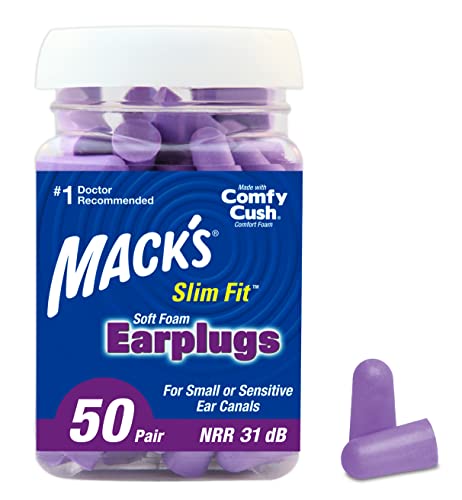
Mack’s Slim Fit Foam Earplugs stands out with a size about 10% smaller than the brand’s standard foam earplugs, making it a practical option for small or sensitive canals. The tapered, slow-release foam compresses for insertion and expands to fill the canal; the brand gives it a 31 dB NRR. The 50-pair pack suits regular use for sleep, travel or noisy activities. Foam plugs are disposable, so this is less suitable if you want a reusable pair; a good seal still depends on correct insertion.
Bottom line: Choose these if you want small-profile foam plugs with a 31 dB NRR.
HEAROS Nanos Extra Small Foam Earplugs

HEAROS Nanos Extra Small Foam Earplugs is the most explicitly petite fit here: its foam plugs are made for extra small ear canals rather than simply described as small. The roll-down foam expands for a custom fit, and the manufacturer gives it a 28 dB NRR. A 25-pair pack can suit people who find standard foam plugs uncomfortable and need hearing protection for sleep or noisy settings. This is a one-size option, so people who need a reusable plug or an adjustable size choice should consider another style.
Bottom line: Pick these when standard small plugs still feel too large.
Alpine SleepDeep Small Reusable Earplugs
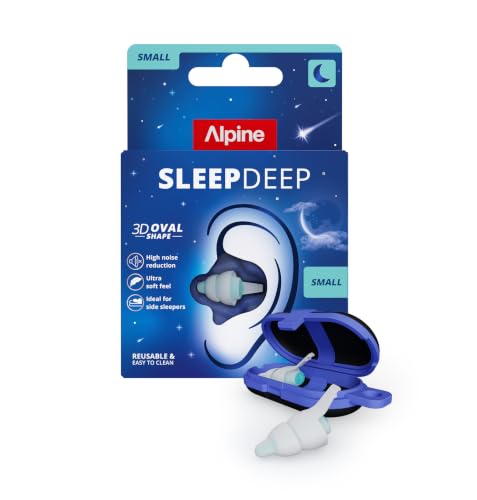
Alpine SleepDeep Small Reusable Earplugs differs from the foam options as a reusable, small-size plug with an oval shape intended for sleeping, including on your side. Its soft material is designed to mold with body heat, and the brand gives it a noise reduction rating of up to 27 dB SNR. The small size suits buyers seeking a reusable sleep-focused option rather than a pack of disposable foam plugs. Its SNR uses a different rating system from the NRR values on the foam choices, so compare fit and intended use rather than treating the numbers as equivalent.
Bottom line: Choose these if you want a small reusable pair for sleep.
Peace&Quiet PQ Small Foam Earplugs

Peace&Quiet PQ Small Foam Earplugs pairs small-canal foam plugs with a compact storage case for one pair, a useful distinction for keeping a spare pair together while traveling. The foam is designed to reduce pressure during extended wear, and the maker describes the fit as suitable for side sleeping as well as everyday noise protection. The 40-count pack is a middle ground between the 25- and 50-pair choices here. No noise-reduction rating is provided for comparison, so buyers choosing protection for a measured noise hazard should select a plug with a suitable, clearly rated attenuation.
Bottom line: Pick these for small-fit foam plugs with a carry case.
How to choose earplugs for small canals
Choose by fit first, then by the kind of noise protection you need. A plug should seal the canal without pain, pressure that worsens over time, or a loose feeling; if it slips out or causes soreness, try a smaller or different shape. Foam plugs compress before insertion and expand in the canal, while reusable plugs keep their shape and need a size that seals reliably. Noise ratings also matter: NRR is used on the foam options here, while Alpine SleepDeep Small Reusable Earplugs uses SNR, so those numbers are not direct equivalents. For hazardous noise, use a properly rated protector and do not rely on an earplug that is too loose just because its printed rating is high.
How to insert foam earplugs for a seal
Roll a foam earplug into a narrow cylinder, reach over your head to gently pull the outer ear up and back, then insert the plug and hold it while it expands. The compressed plug should sit far enough into the canal to form a seal, with only a small portion visible; an exposed plug that springs back immediately may not be seated well. A poor seal can sharply reduce real-world protection, so test the fit by speaking softly or covering your ears: outside sound should become more muffled when the plug is properly seated. Never force a plug into a painful canal, and do not cut foam plugs to make them fit.
What NRR and SNR mean on earplugs
NRR and SNR are different rating systems, so a 31 dB NRR cannot be treated as directly stronger than a 27 dB SNR. Both are laboratory-based ways to describe attenuation, but real protection depends on a correctly fitted seal and how the plugs are worn. Foam plugs can be especially sensitive to shallow insertion because they need room to expand inside the canal. For work or loud recreation, follow the hearing-protection rules for that setting rather than subtracting the package number from a sound reading as a guaranteed personal result. When two plugs use different systems, prioritize canal fit and the protection requirement over a simple number comparison.
When to replace or clean earplugs
Disposable foam earplugs should be replaced when they become dirty, damaged, lose their ability to expand, or no longer seal reliably. Reusable plugs need regular cleaning and complete drying according to their care instructions; moisture or debris can irritate the ear canal. Do not share earplugs, and stop using a pair that causes pain, itching or persistent irritation. Earplugs reduce incoming sound but do not make loud environments safe by themselves, and they should not prevent you from hearing alarms or important warnings. Keep a properly fitted plug clean between uses, and use hearing protection appropriate to the noise exposure rather than extending use of a worn-out pair.
Frequently Asked Questions
How can I tell if earplugs are too big?
Earplugs may be too big if insertion causes pain, persistent pressure or soreness, rather than a comfortable seal. Try a smaller size or a different shape; a plug that keeps falling out may be too small or poorly seated instead.
Can foam earplugs be reused overnight?
Disposable foam plugs should not be reused once they are dirty, damaged or no longer expand and seal well. Replace them sooner if they have been exposed to moisture or debris.
Are NRR and SNR numbers interchangeable?
No; NRR and SNR use different rating systems and their values should not be compared as if they were the same scale. Fit and seal affect actual protection in either system.
How far should an earplug go into the ear?
A properly inserted foam earplug should sit in the canal far enough to seal, with only a small portion visible. Roll it thin, insert it, and hold it as it expands; stop if insertion is painful.
Are earplugs safe to wear while sleeping?
Many people use earplugs for sleep, but a plug should not cause pain or persistent irritation. Keep reusable plugs clean and dry, and choose a secure fit that does not block awareness of alarms or other important sounds.