
Best Goalkeeper Gloves Cheap: 4 Options Compared

WVVOU Goalkeeper Gloves, Size 10 suits most players seeking goalkeeper gloves with sticky latex grip and five detachable finger saves. Choose EFAH SPORTS Youth Gloves, Size 5 instead for a child seeking size 5, or consider the other styles if their fit and protection features better match your needs.
We earn a commission if you buy through links on this page. As an Amazon Associate I earn from qualifying purchases. Products are compared on manufacturer specifications, not hands-on testing.
- Best overall: WVVOU Goalkeeper Gloves, Size 10 – Combines a 4+3 mm sticky latex palm with five detachable finger saves.
- Best for young players: EFAH SPORTS Youth Gloves, Size 5 – Size 5 is identified for children ages 9 to 12.
- Best for wrist support: Sportout Goalie Gloves, Size 8 – A double wristband combines an elastic lining with an outer layer.
- Best for punch protection: T1TAN Rebel 2.0 Black-Out, Size 9 – The backhand has a punching zone with 48 silicone lines.
| Product | Best for | Size | Palm or grip | Finger or wrist protection | Shop |
|---|---|---|---|---|---|
| WVVOU Goalkeeper Gloves, Size 10 | Detachable finger saves | 10 | 4+3 mm sticky latex | 5 detachable finger saves | Check Price on Amazon |
| EFAH SPORTS Youth Gloves, Size 5 | Youth sizing | 5; ages 9–12 | Super-grip palms | Hook-and-loop wrist closure | Check Price on Amazon |
| Sportout Goalie Gloves, Size 8 | Wrist security | 8 | Wear-resistant latex | Finger spines; double wristband | Check Price on Amazon |
| T1TAN Rebel 2.0 Black-Out, Size 9 | Punching support | 9 | 4 mm Black Gecko Grip | 48 silicone lines; mixed cut | Check Price on Amazon |
Goalkeeper Gloves Compared
Compare the palm, protection features and fit cues to find gloves suited to your position and playing needs.
WVVOU Goalkeeper Gloves, Size 10
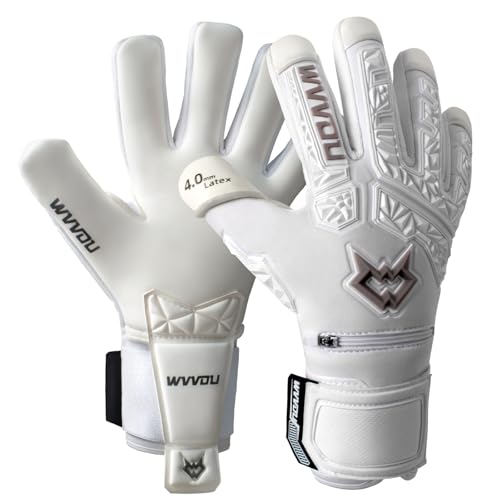
Five detachable finger saves distinguish these gloves from the other options here. The palm uses 4+3 mm sticky latex, and the backhand is SBR fabric with drop molding. That combination makes them a fit for players who want removable finger supports alongside a grip-focused palm. Size 10 is the only specific adult size supplied for this pair, so it may not suit players whose measurements call for a smaller or larger glove. Check how the detachable supports feel before play; players who prefer a flexible, unreinforced finger feel may want another style.
Bottom line: Choose these if you want five removable finger supports and size 10 fits.
EFAH SPORTS Youth Gloves, Size 5

A child-focused size 5, identified for ages 9 to 12, sets these gloves apart from the adult sizes in this group. They use breathable fabric, double stitching and a hook-and-loop wrist closure that adjusts around the wrist. The maker says the palms provide protection while catching and are intended for indoor and outdoor use in all weather. This is the clearest age-and-size cue among these choices, but age alone cannot confirm fit; a player with unusually small or large hands for their age should check hand measurements against the maker’s sizing guide.
Bottom line: Choose these for a young player if size 5 fits their hand.
Sportout Goalie Gloves, Size 8

A double wristband is the distinguishing feature here: its lining is elastic, with an outer layer over it. The gloves also have a positive cut, wear-resistant latex palms, finger spines and padded latex foam. The maker says the spines are intended to help protect against hyperextended fingers, while the palm foam adds cushioning. Size 8 gives players a defined option between the size 5 youth pair and the size 9 and 10 choices. Players who prefer an unstructured wrist or unrestricted finger movement may find the added support less suitable.
Bottom line: Pick these if size 8 fits and you want wrist and finger support.
T1TAN Rebel 2.0 Black-Out, Size 9

A backhand punching zone with 48 silicone lines makes this pair distinct from the other options. The palm uses 4 mm Black Gecko Grip foam, and the glove combines a negative cut with a rolled-finger cut. The maker says the perforated EvoZone Plus backhand increases breathability and reduces weight. This option suits players drawn to a mixed cut and a defined punching zone, but size 9 is the only size supplied for it; players needing a different size should choose another pair after checking fit.
Bottom line: Choose these if size 9 and a mixed cut suit your hand.
How to Choose Goalkeeper Gloves
Choose goalkeeper gloves by fit first, then compare palm and protection features. A glove that is too loose can shift during a catch, while one that is too tight can restrict finger movement. To estimate size, measure from the tip of the middle finger to the base of the palm and compare that length with the maker’s size chart; sizing methods differ, so use each brand’s chart rather than assuming every size 8 fits alike. For a firm hold, close the wrist strap snugly without cutting off circulation. Decide whether removable finger supports, fixed spines or a more flexible glove better suits your preference and playing role.
Goalkeeper Glove Palm Grip and Cuts
Palm latex and glove cut both change how a goalkeeper glove feels on the ball. Latex palms are common, but thickness and foam formulation vary; thicker foam can add cushioning while a thinner profile can give a closer feel. A negative cut puts seams inside the glove for a close fit, while a flat cut uses seams on the outside and often feels roomier. Hybrid cuts combine constructions, so check the product’s cut rather than judging from photos. Grip also depends on keeping latex clean and slightly damp during play; dirt and dry palms can reduce contact. Do not assume a grip claim guarantees the same hold on wet, dry and artificial surfaces.
Finger Protection and Safe Fit
Finger supports can limit backward bending, but they cannot eliminate finger injuries or replace sound catching technique. Fixed spines usually make the glove less flexible; removable supports let a player change the feel, but confirm the supports are properly seated before play. A glove should allow the fingers to close around the ball without painful pressure, and the wrist closure should feel secure without numbness or tingling. If a goalkeeper has an existing injury, ask a qualified clinician about returning to play rather than relying on glove protection. Youth players need adult help checking fit and support: age ranges are rough guides, not substitutes for hand measurements.
Care and Replacement for Goalkeeper Gloves
Rinse latex palms with clean lukewarm water after use and let gloves air-dry away from direct heat; heaters and prolonged sun can dry and crack foam. Avoid machine washing, bleach and harsh detergents, which can damage latex and seams. Store gloves flat or loosely paired only after they are fully dry, since trapped moisture encourages odor and material breakdown. Inspect palms and stitching before each session, especially where fingers meet the palm. A worn patch, split seam or loose support can change grip or fit, so replace gloves when damage affects a secure catch. If a maker gives a different care method for its materials, use that method.
Frequently Asked Questions
How should goalkeeper gloves fit around the fingers?
Goalkeeper gloves should let the fingers close naturally without excess movement or painful pressure. Measure from the middle fingertip to the palm base and use the particular maker’s chart because numeric sizes can differ.
Should goalkeeper glove palms be wet before play?
A lightly damp latex palm can help maintain contact, but it should not be dripping wet. Test the feel during warm-up because grip can change with the ball and playing surface.
How do I wash goalkeeper gloves after a match?
Rinse the palms in clean lukewarm water and air-dry the gloves away from direct heat. Avoid bleach, harsh detergents and machine washing because they can damage the latex.
Do finger saves prevent goalkeeper injuries?
Finger saves may limit backward bending, but they cannot prevent every injury. Choose supports that fit correctly and seek medical guidance before play if recovering from a finger injury.
When should goalkeeper gloves be replaced?
Replace gloves when a split seam, worn-through palm or loose support affects fit or ball control. Check the palm and stitching before each session, since damage can worsen during play.