
Pomada de la Campana: Four Sizes and Packs Compared

For most buyers, Dr. Bell’s Pomade 2.6 oz, 2-pack offers the largest jars in this comparison: two 2.6-ounce containers. Choose a smaller pack if you want to try a single 1.2-ounce jar or need less product on hand.
Pomada de la Campana is a skin ointment or cream; the products here differ mainly by package size and the formula information provided.
We earn a commission if you buy through links on this page. As an Amazon Associate I earn from qualifying purchases. Products are compared on manufacturer specifications, not hands-on testing.
- Best overall: Dr. Bell’s Pomade 2.6 oz, 2-pack – Two 2.6-ounce containers provide the largest unit size in this group.
- Best for a single jar: Dr. Bell’s Pomade 1.2 oz – It comes as one 1.2-ounce jar and identifies a petrolatum-paraffin base with allantoin.
- Best for a three-pack: Medicated Cream 1.2 oz, 3-pack – The package contains three 1.2-ounce jars.
| Product | Best for | Unit size | Pack count | Shop |
|---|---|---|---|---|
| Dr. Bell’s Pomade 2.6 oz, 2-pack | Larger jars | 2.6 oz | 2 | Check Price on Amazon |
| Dr. Bell’s Pomade 1.2 oz | Single jar | 1.2 oz | 1 | Check Price on Amazon |
| Medicated Cream 1.2 oz, 3-pack | Three-jar pack | 1.2 oz | 3 | Check Price on Amazon |
| Pomada de la Campana 1.2 oz, 20-pack | Large quantities | 1.2 oz | 20 | Check Price on Amazon |
Pomada de la Campana options
Compare the jar size and pack count first, then consider the formula information that matters to your intended use.
Dr. Bell’s Pomade 2.6 oz, 2-pack
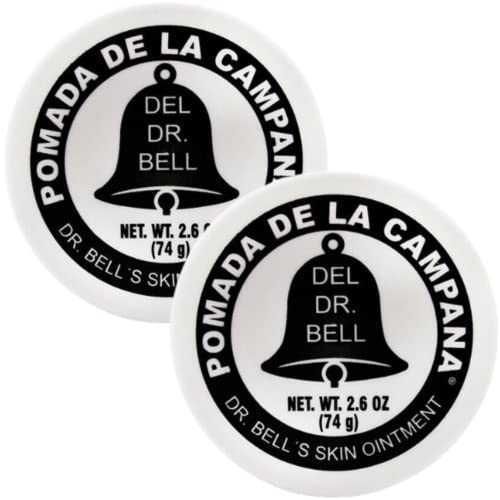
Dr. Bell’s Pomade 2.6 oz, 2-pack stands apart with two 2.6-ounce containers, the largest unit size among these options. Its product features describe moisturizing dry areas and soothing irritated skin, and identify the ointment as suitable for sensitive skin. The compact containers are listed at about 2.3 inches wide and long. This pack suits someone who wants larger jars rather than several small ones. Its formula ingredients are not identified here, so buyers who need to avoid a particular ingredient should check the package before use.
Bottom line: Choose this if larger 2.6-ounce jars matter more than a single small container.
Dr. Bell’s Pomade 1.2 oz

Dr. Bell’s Pomade 1.2 oz is the only single-jar option and the only one here that identifies a petrolatum and paraffin base with allantoin. The product says it is intended for daily use on clean skin to soften and soothe. At 1.2 ounces, the jar is smaller than the two-jar pack of 2.6-ounce containers, which may suit someone who wants a smaller quantity on hand.
Bottom line: Pick this if you want one 1.2-ounce jar and a named base ingredient list.
Medicated Cream 1.2 oz, 3-pack

Medicated Cream 1.2 oz, 3-pack provides three 1.2-ounce jars, making its main distinction the three-container format. Its product features call it a medicated skin cream and describe it for moisturizing skin. That pack may suit someone who prefers several smaller containers to one larger jar. Buyers looking for a specific active ingredient should verify the package before use.
Bottom line: Choose this if three smaller 1.2-ounce jars suit your storage or sharing needs.
Pomada de la Campana 1.2 oz, 20-pack

Pomada de la Campana 1.2 oz, 20-pack is the largest-count package, with twenty 1.2-ounce containers. That makes it a different choice from the single jar, three-pack, and pair of larger jars. It suits buyers who specifically need many small jars; it may be more product than a person seeking one container wants. Check the package for ingredients before use if that affects your choice.
Bottom line: Select this only if you need twenty small jars rather than a few containers.
How to choose Pomada de la Campana
Choose by unit size and count before comparing package names: these options include 1.2-ounce jars and 2.6-ounce jars. Ointments are generally greasier and more occlusive than creams, while creams spread more lightly; that difference can matter on a small dry patch versus a broad area. For a first-time user, a single jar limits the amount on hand; a multiple pack makes sense when you already know the product suits you. If an ingredient triggers a known skin reaction, compare the package ingredient panel before applying. Do not treat a product’s “medicated” wording as proof that it treats a condition; use a clinician’s advice for persistent or worsening skin concerns.
Ointment versus cream for dry skin
Ointments typically form a more occlusive layer than creams, helping reduce water loss from the skin surface, while creams usually contain more water and feel less greasy. Apply moisturizer soon after bathing, while skin is still slightly damp, to help hold water in the outer skin layer. A thin layer is usually enough for a small dry area; more product does not necessarily mean better results. For facial discoloration such as melasma, sun protection is central: dermatology guidance commonly recommends broad-spectrum SPF 30 or higher, with reapplication about every two hours outdoors. A skin ointment is not a substitute for that protection or for medical assessment.
How to compare jar sizes and pack counts
Use the unit size, not just the pack total, when estimating how much product each container holds. A 2.6-ounce jar contains more than twice the amount of a 1.2-ounce jar, while the multipacks increase the number of separate containers. Separate jars can be convenient, but each opened container still needs clean handling to reduce contamination risk. Keep the lid closed between uses and avoid dipping unwashed fingers into a jar; a clean spatula can help when sharing. The 20-pack is a quantity choice, not necessarily a better fit: someone trying an ointment for the first time can minimize leftover product by starting with one container.
| Need | Package feature to prioritize |
|---|---|
| Try one small jar | Single 1.2-ounce container |
| Keep more than one small jar | Three 1.2-ounce containers |
| Have many small jars | Twenty 1.2-ounce containers |
| Prefer larger jars | Two 2.6-ounce containers |
Safe use on sensitive or irritated skin
Test a new skin product on a small area first and watch for redness, itching, swelling, or burning; stop using it if irritation develops. Do not apply an ointment to deep, serious, or infected wounds without medical guidance, and avoid getting it in the eyes or mouth. Persistent rashes, spreading redness, or symptoms that worsen deserve medical advice rather than repeated product changes. If the skin is cracked, gentle cleansing and a thin barrier layer may help protect it, but that does not confirm the cause of the problem. Keep skin products out of children’s reach and follow any age restrictions on the container.
Frequently Asked Questions
How much ointment should I apply to dry skin?
A thin layer is generally enough to cover a small dry area. Apply moisturizer after bathing while skin is slightly damp, and stop if the area becomes irritated.
Is an ointment or cream less greasy?
Creams are usually less greasy because they contain more water, while ointments tend to be more occlusive. Choose based on feel and the size of the area rather than assuming one works for every skin type.
Can Pomada de la Campana be used for melasma?
Do not rely on a skin ointment as melasma treatment based on a product name or claim alone. Broad-spectrum SPF 30 or higher and limiting sun exposure are important, and a dermatologist can advise on treatment options.
How can I reduce the chance of skin irritation?
Patch test a new product on a small area and monitor it for redness, itching, swelling, or burning. Stop use if irritation develops, and seek medical guidance for a severe or persistent reaction.
How should I keep an ointment jar clean?
Close the lid between uses and avoid touching the product with unwashed fingers. A clean spatula is useful when more than one person will use a jar.