
Best Outdoor Patio Flooring Over Concrete Compared

For most concrete patios, PrimeZone 12-Inch Plastic Deck Tiles is the most adaptable pick because its 12-by-12-inch tiles snap together and can be removed without tools. Choose Klyyo Clyro Gray Wood-Grain Vinyl Roll instead for a continuous cut-to-fit covering; consider the other tile options when their finish or drainage design better suits your patio.
We earn a commission if you buy through links on this page. As an Amazon Associate I earn from qualifying purchases. Products are compared on manufacturer specifications, not hands-on testing.
- Best overall: PrimeZone 12-Inch Plastic Deck Tiles – Its 12-by-12-inch interlocking tiles can be installed or removed without tools.
- Best for broad coverage: Klyyo Clyro Gray Wood-Grain Vinyl Roll – The roll covers 107.6 square feet and can be trimmed to fit.
- Best for a brown tile look: 68-Piece Brown Interlocking Deck Tiles – The square brown tiles use an interlocking system and include a drainage design.
- Best for pebble texture: 44-Pack Dark Brown Pebble Deck Tiles – The dark-brown plastic tiles snap together and have a drainage structure.
| Product | Best for | Format | Size | Thickness | Shop |
|---|---|---|---|---|---|
| PrimeZone 12-Inch Plastic Deck Tiles | Flexible tile layout | Interlocking tiles | 12 × 12 in | 1 in | Check Price on Amazon |
| Klyyo Clyro Gray Wood-Grain Vinyl Roll | Large flat areas | Vinyl roll | 3.28 × 32.8 ft | — | Check Price on Amazon |
| 68-Piece Brown Interlocking Deck Tiles | Brown square tiles | Interlocking tiles | 11.42 × 11.42 in | 0.79 in | Check Price on Amazon |
| 44-Pack Dark Brown Pebble Deck Tiles | Pebble-style surface | Interlocking tiles | — | — | Check Price on Amazon |
Outdoor Patio Flooring Over Concrete
Compare tile and roll formats by dimensions, surface style, and how you plan to cover the concrete.
PrimeZone 12-Inch Plastic Deck Tiles
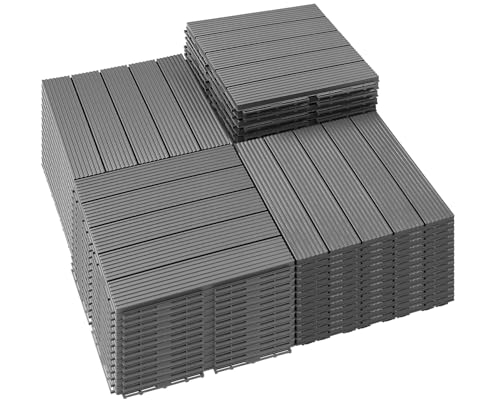
PrimeZone stands out for its one-inch-thick, 12-inch-square plastic tiles, which create a modular surface rather than a continuous sheet. The 54-piece set is made from PP plastic and uses snap connections, so a DIY installer can assemble or take apart the floor without tools. The maker says the tiles resist water and weather, making them a fit for patios, balconies, and other outdoor areas. The limitation is the tile format: seams remain visible, and the specifications do not give total coverage, so measure the area and confirm the set quantity covers it before ordering.
Bottom line: Choose these if you want removable square tiles and can verify the set covers your patio.
Klyyo Clyro Gray Wood-Grain Vinyl Roll

Klyyo Clyro is the only roll-format option here, with a 107.6-square-foot coverage area and a gray wood-grain appearance. Its PVC vinyl can be cut to fit, and the package includes installation tape; the maker says the surface is waterproof and UV resistant. This format suits a broad, relatively flat patio where a continuous covering is preferable to individual tile seams. It is less suited to irregular layouts that need many small pieces, and the specifications do not establish how the tape performs on a particular concrete surface, so confirm surface compatibility before committing.
Bottom line: Choose the roll for a large, flat area where you want a continuous cut-to-fit cover.
68-Piece Brown Interlocking Deck Tiles

The 68-piece set distinguishes itself with brown, 11.42-inch-square tiles and a total area of 61.60 square feet. The maker describes the construction as combining wood strength with plastic resilience and says the design includes drainage; the interlocking system is intended for tool-free DIY assembly. This option fits buyers who want a brown tile surface and can use the coverage to plan a layout.
Bottom line: Choose this set when its 61.60-square-foot coverage and brown tile style match the project.
44-Pack Dark Brown Pebble Deck Tiles

The dark-brown pebble finish sets this 44-pack apart from the gray and brown square-tile options. Its plastic tiles snap together without tools, and the maker describes a drainage structure intended to limit water buildup. That makes the set a candidate for a patio or porch where a textured-look covering is preferred over a wood-grain roll.
Bottom line: Choose this pack if you prefer its pebble appearance and can confirm its coverage first.
How to choose patio flooring over concrete
Choose by drainage, surface shape, and whether you want a modular or continuous floor. Interlocking tiles make a removable grid, while a roll creates a broad sheet that can be cut to shape. Outdoor concrete should drain away from the building; a common planning slope is about 1/8 to 1/4 inch per foot. A covering should not redirect water toward a wall or trap standing water against the slab. Check that the concrete is sound and reasonably flat before installation: loose material, sharp ridges, or deep depressions can interfere with a close fit. For a small, irregular area, tiles are easier to lay around edges; for a broad simple rectangle, a roll can reduce the number of visible seams.
Tile sizes and patio coverage
Measure the patio in feet and multiply length by width to estimate square footage, then compare that total with the product coverage. A 12-inch square covers 1 square foot before accounting for edge cuts; an 11.42-inch square covers slightly less. Add a modest allowance for trimming and awkward corners rather than assuming every tile will fit without waste. Keep control joints in concrete in mind when laying a rigid-looking grid: do not fill or bridge a joint in a way that prevents the slab’s movement. The measured area is especially important for sets whose coverage is unclear. For a rectangular space, sketch the tile rows first and estimate how many edge pieces need cutting.
Drainage and outdoor surface safety
Drainage matters more than appearance when covering an exterior slab. Interlocking tiles with an open drainage structure can let water pass through their joints, while a roll sits more continuously over the surface; neither format fixes a patio that slopes toward the house or holds puddles. Keep drains and weep paths open, and do not cover a floor drain unless the covering allows access. Wet outdoor surfaces can be slippery, so look for a surface and installation that remain stable underfoot; the product facts do not establish a standardized slip rating. Before installing any covering, remove dirt and grit that could hold moisture or scratch the slab. After rain, inspect edges and low spots for pooling.
Installing and maintaining concrete patio flooring
Dry-fit a tile layout before snapping pieces together, and trim border pieces only with an appropriate tool and eye protection. For a roll, measure twice, cut gradually, and test any included tape on a clean, dry section of concrete; surface dust and moisture can undermine adhesion. Outdoor slabs can heat in direct sun, so account for material movement at perimeter edges rather than wedging a covering tightly against walls. Keep the surface free of leaves and debris that block drainage, and lift removable tiles periodically to check for trapped dirt or standing water underneath. Avoid using a covering to hide loose concrete or a drainage problem: repair the underlying issue first so the new floor has a stable base.
Frequently Asked Questions
Can outdoor flooring go over painted concrete?
It can, if the paint is firmly bonded and the covering’s installation method is compatible with the surface. Loose or peeling paint can compromise tape adhesion or create an unstable base, so remove failing coating before laying a floor.
How much extra patio flooring should I allow?
A practical planning allowance is about 5% to 10% for straightforward rectangular layouts, with more for many corners or angled edges. Calculate coverage from the patio’s measured length and width, then account for cuts and unusable offcuts.
Should patio tiles cover concrete expansion joints?
Keep concrete movement joints accessible or preserve their movement rather than rigidly filling them with a covering. Concrete expands and contracts with temperature, and bridging a joint can lead to pressure or misalignment in the floor above.
How do I keep water from collecting under patio flooring?
Start with a slab that drains away from the building, commonly around 1/8 to 1/4 inch per foot, and keep drain paths clear. Lift removable tiles now and then to clear debris; a covering will not correct a low spot that holds water.