
Wind Up Alarm Clock No Batteries: 3 Models Compared

For a battery-free wind up alarm clock, Equity 14075 Black Wind-Up Alarm Clock is the best fit if you prefer a beep alarm and a compact, 4.25-inch-tall design. Choose Westclox Keywound Analog Alarm Clock or Equity 24014 Silver Metal Wind-Up Clock instead if you want a bell alarm; verify the intended wake-up sound before choosing, since a bell and a beep are different alarm styles.
We earn a commission if you buy through links on this page. As an Amazon Associate I earn from qualifying purchases. Products are compared on manufacturer specifications, not hands-on testing.
- Best overall: Equity 14075 Black Wind-Up Alarm Clock – Manual key winding and a compact 4.25-inch height pair with a beep alarm.
- Best for classic bell alarm: Westclox Keywound Analog Alarm Clock – The manual-wind clock uses a loud bell alarm and measures 5.3 inches long.
- Best for metal finish: Equity 24014 Silver Metal Wind-Up Clock – A silver metal case and loud bell distinguish this wind-up model.
| Product | Best for | Alarm style | Height | Case or color | Shop |
|---|---|---|---|---|---|
| Equity 14075 Black Wind-Up Alarm Clock | Beep alarm fans | Beep | 4.25 in | Black | Check Price on Amazon |
| Westclox Keywound Analog Alarm Clock | Bell alarm pick | Bell | 3.1 in | White | Check Price on Amazon |
| Equity 24014 Silver Metal Wind-Up Clock | Metal case style | Bell | 5.5 in | Silver metal | Check Price on Amazon |
Wind Up Alarm Clocks With No Batteries
These mechanical models differ most in alarm sound, case style and size.
Equity 14075 Black Wind-Up Alarm Clock

Unlike the bell-alarm alternatives, this Equity clock uses a beep alarm and a key-wound mechanism, with no batteries needed. Its plain white dial has bold black numbers, and the hour and minute hands glow in low light. At 4.25 inches tall, it has a compact footprint for a bedside table or desk. The specifications do not establish how long one wind lasts, so this clock suits buyers comfortable with a traditional manual routine rather than anyone needing a specified run time.
Bottom line: Choose this if a beep alarm, luminous hands and compact height matter most.
Westclox Keywound Analog Alarm Clock

The Westclox stands out for its loud bell alarm and explicitly manual wind-up operation, rather than the beep alarm on Equity 14075 Black Wind-Up Alarm Clock. Its white analog face and classic styling suit a simple bedside setup, while its 5.3-inch length is the largest length among the exact-fit options. The clock operates without batteries or electricity, making it relevant for travel or power outages. The dimensions are not presented in a consistent orientation, so compare the length and height with your available surface before buying.
Bottom line: Pick this for a manual-wind clock with a bell alarm and white finish.
Equity 24014 Silver Metal Wind-Up Clock
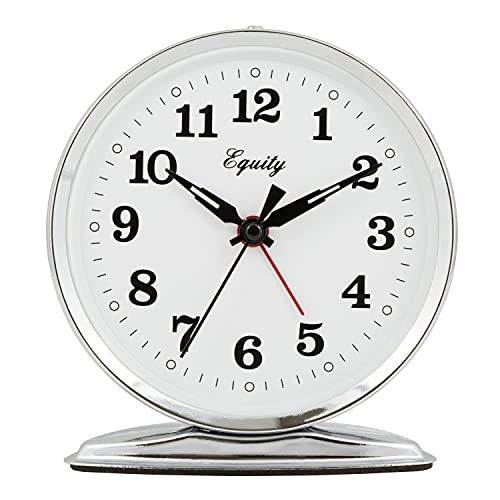
The Equity 24014 is the metal-cased choice among these battery-free clocks, with a silver finish, chrome protective finish and dome glass lens over a white dial. Its loud bell alarm sets it apart from Equity 14075 Black Wind-Up Alarm Clock’s beep, and it shares the bell-alarm approach of Westclox Keywound Analog Alarm Clock. At 5.5 inches tall, it is taller than the other exact-fit options by their heights. The fields identify a wind-up alarm clock but do not give a winding interval, so buyers who need a precise duration between windings should confirm that point before choosing.
Bottom line: Choose this for a silver metal case and traditional bell alarm.
How mechanical wind-up alarm clocks work
A mechanical wind-up alarm clock stores energy in a spring when you turn its key, then releases that energy through gears to move the hands and drive the alarm. Unlike quartz clocks, which use an electronic oscillator and usually a battery, a mechanical clock needs periodic winding to keep running. Wind the timekeeping mechanism and alarm mechanism as separate tasks when the clock has separate keys; winding one does not necessarily wind the other. A mechanical clock can keep operating during an outage because it has no electrical power connection, but accuracy and run time depend on the movement and its condition. Keep the clock dry and avoid forcing a key past resistance, which can strain the winding mechanism.
Choosing a beep or bell alarm
Choose by alarm sound first: a beep gives a different wake-up signal from a ringing bell, and the sound alone does not establish how loud it will seem in your room. Bell alarms use a hammer to strike bells, while beeping models use an internal sounder. Room size, distance from the bedside and closed doors affect how an alarm carries. For a light sleeper who wants a less abrupt signal, consider the beep style; for a sleeper who prefers a sharp ringing alarm, look at bell models. A clock’s claimed loudness is not a standardized decibel rating here, so do not infer a measured sound level from words such as loud.
| Need | Alarm choice | What to compare |
|---|---|---|
| Beep signal | Beep | Alarm type |
| Ringing signal | Bell | Bell mechanism and placement |
Allow room for the clock dimensions
Measure the shelf or nightstand footprint before choosing a clock; the dimensions include different height and length figures, so use the measurements rather than assuming a standard shape. Leave extra room around a bell clock so the alarm can ring unobstructed and the clock can be reached to shut it off. A clock placed against fabric or tucked into a crowded shelf may have its sound partly blocked. The heights range from 3.1 to 5.5 inches across the exact-fit choices, and lengths run from 4.0 to 5.3 inches. Check the space where the clock will sit, including room to handle its winding key, before settling on a model.
Setting and caring for a wind-up alarm
Set the hands and alarm pointer carefully, then test the alarm while awake so you know how its controls operate and when it sounds. Mechanical clocks can lose accuracy as parts wear or lubrication ages; a clockmaker can service a movement that stops, runs inconsistently or becomes difficult to wind. Do not apply household oil to the mechanism, because excess or unsuitable lubricant can attract dust and interfere with small gears. Keep the clock away from moisture and strong impacts, and wind only until the key meets normal resistance. For dependable waking, use a second alarm if a missed wake-up would create a serious risk, since no mechanical alarm can guarantee a wake time.
Frequently Asked Questions
How often should I wind a mechanical alarm clock?
Wind a mechanical alarm clock at the interval its movement requires; mechanical clocks need winding to keep running, but the specifications here give no specific interval. Check how the clock runs over a normal day and confirm the required interval before relying on it for a fixed wake-up.
Do wind-up alarm clocks keep accurate time?
Mechanical clock accuracy varies with movement condition and adjustment, so a wind-up alarm clock may need periodic correction. If a few minutes of drift would matter, compare the clock with a reliable time source regularly and seek service if the drift increases.
Can a wind-up alarm clock work during a power outage?
A mechanical wind-up alarm clock works without household electricity while its spring has stored energy. Wind the clock before an outage and confirm the alarm mechanism is wound separately if it has its own key.
Are bell alarm clocks louder than beep alarms?
A bell alarm and a beep alarm produce different sounds, but neither style guarantees a particular loudness. Distance, doors and room furnishings affect how clearly you hear the alarm, so test its placement while awake.
How do I stop a wind-up alarm from ringing?
Use the clock’s alarm shutoff control as soon as it rings; alarm controls differ by model. Test the shutoff while awake before using the clock overnight, and keep the clock within reach so you can stop it promptly.