
Shade for Air Conditioner: 5 Options Compared

For a shade for an air conditioner, GZAODMCP Mini Split Condenser Shade is the most purpose-built choice because its arched canopy is sized for a mini-split; RecDec Mini Split Foil Shade is a smaller foil shade alternative. Choose a fence screen or general shade cloth instead when concealment or broader patio coverage matters more than a fitted AC canopy.
Outdoor AC condensers draw and discharge air, so any overhead shade must leave the unit’s airflow path and service access clear.
We earn a commission if you buy through links on this page. As an Amazon Associate I earn from qualifying purchases. Products are compared on manufacturer specifications, not hands-on testing.
- Best overall: GZAODMCP Mini Split Condenser Shade – Its 41.7-by-25.2-by-11-inch canopy is specifically intended for a mini-split condenser.
- Best for a foil visor: RecDec Mini Split Foil Shade – The 71-by-33-centimeter aluminum-foil cover is designed for mini-split AC and heat-pump equipment.
- Best for concealment: CASTLECREEK AC Fence Screen – The fir screen hides an outdoor unit while its lattice allows air to pass.
| Product | Best for | Size | Material | Shop |
|---|---|---|---|---|
| GZAODMCP Mini Split Condenser Shade | Mini-split canopy | 41.7 × 25.2 × 11 in | Galvanized steel | Check Price on Amazon |
| RecDec Mini Split Foil Shade | Compact foil visor | 27.95 × 12.99 in | Aluminum foil | Check Price on Amazon |
| CASTLECREEK AC Fence Screen | Screening and privacy | 32 × 38 in | Fir wood | Check Price on Amazon |
| QLOFEI 3 × 6 ft Shade Cloth | Flexible cloth coverage | 3 × 6 ft | HDPE mesh | Check Price on Amazon |
| 90% HDPE Shade Cloth, 6 × 10 ft | Large patio coverage | 6 × 10 ft | 185 GSM HDPE | Check Price on Amazon |
Shade for Air Conditioner Options
Compare purpose-built mini-split shades with screens and shade cloth that serve broader outdoor uses.
GZAODMCP Mini Split Condenser Shade

Unlike general-purpose shade cloth, this is a rigid canopy sized for a mini-split condenser. The product uses a galvanized steel plate and an arched top intended to channel rainwater; its triangular frame and shock-absorbing pad are also part of the design. At 41.7 by 25.2 by 11 inches, it suits buyers whose equipment and mounting space match those dimensions. The fixed size is a limitation for other condenser shapes or larger units, so measure the unit and mounting area before choosing it. Keep the AC’s air path and maintenance access unobstructed.
Bottom line: Choose this if your mini-split fits the canopy dimensions and you want a rigid overhead cover.
RecDec Mini Split Foil Shade

This compact foil cover differs from the rigid steel canopy by using reflective aluminum foil material. It measures 27.95 by 12.99 inches and is intended for an outdoor mini-split AC or heat-pump compressor. The maker says its foil reflects sunlight and heat, and identifies the material as flame retardant. The small fixed size makes it a fit only for equipment with a compatible top area; it is not a full outdoor-unit enclosure. Confirm dimensions and attachment clearance, and leave the unit’s airflow and service access open.
Bottom line: Pick this for a mini-split with a top area that matches its compact dimensions.
CASTLECREEK AC Fence Screen

Rather than shading the condenser from above, this fir screen conceals an outdoor AC unit and can also serve as a privacy wall. Its lattice is designed to let air pass through, and the wood can be painted or stained. The product measures 32 by 38 inches and includes screws and hinges for assembly. This is the more suitable choice when visual screening is the goal, but it is not a fitted sun visor or rain canopy. Position a screen with enough open space around the unit to avoid restricting airflow or blocking service.
Bottom line: Choose this when hiding the unit matters more than covering its top.
QLOFEI 3 × 6 ft Shade Cloth

This knitted HDPE mesh is a flexible alternative to a fitted AC canopy, with a 3-by-6-foot size and an 80–90% shade rating. Reinforced corners and lock-stitch knitting are intended to help with installation and resist unraveling. The maker describes it for varied outdoor uses, including greenhouses and kennels, rather than as an AC-specific cover. It may suit a buyer planning a separate overhead shade arrangement, but the large cloth needs secure support and must not drape over the condenser or obstruct airflow.
Bottom line: Consider this for a separate, supported shade arrangement with ample clearance around the condenser.
90% HDPE Shade Cloth, 6 × 10 ft
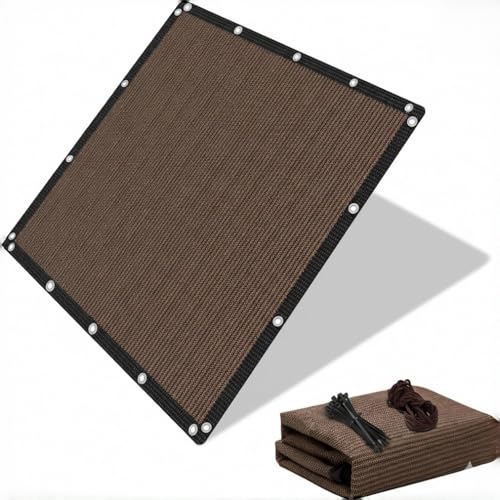
This 6-by-10-foot HDPE fabric provides much broader coverage than the mini-split-specific options, making it a candidate for a larger patio shade plan rather than a fitted AC cover. The fabric is 185 GSM, with reinforced binding and double grommets at each corner; grommets along the edges are spaced every 2 feet. The maker says the cloth blocks up to 90% of UV rays. Its large span needs suitable anchoring, and it should be installed separately from the condenser so the fabric cannot interfere with airflow or access.
Bottom line: Choose this for broad outdoor shade only if you can anchor it clear of the AC unit.
How to choose an air conditioner shade
Start with the unit type and the kind of cover you need: a mini-split visor, a rigid canopy, and a privacy screen solve different problems. A shade overhead can reduce direct sun exposure, but outdoor condensers still need open intake and discharge paths to move air. Keep the service side accessible, and use the unit manual’s clearance requirements because they vary by model. For a fixed canopy, compare its full dimensions with the equipment and mounting area before installation. For cloth, plan a separate support structure so loose fabric cannot sag onto the unit. If the goal is only to hide equipment, a ventilated screen is a different choice from a sun shade.
Airflow and clearance around outdoor AC units
Airflow clearance matters more than how much shade a cover provides. Condensers reject heat through the coil and fan; blocking the discharge or drawing hot exhaust back toward the coil can impair operation. Many manufacturers call for roughly 12 to 24 inches of open space at the sides and several feet above the unit, but the model manual sets the actual requirement. Use the unit’s clearance rather than treating those typical figures as universal. A screen should have open lattice and sit far enough away to preserve the required space. Do not attach cloth to the cabinet or let a canopy, fabric edge, or support cross the fan outlet.
Mini-split covers and shade cloth compared
Choose a cover by its structure and the job it can perform; a soft mesh, reflective visor, and rigid awning are not interchangeable. The table compares their main uses, not their installation clearance, which depends on the AC model and site.
| Cover type | Typical role | Key fit check |
|---|---|---|
| Reflective mini-split visor | Small overhead sun shade | Top dimensions and attachment space |
| Rigid canopy | Fixed overhead weather cover | Canopy dimensions and mounting surface |
| Mesh shade cloth | Broad, separately supported shade | Anchoring and airflow clearance |
| Lattice screen | Visual screening with ventilation | Open space around condenser |
Installation and maintenance considerations
Install overhead shade without enclosing the condenser or restricting the fan outlet. Before drilling or fastening a canopy, identify the mounting surface and check for wiring, refrigerant lines, and required service access. A split-system outdoor unit also needs periodic coil cleaning; many manufacturers recommend checking it at least annually, with more frequent attention where leaves, cottonwood, or dust collect. Clear debris gently and avoid bending delicate coil fins. For fabric shades, inspect grommets, ties, and supports after strong wind, and keep the material taut and away from hot or moving parts. A shade that shifts, sags, or blocks access should be repositioned or removed.
Frequently Asked Questions
Can an air conditioner run under a shade cloth?
Yes, if the cloth is supported separately and does not block the condenser’s intake or fan discharge. Keep the model’s required side and overhead clearance; typical guidance often falls around 12 to 24 inches at the sides and several feet above, but the manual controls.
How much space should remain above an AC condenser?
Use the clearance specified for the exact condenser model, since top clearance varies by design and installation. Several feet above the fan is a common planning allowance, but a canopy must not sit inside the manufacturer’s required discharge space.
Does a shade cover improve air conditioner efficiency?
Shade may reduce direct sun on an outdoor unit, but it cannot compensate for blocked airflow or incorrect clearance. Keep the condenser’s intake and discharge open, since hot exhaust recirculating into the coil can undermine operation.
Can I cover my outside AC unit with a tarp?
Do not run a condenser beneath a tarp that covers or encloses the unit; airflow and heat rejection require open space. During seasonal shutdown, use only the cover approach allowed by the manufacturer, and remove any full cover before restarting.
How often should an outdoor condenser coil be cleaned?
Check the outdoor coil at least once a year and more often where dust, leaves, or cottonwood collect. Turn power off before cleaning, use a gentle method that will not bend the fins, and keep debris from blocking airflow.