
SEM Self Etch Primer: 4 Formats Compared

For a single 15.5-ounce can of gray SEM self etch primer, choose SEM 39683 Gray Primer, 15.5 oz; the deciding difference is its single-can format. Choose another option if you need black primer, a six-pack, or a quart for a different amount of work.
We earn a commission if you buy through links on this page. As an Amazon Associate I earn from qualifying purchases. Products are compared on manufacturer specifications, not hands-on testing.
- Best overall: SEM 39683 Gray Primer, 15.5 oz – A single 15.5-ounce can in gray suits buyers who want one aerosol-size package.
- Best for bulk black: SEM Black Primer, 6-Pack – This option bundles six 15.5-ounce cans of black matte primer.
- Best for quart quantity: SEM 39684 Gray Primer, Quart – The gray primer comes in a 32-fluid-ounce quart and is described as quick drying.
| Product | Best for | Color | Package size | Pack quantity | Shop |
|---|---|---|---|---|---|
| SEM 39683 Gray Primer, 15.5 oz | Single gray can | Gray | 15.5 oz | 1 can | Check Price on Amazon |
| SEM Black Primer, 6-Pack | Multiple black cans | Black, matte | 15.5 oz | 6 cans | Check Price on Amazon |
| SEM 39673 Black Primer, 15.5 oz | Single black can | Black | 15.5 oz | 1 can | Check Price on Amazon |
| SEM 39684 Gray Primer, Quart | Quart-size quantity | Gray (VOC) | 32 fl oz | 1 quart | Check Price on Amazon |
SEM self etch primer options
Compare color and package format to match the amount of primer and the finish you need.
SEM 39683 Gray Primer, 15.5 oz
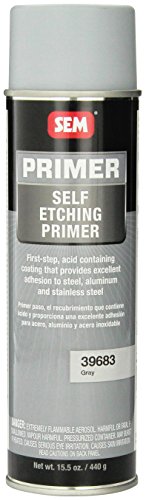
For buyers who want a single gray aerosol-size package, this SEM 39683 option comes as one 15.5-ounce can. Its package dimensions are 6.35 × 6.35 × 23.622 centimeters. Self-etch primers are intended for prepared bare metal; remove rust, oil, and loose coating before applying, and use the product label to confirm compatible surfaces and coating steps. The limitation is the single-can quantity, which may not suit a larger job or someone who specifically needs black primer.
Bottom line: Choose this for a single gray can rather than a bulk pack or quart.
SEM Black Primer, 6-Pack

For a project that calls for several black cans, this option groups six 15.5-ounce containers and has a matte black finish. It differs from the single-can alternatives by providing multiple cans in one package. Self-etch primer is used on bare metal after surface preparation; avoid applying it over rust, grease, or loose paint, which can interfere with adhesion. The six-can format is less suitable when you only need a small repair or want gray primer, so match the quantity and color to the job before choosing.
Bottom line: Pick this when a project needs multiple cans of black matte primer.
SEM 39673 Black Primer, 15.5 oz

For a single black can, SEM 39673 provides 15.5 ounces in a one-can package. It gives buyers a black alternative to the gray single-can option without requiring a six-pack. Bare metal should be clean and free of rust, oil, and loose material before primer application; self-etch primer is not a substitute for removing corrosion. The main limitation is its single-can quantity, which may not be enough for a broad repair or repeated work, and the specifications do not identify a finish beyond its black color.
Bottom line: Choose this for one can of black primer instead of a gray can or six-pack.
SEM 39684 Gray Primer, Quart

For buyers who need a larger container than an aerosol-size can, SEM 39684 is a 32-fluid-ounce quart of gray primer. The maker says it offers adhesion to steel, aluminum, and stainless steel and is quick drying. That named metal compatibility distinguishes it from the other options here. A quart is a different package format from the 15.5-ounce cans, so check the product label for application equipment and coating directions before use; this option is not the pick for someone who specifically wants a black aerosol can.
Bottom line: Choose this for a quart of gray primer and the named metal compatibility.
How to choose a self etch primer
Choose by the substrate, color, and quantity rather than by package size alone. Self-etch primers use an acidic component to promote bonding on bare metal; they are not rust removers, so remove corrosion and contaminants first. Steel and aluminum are common automotive substrates, while the quart option here specifically names steel, aluminum, and stainless steel compatibility. For a small repair, one 15.5-ounce can may be a better fit; for a larger job, compare the six-can package or quart. If you cannot confirm the substrate or coating sequence, verify compatibility on the product label before applying primer.
Surface preparation matters: clean metal, remove sanding dust, and keep oil or silicone away from the area. Do not assume a self-etch primer replaces a compatible primer-surfacer or topcoat.
Can self etch primer go over paint or rust
Self-etch primer is intended for bare, prepared metal, not rust or intact paint. Rust and loose coating weaken the surface beneath the primer, while an acidic primer may not be compatible with every existing coating. Remove corrosion and loose material mechanically, then clean the exposed metal before priming. For a repair that crosses bare metal and existing paint, use the product label to determine which areas can receive the primer and whether a separate primer-surfacer is needed. Do not apply self-etch primer over body filler unless the manufacturer specifically approves that sequence.
Ventilation and protective equipment matter with aerosol coatings: use them in a well-ventilated work area and keep spray away from flames or sparks. Follow the label’s safety directions.
Aerosol can or quart primer
Aerosol cans and quart containers serve different application needs. Aerosols package primer for spray application from a can; quart containers generally require compatible application equipment. A 15.5-ounce can is a practical scale for a small repair, while six cans provide more packaged quantity and a quart holds 32 fluid ounces. Package volume does not predict exact coverage: film thickness, overspray, surface area, and the number of coats all affect consumption. Use the coating label to identify application method and recoat timing rather than assuming the same process works for every format.
| Need | Format to consider |
|---|---|
| One small repair | Single 15.5-ounce can |
| Several black cans | Six-pack of 15.5-ounce cans |
| Larger container | 32-fluid-ounce quart |
Prepare metal and apply primer safely
Clean, dry metal gives primer a more reliable surface than dusty or oily metal. Remove rust and loose coating, then follow the label for cleaning, application distance, coat thickness, and recoat window; those instructions vary by formulation. Test an inconspicuous area when coating an existing finish, and do not mix products from different coating systems without checking compatibility. Aerosol propellants and paint vapors can ignite, so keep spraying away from heat, sparks, and open flames. Wear the protective gear specified on the label and ventilate the workspace. Store and dispose of containers according to their labels and local rules.
Frequently Asked Questions
Does self etch primer remove rust from metal?
No. Self-etch primer promotes adhesion on prepared bare metal; remove rust and loose material before priming. If corrosion remains, the coating cannot repair weakened metal.
Can I apply self etch primer over body filler?
Do not assume it is compatible with body filler. Many repair systems place etch primer on bare metal before filler, but the product label determines the approved sequence.
Can self etch primer be used on aluminum?
Some formulations are intended for aluminum, but compatibility is product-specific. The quart option here names aluminum among its compatible metals; confirm the label before using another option on aluminum.
How many coats of self etch primer should I apply?
The required coat count depends on the formulation and application method. Follow the product label’s coat thickness and recoat window, since excess film can create problems under later coatings.
Do I need to sand before self etch primer?
Bare metal should be clean and free of rust, oil, and sanding dust before primer application. Use the product label for the required surface preparation and any sanding instructions.