
Best Kitchen Sink Splash Guard for Wall: 4 Picks

For most people seeking a kitchen sink splash guard for a wall, Stainless Steel Side Splash Guards, 17 x 12 Inch is the clearest fit because it is a screw-mounted pair of 17 x 12-inch 304 stainless steel guards. Choose a clear acrylic panel instead if you want a transparent barrier at the sink edge rather than a metal wall-mounted guard.
We earn a commission if you buy through links on this page. As an Amazon Associate I earn from qualifying purchases. Products are compared on manufacturer specifications, not hands-on testing.
- Best overall: Stainless Steel Side Splash Guards, 17 x 12 Inch – The 304 stainless steel pair is designed for wall mounting and includes screws.
- Best for a short clear barrier: Donkiyana Clear Acrylic Splash Guard – Its 4.7-inch-high transparent acrylic panel blocks splashes while keeping the area visually open.
- Best for a long counter gap: Risunpet 39-Inch Flexible Water Dam – The flexible 39-inch water dam can be cut to fit a smooth surface.
| Product | Best for | Coverage | Material | Mounting | Shop |
|---|---|---|---|---|---|
| Stainless Steel Side Splash Guards, 17 x 12 Inch | Wall-mounted protection | 17 x 12 in. per guard | 304 stainless steel | Screws included | Check Price on Amazon |
| Donkiyana Clear Acrylic Splash Guard | Low clear barrier | 15.8 x 4.7 in. | Acrylic | Fixed installation | Check Price on Amazon |
| varrisin Two-Piece Acrylic Splash Guard | Two clear panels | 15.7 x 11.8 in. per panel | Acrylic | Self-adhesive pads | Check Price on Amazon |
| Risunpet 39-Inch Flexible Water Dam | Long counter gaps | 39 x 0.47 in. | Rubber material | Adhesive strip | Check Price on Amazon |
Kitchen Sink Splash Guards for Wall
Compare each guard’s coverage and mounting approach with the sink edge and wall area you need to protect.
Stainless Steel Side Splash Guards, 17 x 12 Inch

For a wall-mounted metal barrier, this pair is the most direct match: each guard measures 17 x 12 inches and comes with screws. The panels are made from 304 stainless steel, and the rounded side design reduces the chance of injury during use. They suit a commercial hand sink or compartment prep sink where a fixed side guard is useful. The limitation is installation: unlike a free-standing acrylic panel, these guards require mounting, and the product advises wearing gloves to avoid scratches while fitting them.
Bottom line: Pick this pair when you want screw-mounted stainless steel side protection.
Donkiyana Clear Acrylic Splash Guard

The short profile distinguishes this guard from taller panels: its clear acrylic barrier is 15.8 inches long and 4.7 inches high. The maker says it can sit in front of a kitchen sink or serve as a backsplash at an island, making it a fit for contained edge splashes rather than a full-height wall shield. Its transparency preserves an open sightline around the counter. The tradeoff is limited height, so choose another style if water routinely reaches well above the sink rim or you need screw-mounted side coverage.
Bottom line: Choose it for a discreet, short barrier along the sink edge.
varrisin Two-Piece Acrylic Splash Guard

Two tall clear panels set this option apart from the shorter single guard: the set includes two acrylic guards measuring 15.7 x 11.8 inches, with self-adhesive anti-slip dots and a beveled top. The maker presents them for sink areas in kitchens, bathrooms, laboratories, and offices. This arrangement suits someone who needs a pair of separate splash barriers without screw mounting. The panels are not described as wall-mounted hardware, so they are a less direct choice when the main goal is a fixed guard attached to the wall.
Bottom line: Choose this set when two transparent panels suit your sink layout.
Risunpet 39-Inch Flexible Water Dam
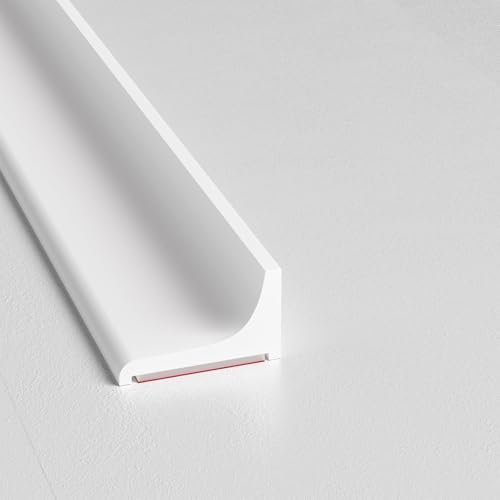
A flexible strip rather than a rigid panel, this 39-inch water dam is intended to create a low barrier along a smooth counter or sink gap. Its 0.47-inch height and 0.8-inch width allow it to fit narrow areas, and the maker says it can be cut with a utility knife and shaped to suit the space. It can be relevant where water escapes along a counter edge, but it does not provide tall wall coverage. Measure the gap before trimming, since cutting the strip is permanent.
Bottom line: Pick it for a narrow counter gap, not for splash coverage up a wall.
How to choose a kitchen sink splash guard for a wall
Start with where water escapes: a tall side panel contains lateral splashes, while a low strip redirects water across a counter. Measure the span and height you need to cover before choosing; a 4.7-inch panel is a low barrier, while a 12-inch panel reaches higher. Then decide whether you can attach hardware to the wall or need a freestanding or adhesive approach. Acrylic keeps the area visually open, while stainless steel offers a rigid metal panel. For a fixed guard, locate studs or use anchors rated for the wall material; avoid relying on adhesive on damp, greasy, or textured surfaces.
Panel height and sink fit
Measure from the counter or sink rim to the highest point where droplets land, then add coverage above that point. A guard that stops below the splash zone will not keep the wall dry. Check faucet handles, backsplash trim, and window ledges for clearance, and confirm the guard will not interfere with normal sink access. A useful decision rule is to choose a panel at least as tall as the measured splash zone; choose a flexible low dam only when water travels along a narrow horizontal gap rather than upward. For multi-bowl or compartment sinks, consider whether protection is needed on one side or both.
Rigid panels versus flexible water dams
Rigid acrylic and metal panels block splashes by standing between the sink and nearby surfaces; flexible water dams make a low ridge that redirects water. Use a panel when droplets travel sideways or upward, and use a dam when water creeps across a counter seam. This table helps match the guard style to the problem.
| Need | Guard style | Check before fitting |
|---|---|---|
| Higher side splash coverage | Rigid wall-mounted panel | Wall material and screw placement |
| Short, transparent edge barrier | Clear acrylic panel | Panel height and counter clearance |
| Water crossing a narrow gap | Flexible water dam | Gap length and smooth surface |
Installation and care mistakes to avoid
Install a wall-mounted guard level and secure it to suitable wall backing; loose fasteners can let the panel shift when bumped. Wear gloves when handling metal edges, as the manufacturer advises for the stainless steel guards. For adhesive pads or strips, clean and dry the surface thoroughly and allow the adhesive to set as directed before exposing it to water. Acrylic can scratch, so use a soft cloth rather than an abrasive pad. Remove standing water and soap residue regularly to limit buildup around seams and mounting points.
Frequently Asked Questions
How tall should a kitchen sink splash guard be?
Choose a panel that rises above the measured splash zone; a 4.7-inch guard is suited to lower edge splashes, while a 12-inch panel provides more vertical coverage. Measure where droplets reach during normal use before selecting a height.
Can a splash guard attach to a tiled wall?
A screw-mounted guard can attach to tile if the fastener and wall backing are suitable for the installation. Drill tile with a tile-rated bit and avoid mounting only into grout, which can crack or loosen.
How do I keep a clear acrylic splash guard clean?
Use a soft cloth and mild soap to remove water spots and soap film without scratching the acrylic. Avoid abrasive scrubbers, which can leave visible marks on a transparent surface.
When should I choose a water dam instead of a panel?
Choose a low water dam when water runs across a narrow counter gap, not when droplets hit the wall above the sink. A 0.47-inch-high strip is a small ridge, so measure the gap and consider whether a raised panel is needed.