
Tea for Diverticulitis Pain: Herbal Blends Compared

No tea is proven to relieve diverticulitis pain or treat a flare; Calming Blends Loose-Leaf Tea is the closest match if you want a caffeine-free chamomile-and-peppermint loose-leaf blend. Choose another option if you want an included strainer, booklet or two-pack, and contact a clinician for abdominal pain rather than relying on tea.
Diverticulitis is inflammation or infection of small pouches in the colon, and herbal tea is only a beverage—not a substitute for diagnosis or treatment.
We earn a commission if you buy through links on this page. As an Amazon Associate I earn from qualifying purchases. Products are compared on manufacturer specifications, not hands-on testing.
- Best overall: Calming Blends Loose-Leaf Tea – Chamomile, peppermint, marshmallow leaf and wild yam root come as loose-leaf with brewing directions.
- Best with a strainer: Calming Blends Tea with Infuser – The set includes a food-grade silicone tea infuser.
- Best with a food guide: Calming Blends Tea with Diet Booklet – The tea comes with a booklet covering foods and recipes.
| Product | Best for | Format | Blend | Pack | Shop |
|---|---|---|---|---|---|
| Calming Blends Loose-Leaf Tea | Loose-leaf routine | Loose leaf | Chamomile, peppermint, marshmallow leaf | 2 oz | Check Price on Amazon |
| Calming Blends Tea with Infuser | Built-in straining | Loose leaf with infuser | Chamomile, peppermint, marshmallow leaf | 2-piece set | Check Price on Amazon |
| Calming Blends Tea with Diet Booklet | Food-reading extra | Loose leaf with booklet | Chamomile, peppermint, marshmallow leaf | 2 oz | Check Price on Amazon |
| Calming Blends Tea 2-Pack | Two-pack supply | Loose leaf | Blend not detailed | 2 × 2 oz | Check Price on Amazon |
| JIAOMING Herbal Tea | Alternative blend | Loose-leaf teabags | Chamomile, peppermint | — | Check Price on Amazon |
Tea for Diverticulitis Pain
Compare the blends by ingredients and included items, while keeping in mind that tea does not treat diverticulitis.
Calming Blends Loose-Leaf Tea

For a loose-leaf routine, this caffeine-free blend combines chamomile flowers and peppermint leaf with marshmallow leaves and wild yam root. The maker suggests using 2 teaspoons in 6–8 ounces of boiling water, covered, for 5–7 minutes; a cup or infuser is needed to strain it. The pouch is resealable. This suits someone who wants to control each serving and already has a strainer. The product is a herbal beverage, not a treatment for diverticulitis pain, and the four-herb blend may not suit someone who needs to avoid one of its ingredients.
Bottom line: Choose this if you want measured loose-leaf servings and have a way to strain them.
Calming Blends Tea with Infuser

The included silicone infuser is the practical difference here: the set pairs a strainer with Calming Blends’ chamomile, peppermint, marshmallow leaf and wild yam root tea. The maker describes the tea as caffeine-free, gluten-free and free of artificial flavors or added preservatives; the infuser is described as BPA-free and food-grade. This suits a buyer who does not already own a loose-leaf strainer. It remains a beverage rather than a remedy for diverticulitis pain, and the specifications give no serving size or brewing directions for this set.
Bottom line: Pick this if you want a strainer included with the loose-leaf tea.
Calming Blends Tea with Diet Booklet

The added food-and-recipe booklet distinguishes this set from the tea-only options. Its included caffeine-free tea uses chamomile flowers, peppermint leaves, marshmallow leaves and wild yam root, and the maker describes it as gluten-free with no artificial flavors or added preservatives. This may suit someone who wants general food-reading material alongside tea. A booklet is not an individualized diet plan, and the tea is not a treatment for diverticulitis pain. Ask a clinician what to eat during a flare, since advice can depend on symptoms and treatment.
Bottom line: Choose this if an accompanying food and recipe booklet is useful to you.
Calming Blends Tea 2-Pack
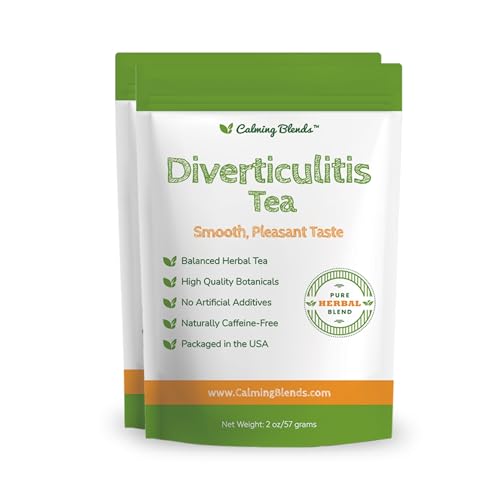
The two-pack is the only option here that provides two 2-ounce pouches of Calming Blends tea. The maker identifies it as an all-natural, caffeine-free blend, but the specifications do not enumerate the ingredients for this particular pack, so check the package if an ingredient matters to you. This format suits someone who wants two packs of the same tea rather than a strainer or booklet. It is still an herbal beverage, not a way to treat diverticulitis pain; do not use it to delay medical assessment of abdominal symptoms.
Bottom line: Pick this if you specifically want two 2-ounce packs.
JIAOMING Herbal Tea

JIAOMING is the alternative brand in this group, marketed as a mild herbal tea for post-meal sipping rather than as a Calming Blends product. The specifications do not give a pack size or brewing directions, so check the package for those before choosing it if serving format matters. This may suit someone seeking a different brand, but no tea is established here as a treatment for diverticulitis pain.
Bottom line: Choose this if you prefer a different chamomile-and-peppermint tea brand.
What to expect from diverticulitis tea
Herbal tea can be a drink, but it cannot treat diverticulitis or reliably ease its pain. Diverticulitis involves inflamed or infected pouches in the colon; abdominal pain can also have other causes, so a new episode needs clinical assessment rather than a tea trial. No herbal blend or ingredient in these options is established as a treatment for the condition. For a mild beverage choice, compare the ingredient list with allergies, sensitivities and medicines, and stop drinking it if it causes a reaction. Seek urgent medical care for severe or worsening abdominal pain, fever, repeated vomiting, or blood in the stool.
Choosing a tea blend and format
Choose by the ingredient and preparation you actually want, not by a pain-relief promise. Chamomile and peppermint appear in several blends here, while marshmallow leaf and wild yam root are named for the Calming Blends original tea; the two-pack does not enumerate its blend ingredients in the specifications. Loose-leaf needs a strainer, so select the set with an infuser if you do not own one; the booklet set adds reading material, not medical advice. The measurable serving suggestion for the original blend is 2 teaspoons per 6–8 ounces of boiling water, steeped covered for 5–7 minutes. Check ingredients before use if you avoid any herb.
Food and fluids during a flare
Diet during a diverticulitis flare is a clinical decision, not a universal tea routine. Some people with uncomplicated acute symptoms may be advised to use clear liquids briefly, then advance their diet as symptoms improve; this is not appropriate for every person or situation. Persistent pain, fever, inability to keep fluids down, or worsening symptoms calls for prompt medical advice. During recovery, clinicians often guide a gradual return to a varied diet, and long-term fiber goals differ from short-term flare instructions. Do not use a tea or a booklet to decide whether a flare is safe to manage at home; ask a clinician about the right food and fluid plan for your symptoms.
When abdominal pain needs medical care
Severe or worsening lower abdominal pain, fever, repeated vomiting, or blood in the stool should prompt urgent medical attention, not a switch to another tea. Diverticulitis can require tests and treatment that a drink cannot provide, and delaying care can be dangerous. New abdominal pain, especially with a history of diverticulitis, deserves a call to a healthcare professional for direction. If a clinician has already assessed the symptoms and tea is acceptable as a beverage, keep the serving moderate and stop if it worsens discomfort or causes an allergic reaction. People with significant health conditions or regular medicines should ask a clinician or pharmacist about herbal ingredients before use.
Frequently Asked Questions
Can tea relieve diverticulitis pain?
No herbal tea is established as a treatment for diverticulitis pain. Tea may be a beverage if tolerated, but new or worsening abdominal pain needs medical advice.
Should I drink peppermint tea during a flare?
Peppermint tea does not treat a diverticulitis flare. If a clinician has advised fluids and peppermint is safe for you, drink it only as a beverage and seek care for fever, worsening pain or vomiting.
What should I drink during acute diverticulitis?
Ask a clinician what fluids are appropriate for your symptoms and treatment. Some people with uncomplicated acute symptoms may be told to use clear liquids briefly, but that advice is not suitable for every case.
Can I drink herbal tea with my medications?
Check the herb list with a pharmacist or clinician before combining herbal tea with regular medicines. These blends may contain several herbs, and safety can depend on the medicine and your health conditions.
When should abdominal pain become an emergency?
Get urgent medical care for severe or worsening abdominal pain, fever, repeated vomiting, or blood in the stool. Tea cannot diagnose or treat a complication.