
Best Balaclava for Extreme Cold: 5 Options Compared

For most people, Fleece Balaclava Hoodie is the strongest fit for extreme cold because its heavyweight fleece hood has an extra-long neck and adjustable coverage. Choose ROCKBROS Thermal Balaclava instead if you need a slim layer under a helmet; its streamlined fit is designed for helmet compatibility.
We earn a commission if you buy through links on this page. As an Amazon Associate I earn from qualifying purchases. Products are compared on manufacturer specifications, not hands-on testing.
- Best overall: Fleece Balaclava Hoodie – Heavyweight fleece, an extended neck, and adjustable toggles support full coverage or a looser setup.
- Best for helmet layering: ROCKBROS Thermal Balaclava – Its close-fit profile is designed to fit under bike, ski, or motorcycle helmets.
- Best for head and shoulder coverage: ROCKBROS Fleece Hood Balaclava – The fleece hood extends coverage over the head and shoulders.
| Product | Best for | Coverage | Adjustment | Helmet fit | Shop |
|---|---|---|---|---|---|
| Fleece Balaclava Hoodie | Maximum coverage | Extended neck | Draw-tight toggles | — | Check Price on Amazon |
| ROCKBROS Thermal Balaclava | Helmet layering | Head, ears, face, neck | — | Designed for helmets | Check Price on Amazon |
| Stretch Fleece Balaclava with Mesh | Active airflow | Extended neck | Multiple face positions | Mesh panel | Check Price on Amazon |
| GXCROR Dual-Layer Ski Balaclava | Adjustable face coverage | Extended face and neck | Adjustable front | Glasses port | Check Price on Amazon |
| ROCKBROS Fleece Hood Balaclava | Shoulder coverage | Head and shoulder coverage | Adjustable drawcord | Helmet-covering hood | Check Price on Amazon |
Balaclavas for Extreme Cold
Compare how each design handles coverage, airflow, and layering before choosing for your activity.
Fleece Balaclava Hoodie

Fleece Balaclava Hoodie stands apart with a heavyweight fleece hood and an extra-long neck designed to tuck into a jacket. Draw-tight toggles let you change between full face coverage, a half mask, and a neck warmer, making the design adaptable when wind exposure changes. It is a strong match for skiing, snowboarding, hiking, and outdoor work when you want one layer for head and neck. The tradeoff is that the specifications does not identify a helmet-compatible slim profile, so riders who need a close-fitting under-helmet layer should choose a design that specifies that fit.
Bottom line: Choose this when extended fleece coverage and adjustable face protection matter most.
ROCKBROS Thermal Balaclava

ROCKBROS Thermal Balaclava is the more streamlined option for wearing beneath a helmet, with a close-fit profile intended for bike, ski, or motorcycle helmets. Its fleece lining covers the head, ears, face, and neck, while the extended cut reduces exposure to wind during winter rides and other outdoor activity. This design suits cyclists and commuters who prioritize layering over a hood-like shape. The specifications gives no adjustment or alternate face configurations, so buyers who want to switch between full mask and neck-warmer modes may prefer a toggled or multi-position design.
Bottom line: Pick this for a close-fitting fleece layer under a helmet.
Stretch Fleece Balaclava with Mesh

Stretch Fleece Balaclava with Mesh adds mesh paneling and four-way stretch, distinguishing it from the heavier hood and simpler close-fit options. The mesh is intended to increase airflow and manage moisture during higher-effort activities such as running or skiing; its face coverage can also shift among full, open, half-mask, and neck-gaiter positions. The extended neck covers below the face. The tradeoff is that the specifications emphasizes a less bulky construction rather than heavyweight fleece, so people prioritizing the most substantial hood-style coverage may prefer a heavier design.
Bottom line: Choose this for active use where stretch and face-panel airflow are priorities.
GXCROR Dual-Layer Ski Balaclava

GXCROR Dual-Layer Ski Balaclava uses a dual-layer build with an adjustable front panel, so the wearer can alter face coverage without removing the balaclava. A glasses port provides a route for eyeglass arms, and the design emphasizes airflow alongside protection from wind, blowing snow, and dust. It suits people who wear glasses or want to fine-tune coverage as activity changes. The specifications does not describe fleece thickness or a helmet-specific profile, so buyers seeking a heavyweight hood or a proven close helmet fit should prioritize those stated design features instead.
Bottom line: Pick this when adjustable front coverage and a glasses port fit your needs.
ROCKBROS Fleece Hood Balaclava
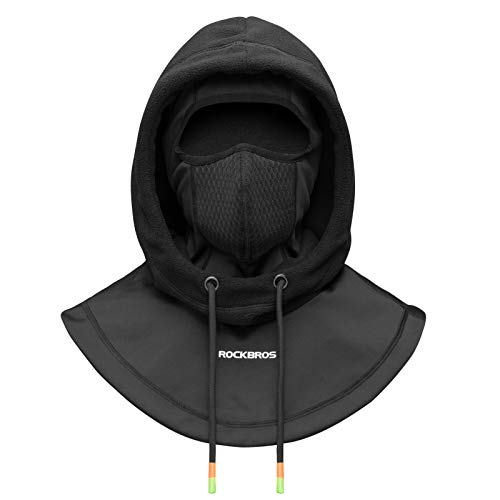
ROCKBROS Fleece Hood Balaclava differs from a close-fitting mask by pairing a fleece balaclava with a large warm outer hat that can cover a ski or bike helmet. Its extended head-and-shoulder coverage and adjustable drawcord suit people who want a hooded setup rather than a slim layer. The specifications identifies 100% polyester and a water-resistant balaclava fabric. That added hood volume can be inconvenient beneath a helmet, so choose a close-profile option if your helmet needs a low-bulk underlayer.
Bottom line: Choose this for a hooded fleece setup with added shoulder coverage.
How to Choose a Balaclava for Extreme Cold
Choose by coverage first, then match the face panel to your activity. A balaclava covers the head and neck, while openings or adjustable panels expose the nose and mouth; full coverage blocks more direct wind, but airflow matters when exertion rises. For stationary work or slow travel in biting wind, favor a fleece hood with a long neck that can tuck into a jacket. For cycling or running, a slim or mesh-panel design may better manage sweat and helmet bulk. If your activity uses a helmet, try the complete setup together: seams and excess fabric can create pressure points. For under-helmet use, choose a product explicitly shaped for that fit rather than assuming any one-size mask will work.
Balaclava Coverage and Face-Panel Choices
Face-panel design determines how easily you can balance warmth and breathing. A fixed full-face panel prioritizes coverage; a drawcord or adjustable front lets you change the opening without taking off the head layer. Mesh can increase airflow, but it does not replace a wind-blocking outer layer in severe exposure. The table matches common needs to the features represented in these options.
| Need | Design to favor |
|---|---|
| Wind exposure with neck tucked into a jacket | Heavy fleece hood and extended neck |
| Helmet worn during rides | Close-fit profile designed for helmets |
| High exertion and airflow | Stretch fabric and mesh panel |
| Glasses and adjustable face opening | Glasses port and adjustable front |
When choosing between two similar designs, select the less bulky face covering if you struggle with fogging or heat buildup during exertion.
Layering a Balaclava Under a Helmet
A helmet-compatible balaclava should lie flat without bunching beneath the helmet’s retention system. Start with the helmet bare, then add the mask and recheck fit: the helmet should remain level and secure, not perch higher because fabric is trapped at the crown. Leave straps and adjustment points unobstructed. A hood designed to cover a helmet is a different use than a slim liner worn under one; the two shapes are not interchangeable. Cold-weather layering also needs moisture control: damp fleece loses comfort, so vent or loosen a face panel during hard effort, then restore coverage when activity slows. Never compensate for a poor helmet fit by loosening its retention system.
Frequently Asked Questions
Can you breathe comfortably through a fleece balaclava?
Breathing comfort depends on the face panel and effort level. Mesh or an adjustable opening can provide more airflow than a fixed, fully covered panel; during strenuous activity, loosen the coverage before fabric becomes damp.
Should a balaclava cover your nose in freezing wind?
Covering the nose can reduce direct wind exposure, but the opening should still allow comfortable breathing. For hard exercise, use an adjustable panel or airflow-focused design and ease coverage if moisture builds up.
How should a balaclava fit under a ski helmet?
A balaclava should sit flat without bunching under the helmet or changing its level, secure fit. Choose a close-profile design made for helmets; a bulky outer hood may be intended to go over a helmet instead.
Is fleece or mesh better for winter running?
Fleece favors warmth, while mesh can support more airflow during vigorous running. If your route includes exposed wind or long pauses, balance the panel’s airflow with enough coverage for the slower, colder portions.
How do you keep a balaclava from fogging glasses?
Direct exhaled air downward and avoid gaps that channel warm breath toward the lenses. A glasses port can provide a path for eyeglass arms, while an adjustable front panel can help reposition face coverage.