
Best Quick-Drying Glue: 5 Formulas Compared by Use

Aleene’s Quick Dry Tacky Glue, 8 oz. is the best quick-drying glue for most craft projects because it is made for several common materials and dries clear and flexible. Choose an instant adhesive instead for small, rigid household repairs; cyanoacrylate sets differently from water-based craft glues.
Quick-drying glue is a broad category, so match the formula to the material and the time you can hold or clamp the pieces.
We earn a commission if you buy through links on this page. As an Amazon Associate I earn from qualifying purchases. Products are compared on manufacturer specifications, not hands-on testing.
- Best overall: Aleene’s Quick Dry Tacky Glue, 8 oz. – Its thick tacky formula works across paper, wood, foam, plastic, and metal and dries clear and flexible.
- Best for gap filling: Titebond Quick & Thick, 16 oz. – The thick multi-surface formula can fill small cracks and gaps and sands on wood.
- Best for instant repairs: Super Glue All-Purpose Liquid, 1.75 oz. – The liquid cyanoacrylate formula reaches handling durability in seconds, according to the maker.
- Best for one-handed use: Aleene’s Always Ready Quick Dry Tacky Glue, 4 oz. – The inverted-cap bottle is designed to stay ready for quick application.
| Product | Best for | Size | Materials | Cleanup | Shop |
|---|---|---|---|---|---|
| Aleene’s Quick Dry Tacky Glue, 8 oz. | Crafts and DIY | 8 fl oz | Paper, wood, foam, plastic, metal | Soap and water before drying | Check Price on Amazon |
| Titebond Quick & Thick, 16 oz. | Wood and repairs | 16 oz | Wood, ceramic, pottery, stone, glass, fabric | Water cleanup | Check Price on Amazon |
| Super Glue All-Purpose Liquid, 1.75 oz. | Small rigid repairs | 1.76 fl oz | Wood, glass, metal, plastic | — | Check Price on Amazon |
| Aleene’s Quick Dry Tacky Glue, 4 oz. 3-Pack | Multiple craft sessions | Three 4 fl oz bottles | Paper, wood, foam, plastic, metal | Soap and water before drying | Check Price on Amazon |
| Aleene’s Always Ready Quick Dry Tacky Glue, 4 oz. | Quick craft access | 4 fl oz | Paper, wood, foam, plastic, metal | Soap and water before drying | Check Price on Amazon |
Quick-Drying Glue Compared
Match the adhesive type to your materials, the bond you need, and how quickly you need to handle the joined pieces.
Aleene’s Quick Dry Tacky Glue, 8 oz.
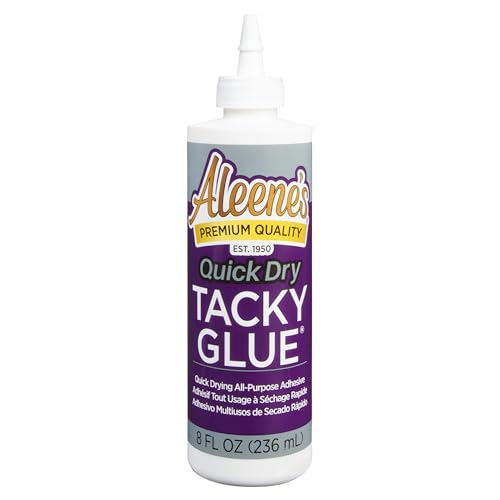
For flexible craft bonds across several common materials, this 8-ounce tacky glue stands out from the liquid instant-repair formula. Aleene’s says it grabs items instantly, dries clear and permanent, and dries 50% faster than its Original Tacky Glue; the maker also identifies the cured bond as flexible. The squeeze bottle is intended for precise application, and the glue is AP-certified non-toxic. It suits projects where a little flexibility matters, such as paper or foam crafts. The limitation is that it is a water-based craft adhesive, not a substitute for a rigid instant bond on a small repair.
Bottom line: Choose this for broad craft use when a flexible, clear bond matters.
Titebond Quick & Thick, 16 oz.

Small gap filling and sandability on wood distinguish this 16-ounce water-based glue from the craft-focused tacky formulas. Titebond says its formula is three times as thick and twice as fast-drying as traditional PVA glues, and that it fills small cracks and gaps. It also dries clear, can be painted, and is described by the maker as low-odor and nonflammable. The broad material range suits workshop and household projects involving wood, ceramic, stone, glass, fabric, or leather. Its white appearance before drying and thick consistency may be less convenient when a very fine, nearly invisible line is the priority.
Bottom line: Pick this for wood projects where filling and sanding small gaps helps.
Super Glue All-Purpose Liquid, 1.75 oz.

Seconds-fast handling separates this liquid instant adhesive from the water-based craft glues. The maker says the formula reaches maximum handling durability in seconds and dries clear on most materials; the precision tip and anti-clog cap are intended to support controlled application and storage. It is positioned for household repairs as well as crafts and lists wood, glass, metal, and plastic among its uses. This is the pick for a small, rigid repair where pieces can be aligned promptly. The limitation is the fast set: it leaves little adjustment time, and cyanoacrylate can bond skin, so keep it away from fingers and eyes.
Bottom line: Choose this for small repairs that need a quick, rigid bond.
Aleene’s Quick Dry Tacky Glue, 4 oz. 3-Pack

Three separate 4-ounce bottles make this set distinct from the single-bottle choices, which can be useful when several crafting sessions or work areas need glue. Aleene’s says the thick formula grabs items instantly, dries clear and permanent, and is 50% faster-drying than Original Tacky Glue. The material range includes paper, wood, foam, plastic, and metal, while wet residue can be cleaned with soap and water before it dries. This set suits recurring craft work that benefits from dividing supplies. Unlike the single inverted-cap option, the product name does not indicate an always ready bottle design.
Bottom line: Choose this set when you want multiple small bottles for craft work.
Aleene’s Always Ready Quick Dry Tacky Glue, 4 oz.

The inverted-cap Always Ready bottle is the distinguishing feature here, designed for instant use without turning the bottle over before application. Aleene’s says its thick tacky formula grabs items instantly, dries clear, permanent, and flexible, and dries 50% faster than Original Tacky Glue. The 4-ounce size and easy-squeeze bottle suit quick craft tasks using paper, wood, foam, plastic, or metal. Wet glue cleans up with soap and water before drying. Its capacity is smaller than the 8-ounce single bottle and the 16-ounce workshop glue, so frequent or larger projects may call for a larger container.
Bottom line: Pick this for quick craft access and an inverted-cap bottle.
How to choose quick-drying glue
Choose by bond type first: water-based craft glue gives more working time and can dry flexible, while cyanoacrylate instant glue sets rapidly into a rigid bond. Most PVA-style wood glues need clamping during initial set, and full strength commonly takes about 24 hours; temperature, humidity, wood porosity, and glue thickness affect the timing. A fast tack is not the same as full cure. For a project that must stay flexible, favor a product explicitly described as flexible rather than assuming every clear-drying adhesive bends. For a gap under about 1/16 inch, a thick adhesive may help bridge it, but larger gaps generally need a fitted repair or filler rather than more glue.
Match glue to the materials
Material compatibility decides more than the word “all-purpose”: porous paper and wood accept many water-based glues, while smooth glass and metal need a formula expressly intended for those surfaces. Cyanoacrylate commonly bonds close-fitting, nonporous surfaces quickly, but gaps and large contact areas can weaken the joint. Clean, dry, close-fitting surfaces usually bond more reliably than dusty or oily ones. The options here differ in both application and material claims, so use this guide to narrow the type rather than treating all fast glues as interchangeable.
The main adhesive types solve different jobs:
| Type | Typical strength | Useful for |
|---|---|---|
| Tacky/PVA craft glue | Flexible to firm; slower cure | Paper, wood, foam crafts |
| Thick multi-surface glue | Fills small gaps; sandable on wood | Workshop and household projects |
| Cyanoacrylate | Rapid, rigid bond | Small, close-fitting repairs |
Set time, handling, and full cure
Plan to hold or support pieces until the adhesive has developed enough strength for the job; a glue that grabs quickly can still need longer before full loading. Many household PVA glues reach full cure in roughly 24 hours, while cyanoacrylate can become handleable in seconds but is best used on small joints with a close fit. Thick glue layers often take longer to dry than thin ones because moisture or solvent has farther to leave the bond. For a craft piece that must be repositioned, spread a thin bead and dry-fit the parts before applying glue; for an instant adhesive, align the pieces first because adjustment time is short.
Use fast-setting glue safely
Keep cyanoacrylate away from skin and eyes: it bonds skin rapidly, and cotton or wool can react strongly with some cyanoacrylate products and generate heat. Work with good airflow, use only a small amount, and keep the cap closed between applications. Water-based craft glues are easier to clean while wet, but that does not mean dried glue will wash out of fabric. Keep all adhesives out of children’s reach even when a craft glue carries a non-toxic certification. For a bond that bears weight or supports a load, follow the adhesive maker’s material and curing guidance rather than relying on a quick grab alone.
Frequently Asked Questions
How long should quick-drying glue cure before use?
A fast grab does not necessarily mean full cure. Many PVA-style household glues need about 24 hours to reach full strength, while temperature, humidity, material, and bead thickness can change the time.
Is quick-drying glue safe for children’s crafts?
Some craft adhesives are AP-certified non-toxic, but that does not make them edible or suitable for unsupervised use. Keep glue away from eyes and mouths, and supervise young children; instant cyanoacrylate can bond skin in seconds.
Can quick-drying glue fill a gap between parts?
Thick formulas can fill small gaps, but a large gap is usually a poor glue joint. For a gap greater than about 1/16 inch, improve the fit or use an appropriate filler before relying on adhesive alone.
How do you remove wet tacky glue from a surface?
Wet water-based tacky glue can generally be cleaned with soap and water before it dries. Dried glue is harder to remove, and porous fabric may retain residue, so blot wet spills promptly rather than rubbing them deeper.
Can fast-drying glue bond plastic to metal?
Some instant adhesives are intended for plastic and metal, but plastic types differ in bondability. Make sure both materials are expressly compatible and use a close-fitting joint, since fast glue is not a reliable gap filler.