
Zep Wall Foam Cleaner: 4 Options Compared

For most people, Zep Foaming Wall Cleaner, 18 oz is the clearest match for Zep wall foam cleaner because its 18-ounce can is described for painted surfaces, wall coverings, baseboards, doors, and trim. Choose another format if you need multiple cans or want an included reusable cloth.
Foaming wall cleaner is a spray-on cleaner intended to cling to vertical surfaces before wiping; test a small hidden area first, especially on delicate paint or wallpaper.
We earn a commission if you buy through links on this page. As an Amazon Associate I earn from qualifying purchases. Products are compared on manufacturer specifications, not hands-on testing.
- Best overall: Zep Foaming Wall Cleaner, 18 oz – An 18-ounce can with use on painted surfaces, wall coverings, baseboards, doors, and trim.
- Best for multiple rooms: Zep Foaming Wall Cleaner, 4-Pack – Four 18-ounce cans provide several units for a larger cleaning supply.
- Best with a cloth: Zep Foaming Wall Cleaner with Microfiber Rag – The product name specifies a reusable microfiber rag alongside the cleaner.
| Product | Best for | Stated surface range | Application | Included accessory | Shop |
|---|---|---|---|---|---|
| Zep Foaming Wall Cleaner, 18 oz | Everyday wall marks | Painted surfaces, coverings, trim | Clinging foam; spray and wipe | None specified | Check Price on Amazon |
| Zep Foaming Wall Cleaner, 4-Pack | Multiple-room supply | Washable surfaces, walls, ceilings | Clinging foam; spray and wipe | None specified | Check Price on Amazon |
| Zep Foaming Wall Cleaner, Case of 12 | Bulk replenishment | Walls, ceilings, doors, woodwork | Clinging foam; scrub-free | None specified | Check Price on Amazon |
| Zep Foaming Wall Cleaner with Microfiber Rag | Cloth included | Painted walls, woodwork, doors, trim | Clinging foam; wipe after use | Reusable microfiber rag | Check Price on Amazon |
Zep Wall Foam Cleaner Options
Compare the surface uses and formats to find the cleaner that fits your wall-cleaning routine.
Zep Foaming Wall Cleaner, 18 oz

Zep Foaming Wall Cleaner, 18 oz is the single-can option with the broadest clearly named household surface range in this group: painted surfaces, wall coverings, baseboards, doors, and trim. Its 18-ounce can uses clinging foam intended for spray-and-wipe cleaning of marks such as scuffs, fingerprints, grease, ink, crayon, food, and lipstick. That makes it a straightforward fit for occasional spot cleaning across several rooms. The maker says the scrub-free formula lifts stains without damaging finishes or leaving residue. The limitation is the one-can format, which may not suit someone stocking up for repeated or large-area cleaning.
Bottom line: Choose this for one can and several common painted or covered surfaces.
Zep Foaming Wall Cleaner, 4-Pack
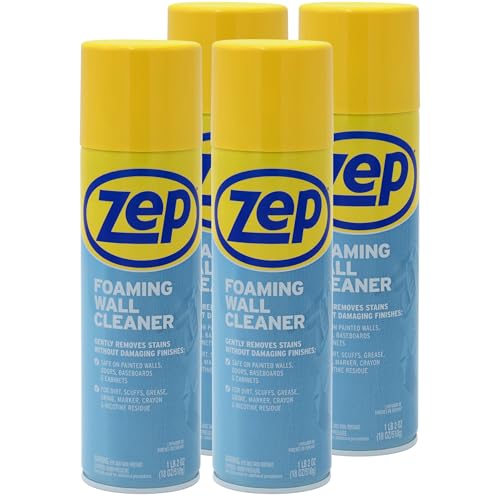
Zep Foaming Wall Cleaner, 4-Pack differs mainly in quantity: it supplies four 18-ounce cans rather than one. Its uses include washable surfaces, walls, ceilings, woodwork, and washable wallpaper, with foam that clings to vertical surfaces before wiping. The maker says it lifts everyday marks including fingerprints, grease, food, ink, makeup, and crayon, and leaves no residue. This format suits households planning cleaning across several areas or keeping spare cans on hand. Its limitation is the larger supply commitment; someone who only needs to remove a few isolated marks may have no reason to choose four cans.
Bottom line: Pick this when you want four cans for cleaning several areas.
Zep Foaming Wall Cleaner, Case of 12

Zep Foaming Wall Cleaner, Case of 12 is the case-size choice, with twelve 18-ounce cans and an identified product code, ZUFWC18. Its uses extend to walls, ceilings, doors, woodwork, vinyl coverings, and washable wallpaper. The maker says the scrub-free foam lifts scuffs, fingerprints, grease, crayon, ink, marker, food, and lipstick without damaging finishes or leaving residue. The surface range makes it relevant where more than painted walls need occasional spot cleaning. A case is a poor fit for someone who wants only a small amount of cleaner or has limited storage space.
Bottom line: Choose this when a twelve-can supply suits your storage and cleaning needs.
Zep Foaming Wall Cleaner with Microfiber Rag

Zep Foaming Wall Cleaner with Microfiber Rag stands apart by including a reusable microfiber rag, so the wiping cloth is part of the package. Its uses include painted walls, woodwork, doors, baseboards, and other vertical surfaces. The maker says the foam clings before wiping and is intended to lift scuffs, grease, and soil without dulling paint. This is the option for buyers who want a cloth included, but the package-size conflict makes it important to verify the format.
Bottom line: Pick this if the included microfiber cloth matters and you verify the package format.
How to Choose Wall Foam Cleaner
Choose by surface compatibility first, then by the amount of cleaner and cleanup tools you need. Painted walls, wallpaper, and finished wood can respond differently to moisture and cleaning agents, so a small hidden-spot test is a sensible first step even when a product names that surface. If the test spot changes color, sheen, or texture, stop rather than expanding the cleaned area. For ordinary marks, use the least aggressive approach that works: a soft cloth and light pressure reduce the chance of burnishing paint. Clinging foam can be useful on vertical surfaces because it stays where applied longer than a thin liquid, but follow the product’s application directions and wipe away loosened soil.
Using Foam Cleaner on Painted Walls
Apply wall cleaner to a small area rather than coating an entire wall, then wipe with a clean, soft cloth. A 1-foot-square test patch in an inconspicuous place gives you a controlled way to check the paint finish before treating a visible area. Use gentle pressure and avoid abrasive pads, which can dull or remove paint. Keep the area ventilated when using spray cleaners, and avoid breathing the mist. Never combine household cleaners; mixtures can release hazardous gases or cause other dangerous reactions. Keep sprays away from children and pets, and follow the product label for any precautions and contact time.
Wall Cleaner Formats Compared
Choose a single can for occasional spot cleaning, a multipack for repeated use, or a format with a cloth if you need a wiping tool. Package count is useful only when the can size is clear; compare both rather than assuming every multipack contains the same amount. The table maps common cleaning needs to a practical format.
| Need | Format to consider |
|---|---|
| Test a cleaner on a few marks | One can |
| Keep several cans available | Multipack or case |
| Need a wiping cloth included | Cleaner bundle with cloth |
For a small job, start with one can and a soft cloth; for recurring use, choose a multipack only after confirming its can size and count. A microfiber cloth can be reused, but wash it separately from lint-producing materials to keep it clean for wiping surfaces.
Common Wall-Cleaning Mistakes
Scrubbing hard is a common mistake because flat and matte paints can develop shiny patches from friction. Use light pressure and pause if a mark does not lift readily rather than escalating to a rough pad. Another mistake is applying cleaner over a large area before checking whether the finish tolerates it; start with a small hidden patch and allow it to dry before judging the result. Do not mix sprays with bleach, ammonia, or other cleaners, and ventilate the room during use. For wallpaper, use only a cleaner whose label permits that wallpaper type, since washable wallpaper and delicate or uncoated papers are not interchangeable.
Frequently Asked Questions
How do I test foam cleaner on painted walls?
Apply a small amount to a hidden patch about 1 foot square and wipe gently with a soft cloth. Let the patch dry fully, then check for changes in color, sheen, or texture before cleaning a visible area.
Can wall foam cleaner be used on wallpaper?
Use it only when the product label permits the wallpaper type and the paper is washable. Test a concealed spot first, because moisture can damage delicate or uncoated wallpaper.
What cloth should I use to wipe cleaned walls?
A soft microfiber cloth is a practical choice for light wiping because it is nonabrasive when clean. Avoid rough pads and use gentle pressure, especially on flat or matte paint.
Should I ventilate while spraying wall cleaner?
Yes, ventilate the room while using spray cleaner and avoid breathing the mist. Keep the product away from children and pets, and do not mix it with other household cleaners.
Why can paint look shiny after wall cleaning?
Repeated friction or abrasive scrubbing can burnish some paint finishes, leaving a shiny patch. Use a hidden-spot test and light wiping pressure before treating a larger area.