
Antenna With Booster for Auto: 3 Radio Options Compared

For an antenna with booster for auto radio, TTLCFP 12V Car Antenna Booster is a straightforward 12V AM/FM amplifier kit with installation accessories. Choose 12V Car Antenna Booster, 25 dB if its claimed 25 dB gain is the deciding specification, or 12V Booster with 7-Inch Hidden Antenna if you also need a separate electric antenna.
A radio antenna booster amplifies the incoming signal before it reaches the stereo; it cannot bring back stations that are outside coverage, and amplification may also raise noise. Confirm 12V power and connector compatibility before ordering.
We earn a commission if you buy through links on this page. As an Amazon Associate I earn from qualifying purchases. Products are compared on manufacturer specifications, not hands-on testing.
- Best overall: TTLCFP 12V Car Antenna Booster – A 12V AM/FM amplifier kit includes tape, a quick connector, and two cable clamps.
- Best for stated gain: 12V Car Antenna Booster, 25 dB – Its name gives a 25 dB signal-amplifier rating.
- Best with replacement antenna: 12V Booster with 7-Inch Hidden Antenna – The package pairs a booster with a separate 7-inch electric antenna.
| Product | Best for | Antenna included | Shop |
|---|---|---|---|
| TTLCFP 12V Car Antenna Booster | AM/FM signal kit | No | Check Price on Amazon |
| 12V Car Antenna Booster, 25 dB | Stated gain rating | No | Check Price on Amazon |
| 12V Booster with 7-Inch Hidden Antenna | Antenna replacement | Yes, separate 7-inch | Check Price on Amazon |
Auto Antenna Boosters for AM/FM Radio
These options differ in their gain and whether a replacement antenna comes with the amplifier.
TTLCFP 12V Car Antenna Booster

TTLCFP 12V Car Antenna Booster stands out for its installation accessory set: it includes double-sided tape, a quick connector, and two cable clamps alongside the booster. The maker says the amplifier improves signal sensitivity and receiving distance, while its shielded metal housing helps reduce outside interference and background noise. Its ABS housing suits buyers looking for a basic car, truck, SUV, or van AM/FM setup.
Bottom line: Pick this if you want a 12V AM/FM booster with connection accessories.
12V Car Antenna Booster, 25 dB

12V Car Antenna Booster, 25 dB is the only option here whose name specifies a 25 dB signal-amplifier rating. The maker says its copper wiring and metal shield improve reception clarity and reduce interference, and its ABS shell and capped fuse holder are designed to resist daily wear and guard the connection point. This makes it a fit for buyers who want a gain figure and a 12V AM/FM amplifier. A gain rating alone does not guarantee stronger reception in every vehicle; antenna condition, wiring, local signal strength, and interference still affect results.
Bottom line: Choose this if a 25 dB gain is important to your comparison.
12V Booster with 7-Inch Hidden Antenna
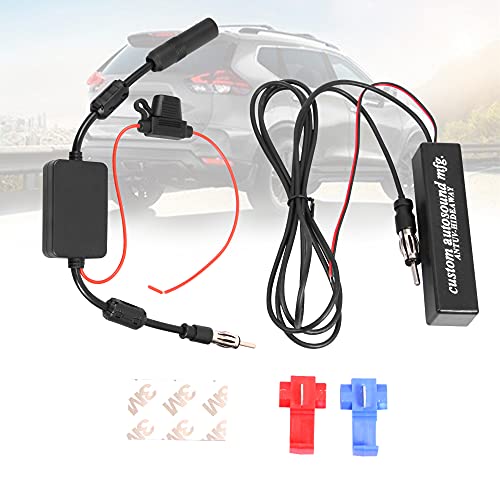
12V Booster with 7-Inch Hidden Antenna differs by bundling a booster with a separate 7-inch electric antenna, which can replace a damaged factory antenna or suit a custom installation where a visible mast is unwanted. The maker says the booster enhances AM/FM signal and reduces noise, and identifies 12V power for most cars and boats. The antenna and booster are separate components, so buyers who only need signal amplification may not need the included antenna. Compatibility is also not universal; verify that the vehicle and stereo setup can use this combination before choosing it.
Bottom line: Pick this when you need both a 12V booster and a replacement antenna.
How an AM/FM antenna booster works
An AM/FM antenna booster raises the radio-frequency signal delivered from an antenna to a car stereo. The amplifier is most useful when the existing antenna signal is weak but still present; it cannot recreate a station that is beyond broadcast coverage. Amplification can also raise electrical noise or interference along with the wanted signal, so a stronger output does not always mean clearer sound.
Many automotive amplifiers need vehicle power, and these three options specify 12V. A typical installation places the amplifier inline between the antenna lead and radio, with a power connection as required by its design. Before buying, check the head unit’s antenna socket, the vehicle’s antenna plug, and the amplifier’s connectors. A mismatch can require an adapter or make the setup unsuitable.
Choosing between a booster and a replacement antenna
Choose an amplifier-only setup when the vehicle antenna is intact and the stereo receives weak stations; choose a booster bundled with a replacement antenna when the original antenna is damaged or you want a different antenna arrangement. Antenna placement matters: a metal roof or body can obstruct signals, and a windshield-mounted antenna should be positioned according to its design rather than hidden behind metal trim.
The table distinguishes the three radio-focused choices by what comes in the package. Use the included antenna only if it suits the vehicle and installation plan; a booster by itself does not replace a broken antenna.
| Need | Option type | What to check |
|---|---|---|
| Amplify existing antenna signal | Booster only | 12V power and connector fit |
| Replace a damaged antenna too | Booster plus separate antenna | Vehicle compatibility and mounting |
| Compare amplifier ratings | Booster with gain | Gain figure and real installation fit |
Installation checks for an auto radio booster
Check the radio and antenna connectors before installing any inline booster; connector shapes and wiring differ among vehicles and head units. A clean, secure connection matters because a loose antenna lead can cause intermittent reception that resembles a weak signal. Route wiring away from moving parts, sharp metal edges, and hot engine components, and secure cables so they cannot interfere with pedals or steering.
Power wiring must match the vehicle system and the amplifier’s design. Disconnect power before changing wiring, and use the correct fuse protection rather than bypassing a fuse. If reception gets noisier after installation, check the antenna and connections first; adding more amplification will not necessarily fix interference or poor antenna placement.
When a booster will not fix poor reception
A booster is not a substitute for an intact antenna, a suitable antenna location, or coverage from local stations. If reception cuts out only in one area, terrain and distance from transmitters may be the cause; if it is poor everywhere, inspect the antenna, cable, ground, and radio connection. FM signals are more affected by obstacles and terrain than AM signals, while electrical equipment in a vehicle can contribute interference.
Use a measurable rule: if the antenna is broken or its cable is visibly damaged, repair that fault before adding amplification. For a working antenna and a 12V-compatible radio setup with weak but present signals, an amplifier may be worth considering. If the stereo connector or vehicle compatibility is uncertain, verify those points before ordering rather than relying on a universal-fit claim.
Frequently Asked Questions
Can a car antenna booster improve AM and FM reception?
A car antenna booster can amplify a weak AM/FM signal before it reaches the stereo, but it cannot restore a station that is outside coverage. If the antenna or cable is damaged, repair it first because an amplifier cannot replace a functioning antenna.
Does a 25 dB booster guarantee clearer radio sound?
No; 25 dB describes the gain, not a guaranteed listening result. Antenna condition, signal strength, connector fit, and interference all affect reception, and an amplifier can raise unwanted noise too.
Where does an auto radio antenna booster connect?
An inline booster generally connects between the antenna lead and the stereo, with power wiring if its design requires it. Check the vehicle and radio connector types first because antenna plugs are not universal.
Will a radio booster work with a broken car antenna?
A booster does not replace a broken antenna unless the package also includes a suitable replacement. Restore the antenna connection or install a compatible antenna before expecting an amplifier to improve reception.
Can I use a 12V car antenna booster in a boat?
A 12V model may suit a 12V boat electrical system, but the product’s voltage alone does not confirm marine suitability. Check the installation location and the vehicle or boat’s connector and power requirements before fitting it.